Given that thousands of people have filed baby powder cancer lawsuits over talc-based products, countless consumers may wonder: is talc dangerous?
What is talc?
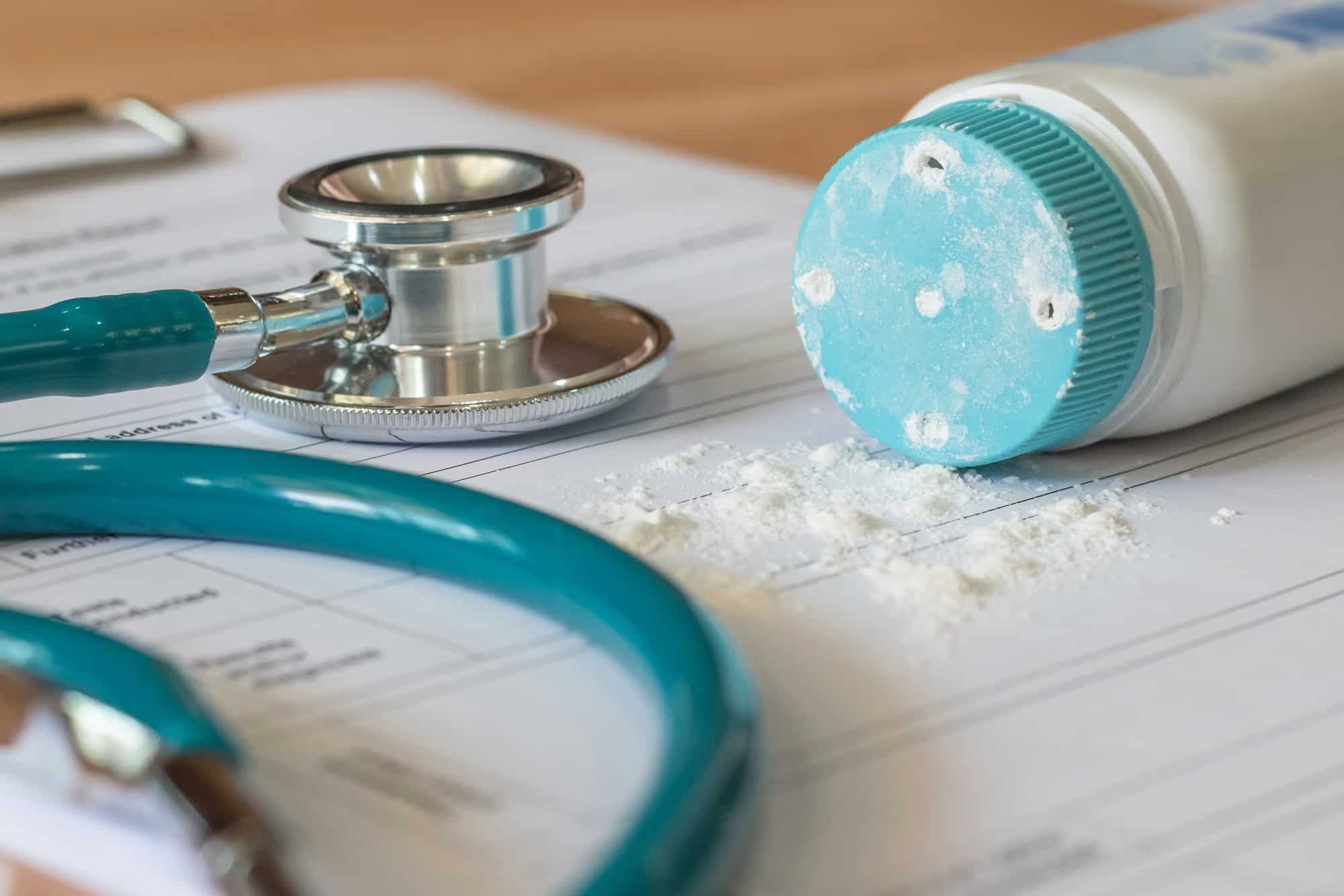
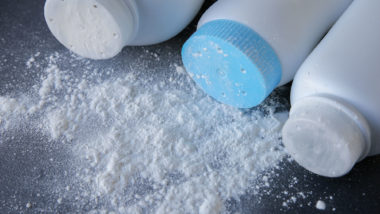
Talc is a naturally occurring mineral made from elements like magnesium, silicon, and oxygen, and is good for treating moisture and reduces friction. It has been a common ingredient in baby talc, after-shower powder, makeup products, and many other consumer products.
Is talc dangerous?
So, is talc dangerous? In its natural form, some variants of talc contain asbestos and can cause serious health problems if inhaled. According to the American Cancer Society, cross-contamination is a serious risk because asbestos and talc particles can become intermixed underground.
Millions of people grew up using talcum powder for various hygiene purposes like preventing rashes, with two of its most popular applications being baby powder and adult hygiene.
If so many people have used talc-based powders for generations, is talc dangerous? There has been much debate over the safety of talc. The International Agency for Research on Cancer (IARC), an international cancer research organization and part of the United Nation’s World Health Organization, classifies talc as “possibly carcinogenic to humans.” This is based on studies that link perineal use of talc products to ovarian cancer. However, the agency feels it lacks the evidence to confidently classify talc as a carcinogen.
The evidence is growing that adult genital application of talc powder can and does increase the likelihood of being diagnosed with ovarian cancer, according to the National Center for Health Research. CNN reports that studies have indicated a correlation between talcum powder and ovarian cancer since the early 1970s, with over a dozen later studies finding similar results.
The lifetime risk when all things remain equal among women is a 1% chance of development. This stands in stark contrast to a 12% chance of coming down with cancer of one or both breasts.
Early diagnosis of ovarian cancer is rare as screening methods that identify the disease when it is most curable are lacking.
The Center also indicates that those who use talcum powder as part of their hygiene routine, especially over several years, increase their chance of getting ovarian cancer by 30%. Talc has also been found in makeup and other products. With the growing number of talc lawsuits being filed, companies are looking for alternatives to talc in their products.
As for the other most popular application of talc — baby powder — the New York Times notes that, given the alleged health risks associated with talcum powder, it is recommended that parents use alternative products like cornstarch or oil-based products. This is because any baby talc may scatter and get released into the air, which can cause the child to inhale it and cause serious respiratory issues.
While this does not pertain to asbestos, cases of babies allegedly choking on talcum powder have been reported since the 1960s. Since 1981, the American Academy of Pediatricians has stated that baby talc could be hazardous and serves no medical purposes.
Is talc dangerous outside of cosmetics/hygiene?
Is talc dangerous only in regards to cosmetic and hygiene products, or are there other possible dangers as well? Talc has also been linked to an increased risk of lung cancer and other respiratory problems in studies of talc miners. However, other talc miner studies have found no increased risk with talc exposure. Miners may also be exposed to other dangerous carcinogens.
Even if the safety of pure talc remains in contention, talc contaminated with asbestos is not safe due to the carcinogenic nature of the contaminant. The IARC classifies talc contaminated with asbestos to be “carcinogenic to humans.”
Talc recalls
In February 2020, Johnson & Johnson announced that the company would discontinue selling its talc-based baby powder in the U.S. and Canada. Although the talc version of Johnson & Johnson baby powder will continue to be available in other countries around the world, only the cornstarch-based baby powder will be sold in the U.S. and Canada.
The company continues to claim that its baby powder is safe and does not contain asbestos or cause cancer. However, the discontinuation of the product comes after more than 19,000 lawsuits had been filed against the company by alleged victims.
Have talc lawsuits been filed?
Johnson & Johnson has already been ordered to pay out billions to plaintiffs who have won litigation alleging the company sells dangerous products talc-based products.
Many plaintiffs have sued Johnson & Johnson alleging that use of its products for hygiene purposes resulted in ovarian cancer. More recently, though, consumers have claimed that the talc used in Johnson & Johnson products is contaminated with asbestos.
There have also been lawsuits filed alleging a correlation between talcum powder and asbestos lung diseases. In April 2018, a lawsuit in New Jersey Superior Court ended with a $37 million jury verdict awarded to a man who allegedly developed mesothelioma after regularly using Johnson & Johnson talc powders contaminated with asbestos.
Talc verdicts and settlements
Johnson & Johnson has reportedly been hit with millions and even billions in settlements and jury verdicts over allegations that its talc products are dangerous.
In 2018, twenty-two plaintiffs were reportedly awarded a whopping $4.69 billion by a Missouri jury after alleging that Johnson & Johnson’s talc products caused ovarian cancer. Though the verdict was reduced to $2.1 billion by a Missouri court, the reasoning behind the award was warranted.
“A reasonable inference from all this evidence is that, motivated by profits, Defendants disregarded the safety of consumers despite their knowledge the talc in their Products caused ovarian cancer,” stated the court in its order upholding the verdict.
Johnson & Johnson attempted to appeal this decision. However, the Supreme Court recently declined to hear the company’s argument, putting an end to the appeal and reaffirming the $2.1 billion verdict award.
Forbes reports a long-overdue settlement with the manufacturer covering 1,000 lawsuits filed by women who alleged that, despite evidence deeming talc dangerous, Johnson & Johnson continued to include it in their adult hygiene products. The lawsuits claimed that Johnson & Johnson targeted Black and Latinx populations in particular. The company allegedly sent free baby powder samples to Black beauty salons and churches and using targeted marketing in underdeveloped Black and brown communities.
The company agreed to pay $100 million to settle 1,000 of these talc lawsuits, and still faces tens of thousands of other talc product lawsuits, according to Forbes.
Experts told Healthline that companies should be aware of talc dangers.
“They should at least warn individuals that there is a potential risk, or just sell products that are actually safe,” a talc researcher told Healthline.
Filing a talc powder cancer lawsuit
A growing number of people are coming forward with baby powder cancer lawsuits. If you or someone you love has been diagnosed with cancer after long-term talc powder usage, you may be able to file a lawsuit and pursue compensation. Filing a lawsuit cannot take away the pain and suffering caused by a cancer diagnosis, but it can at least help to provide some kind of financial compensation.
Filing a lawsuit can be a daunting prospect, so Top Class Actions has laid the groundwork for you by connecting you with an experienced attorney. Consulting an attorney can help you determine if you have a claim, navigate the complexities of litigation, and maximize your potential compensation.
Join a free Johnson’s Baby Powder class action lawsuit investigation
If you or your loved one was diagnosed with ovarian cancer and used a baby powder product such as Johnson and Johnson Baby Powder or Shower to Shower, submit your information now in the form on this page for a free and confidential case evaluation.
You may qualify to pursue compensation for your medical bills, pain and suffering, and other damages.
See if you qualify by filling out the free form on this page.
Various Trademarks held by their respective owners
This website is not intended for viewing or usage by European Union citizens.
Get help – it’s free
Join a free Johnson’s Baby Powder class action lawsuit investigation
Failing to warn consumers about the danger of baby powder cancer could make companies liable for your injuries. If you used Johnson’s Baby Powder or Shower to Shower body powder and were diagnosed with ovarian cancer or mesothelioma — or your loved one was — you may have a legal claim.
Please Note: If you want to participate in this investigation, it is imperative that you reply to the law firm if they call or email you. Failing to do so may result in you not getting signed up as a client or getting you dropped as a client.
Submit your information now for a free case evaluation!
Please note: Top Class Actions is not a settlement
administrator or law firm. Top Class Actions is a legal news source
that reports on class action lawsuits, class action settlements,
drug injury lawsuits and product liability lawsuits. Top Class
Actions does not process claims and we cannot advise you on the
status of any class action settlement claim. You must contact the
settlement administrator or your attorney for any updates regarding
your claim status, claim form or questions about when payments are
expected to be mailed out.






One thought on Why is talc dangerous?