
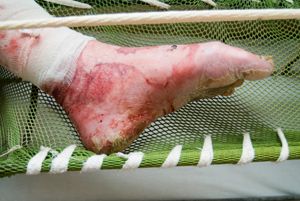
 Toxic Epidermal Necrolysis (TEN) is also known as “skin death” or Lyell’s Syndrome. While it’s relatively rare, it’s not as rare as you may think. It is almost exclusively caused by medication, TEN often starts as Stevens Johnson Syndrome (SJS), a severe allergic skin reaction. SJS transitions to TEN when more than 30 percent of the skin is infected— and this can happen in just a few hours.
In the SJS stage, the attack often looks like a poison oak rash and, since many doctors have never seen SJS or TEN in person, it’s often misdiagnosed, which can be a deadly mistake. A number of medications have been linked to TEN including certain anti-seizure medications, which a number of young children suffering from epilepsy take, to something as minor as an over the counter painkiller. TEN is deadly, and there’s no cure for it. The only hope victims have is to get the medical attention they need, almost always in burn units, and that the symptoms can be treated well enough until the skin can heal itself.
With TEN, the top layer of the skin, or the epidermis, begins to detach from the lower layers. TEN victims say that it feels like their body is being burned from the inside out, and the skin sloughs off in layers. Not only is this incredibly painful, it also opens the body up completely for infection. In order to protect against infection as much as possible, regular showers in the hospital are required—which is, of course, excruciating.
Experts are divided on whether or not TEN is part of “erythema multiforme” or not, but one thing is certain: If a person’s SJS worsens into TEN, their life is on the line. There have been incidents of death from TEN caused by medication, which is at the core of class action lawsuits involving a number of medications. Even if a person survives TEN, it’s often not without permanent damage and/or disfigurement. Blindness is especially common, since blisters usually gather in wet regions and the scarring left behind can be severe.
TEN can impact any part of the body, but the blisters are particularly attracted to mucous membranes. Along with the eyes, the mouth and groin are also “hot spots” for TEN. Prior to full-blown TEN, victims often have feverish symptoms for one to two weeks prior.
A lot of the time, these symptoms mimic a common upper respiratory tract infection, and patients are sent home from doctor’s offices and ER without any further exploration. When the TEN rash appears, it’s often warm, red and unassuming. Next, the dermal layer of the skin begins holing fluid, and this is the blistering stage of the process. Saggy skin is the last red flag before it behind to peel away in large pieces. The blisters in the mouth begin to erode, and eating becomes impossible. Tubal feedings are the norm for hospitalized TEN patients. The blisters in the eyes turn to ulcers, and many patients are unable to see by this point, even if they survive with some or all of their vision intact by the time this ordeal is complete.
Needless to say, the number of lawsuits from TEN are growing each month. Victims say that the medications they were prescribed or bought over the counter never warned of TEN or even of SJS. Most people don’t know what these issues are unless they or someone they know has been impacted. However, there are countless YouTube videos and testimonials detailing the excruciating reality of TEN.
Anyone can be impacted at any time. Just because a person has safely taken a medication before, even for years, doesn’t mean they’re immune from getting TEN from it. However, most cases of TEN happen in the first few weeks or months of starting a new medication. It’s easy to accept a doctors dismissal of a red flag as “just a rash,” but a few hours can mean the different between life and death, especially in young children. Overall, 95 percent of TEN cases are caused by a medication.
Antibiotics, such as the popular Z-Pak, are most often to blame which is troublesome. Many doctors say that antibiotics in general are over-prescribed, and a number of people can probably say they’ve taken an antibiotic in the past two years. They’re prescribed for everything from an ear infection to pneumonia, and there’s no telling when an antibiotic will bring on a TEN attack.
If a person is already suffering a fever and other painful symptoms from an infection, it becomes even easier to dismiss TEN symptoms as par for the course. Like any attack, catching it early is key but with TEN, that becomes tricky. Just a few hours can make the difference between SJS and TEN, and by then it could be too late. Particularly for those in rural areas or with limited access to healthcare professionals and the latest equipment, TEN can easily kill.
Those Most at Risk for Toxic Epidermal Necrolysis
There are a number of class action lawsuits due to medications causing TEN and SJS. However, the most common include nonsteroidal anti-inflammatory drugs, corticosteroids, anticonvulsants, antimetabolits, and allopurinol. In rare cases, TEN can be caused from herpes and bone marrow/organ transplants, but that’s usually not the cases. At its core, TEN leads to cell death via the epidermis. The keratinocytes (cells found in the lowest level of the skin and with the job of holding skin cells together) dies when TEN happens.
Once a person is correctly diagnosed with TEN, they’re usually sent to a burn or intensive care unit. Next, intravenous immunoglobulin (IVIG) is administered. Finally, a third action is made which may include cyclosporine or plasmapheresis. Death occurs in 30-40 percent of patients with TEN, but there’s a much higher chance of survival if SJS never worsens to TEN. Fungi and bacteria can easily attack when the skin isn’t there to protect the body, and most people die from infection or respiratory distress from pneumonia.
In general, SJS lawsuits are filed individually by each plaintiff and are not class actions.
Do YOU have a legal claim? Fill out the form on this page now for a free, immediate, and confidential case evaluation. The attorneys who work with Top Class Actions will contact you if you qualify to let you know if an individual lawsuit or class action lawsuit is best for you. Hurry — statutes of limitations may apply.
ATTORNEY ADVERTISING
Top Class Actions is a Proud Member of the American Bar Association
LEGAL INFORMATION IS NOT LEGAL ADVICE
Top Class Actions Legal Statement
©2008 – 2026 Top Class Actions® LLC
Various Trademarks held by their respective owners
This website is not intended for viewing or usage by European Union citizens.
Get Help – It’s Free
Help for Victims of Stevens Johnson Syndrome
If you or a loved one were diagnosed with Stevens Johnson Syndrome (SJS) or toxic epidermal necrolysis (TEN) after taking a prescribed or over-the-counter medication, you may be eligible to take legal action against the drug’s manufacturer. Filing an SJS lawsuit or class action lawsuit may help you obtain compensation for medical bills, pain and suffering, and other damages. Obtain a free and confidential review of your case by filling out the form below.
An attorney will contact you if you qualify to discuss the details of your potential case at no charge to you.
Oops! We could not locate your form.










One thought on What is Toxic Epidermal Necrolysis?