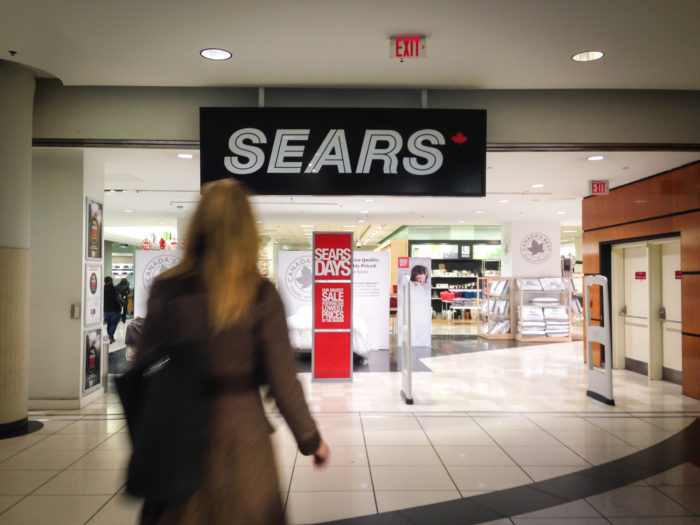
 Sears has been hit with a class action lawsuit alleging the beleaguered retail chain violated the Telephone Consumer Protection Act (TCPA) when it used an auto dialer to make prerecorded calls to consumers.
Lead plaintiff Erendira Ramirez claims in the Sears TCPA class action lawsuit that she and others received prerecorded messages from the company.
The plaintiff says that Sears places these calls using an auto dialer that dials incorrect or reassigned phone numbers.
According to the Sears TCPA class action lawsuit, the plaintiff began receiving prerecorded messages from the retail chain in 2018.
She says that the calls were not meant for her, regarding automatic subscriptions she had not signed up for, even though she has had the same cell phone number since 2015.
“On June 4, 2018, Plaintiff called [Sears] for the purpose of informing Defendant that it was calling the wrong number and to stop calling,” alleges the Sears TCPA class action lawsuit. “However, Plaintiff was unable to do so as she was placed on hold and, despite waiting for seven minutes, was not transferred to a live operator.”
The plaintiff accuses Sears of using a “complex set of algorithms” to auto dial consumers’ phone numbers in violation of the TCPA. Ramirez says that the calls she received were a nuisance and an invasion of privacy since she is not a Sears customer.
“As well, Defendant’s calls at issue unnecessarily tied up Plaintiff’s cellular telephone line,” alleges the Sears TCPA class action lawsuit.
The TCPA was put into place by the federal government in the 1990s to protect consumers from unwanted or harassing advertising calls. The Act also includes fax communications and set up the Do Not Call Registry. Further, the TCPA was extended to include spam or unwanted text communications.
Violations of the TCPA can lead to steep fines – from $500 to $1,500 per violation that is discovered.
“Defendant, as a matter of pattern and practice, uses an automatic telephone dialing system or an artificial or prerecorded voice to place calls to telephone numbers assigned to a cellular telephone service, absent prior express consent,” alleges the Sears class action lawsuit.
The Sears TCPA class action lawsuit seeks to represent a nationwide Class of consumers who received a cell phone call from the retail chain.
The call must have been generated by an auto dialer and must have contained a prerecorded message that the recipient of the message did not agree to, and the call must have occurred in the past four years.
According to the Sears class action lawsuit, a trial by jury is appropriate. The plaintiff is seeking damages, as well as a court order stopping Sears from auto dialing and sending prerecorded messages to cell phones.
Ramirez is represented by Michael L. Greenwald of Greenwald Davidson Radbil PLLC.
The Sears TCPA Class Action Lawsuit is Erendira Ramirez v. Sears Brands LLC, Case No. 2:18-cv-01763-GMS, in the U.S. District Court for the District of Arizona.
Join a Free TCPA Class Action Lawsuit Investigation
If you were contacted on your cell phone by a company via an unsolicited text message (text spam) or prerecorded voice message (robocall), you may be eligible for compensation under the Telephone Consumer Protection Act.
GET A FREE CASE EVALUATION NOW
ATTORNEY ADVERTISING
Top Class Actions is a Proud Member of the American Bar Association
LEGAL INFORMATION IS NOT LEGAL ADVICE
Top Class Actions Legal Statement
©2008 – 2026 Top Class Actions® LLC
Various Trademarks held by their respective owners
This website is not intended for viewing or usage by European Union citizens.

Suing for unpaid wages in California: Recover unpaid overtime, back pay and more
April 2, 2026 | Legal News