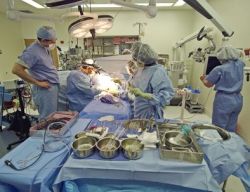
 A morcellation cancer lawsuit was filed against Karl Storz, a manufacturer of power morcellators.
The morcellation cancer lawsuit claims that the power morcellator used for a laparoscopic surgery caused a woman to develop cancer. This is one of many morcellation cancer lawsuits that has been filed against Storz and other manufacturers.
Plaintiff Linda B. from New York underwent a laparoscopic, supracervical hysterectomy, with a power morcellator, on Aug. 30, 2011. One month later, she was diagnosed with leiomyosarcoma, a dangerous form of cancer, according to her morcellation cancer lawsuit.
The morcellation cancer lawsuit claims that “there was not evidence of disseminated and/or metastatic cancer/disease,” before the morcellation surgery. The plaintiff is undergoing treatment.
The morcellation cancer lawsuit alleges the company was aware of the risk of morcellation cancer before Linda underwent surgery.
The morcellation cancer lawsuit claims that Storz put “products used for uterine morcellation such as the Storz Rotocut G1 morcellator on the market without first conducting adequate testing to determine possible side effects.” The plaintiff also states that Storz failed to adequately warn users and the medical community about possible cancer side effects.
Linda accuses the power morcellator manufacturer of negligence, product liability, breach of express and implied warranty, and fraudulent misrepresentation and omission.
Morcellation Cancer Dangers
Women who have undergone surgery in order to remove fibroids, their uterus, ovaries, or fallopian tubes with a power morcellator may be at risk of developing cancer.
The power morcellator enters the body through an insert in the abdomen. It is supposed to be less invasive and have a faster recovery time than the traditional hysterectomy and other similar surgeries. However, as the power morcellator cuts up the tissue that is going to be removed, it may spread preexisting uterine sarcoma throughout the abdomen.
Thousands of women undergo fibroid removal surgery every year, in addition to the number of women who undergo hysterectomies or oophorectomies. There is currently no efficient way to determine if a woman has uterine sarcoma before undergoing power morcellation surgery. Therefore, the U.S. Food and Drug Adminisration issued a warning in April 2014 suggesting that power morcellators not be used for uterine fibroid removal surgery.
One in 350 women reportedly may have undetected uterine sarcoma before undergoing a hysterectomy or myomectomy.
Other manufacturers under investigation in morcellation cancer lawsuits include Ethicon and Blue Endo. Morcellation cancer lawsuits have claimed that manufacturers failed to adequately study power morcellators before releasing them.
Plaintiffs seek compensation for medical expenses, lost wages, pain and suffering, and more.
This Morcellation Cancer Lawsuit is Case No. 3:14-cv-01024, in the U.S. District Court for the Northern District of New York.
Do YOU have a legal claim? Fill out the form on this page now for a free, immediate, and confidential case evaluation. The morcellation cancer attorneys who work with Top Class Actions will contact you if you qualify to let you know if an individual lawsuit or class action lawsuit is best for you. [In general, morcellator cancer lawsuits are filed individually by each plaintiff and are not class actions.] Hurry — statutes of limitations may apply.
ATTORNEY ADVERTISING
Top Class Actions is a Proud Member of the American Bar Association
LEGAL INFORMATION IS NOT LEGAL ADVICE
Top Class Actions Legal Statement
©2008 – 2026 Top Class Actions® LLC
Various Trademarks held by their respective owners
This website is not intended for viewing or usage by European Union citizens.
Get Help – It’s Free
Join a Free Morcellation Cancer Class Action Lawsuit Investigation
If you or a loved one were diagnosed with cancer in the uterus, pelvis or abdomen within two years of undergoing surgery for a myomectomy (removal of fibroids), hysterectomy (removal of the uterus), oophorectomy (removal of the ovaries), or salpingectomy (removal of fallopian tubes), you may have a legal claim. See if you qualify by filling out the short form below.
An attorney will contact you if you qualify to discuss the details of your potential case at no charge to you.
Oops! We could not locate your form.