 The FDA is leaning on hospitals to fulfill their reporting requirements in cases of morcellator cancer and other medical device problems.
The agency maintains a reporting system to keep track of problems that come up during the use of medical devices.
Hospitals are required to lodge reports with this system every time a problem with a medical device leads to serious injury or death.
But hospitals apparently aren’t complying with their reporting requirements as much as they should.
The FDA says the lack of required reporting about instances of morcellator cancer is an illustrative example.
Morcellator Cancer
Power morcellators are medical devices used during laparoscopic surgery to cut up larger pieces of tissue. Once the tissue is in smaller pieces, it can be removed through a smaller incision.
Use of a power morcellator has allowed patients to enjoy the benefits of laparoscopic surgery when they undergo procedures that may otherwise have had to employ open abdominal surgery.
Laparoscopic surgery uses smaller incisions and is generally less invasive, so patients tend to have less bleeding, shorter recovery time, and reduced risk of infection.
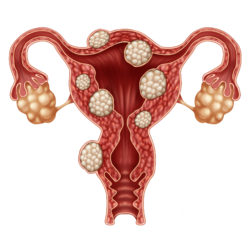
The problem that has made power morcellators so controversial comes up in gynecological surgery used to remove uterine fibroids.
By the FDA’s estimate, one in 350 women who undergo uterine fibroid surgery have a type of uterine cancer that goes undiscovered before the surgery begins.
For those patients, use of a power morcellator creates a risk that the cancerous tissue will be cut up and spread elsewhere in the abdomen, causing the cancer to spread and advance rapidly.
The resulting aggravated cancer tends to be harder to treat and may significantly reduce the patient’s odds of survival.
FDA Seeks Better Reporting from Hospitals
The FDA is now seeking to modernize its reporting system so that instances of medical device problems are more likely to show up on the agency’s radar.
According to the FDA, hospitals didn’t begin reporting morcellator cancer until after the problem started to get publicity. The FDA responded by launching an investigation into hospitals’ reporting practices, which ended up revealing multiple reporting problems at several different hospitals.
In one example, the FDA said Brigham and Women’s Hospital in Boston failed to report a 2012 case in which a woman died from cancer after undergoing surgery using a power morcellator.
The same thing happened to another Brigham and Women’s patient the next year. The hospital acknowledged that second occurrence – but not without some effort by the patient, Amy Reed. She has since become a vociferous activist advocating against the use of morcellation in fibroid surgery.
The FDA issued formal alerts about the risk of morcellator cancer in April and November 2014. The agency strongly advised doctors and patients to avoid the use of power morcellation for fibroid removal in all but a few very specific cases.
Since then, the use of power morcellators in gynecological surgery has decreased dramatically, according to one study.
Johnson & Johnson, whose Ethicon unit produced a large share of the power morcellators on the market, went so far as to pull its morcellators from the market entirely.
Do YOU have a legal claim? Fill out the form on this page now for a free, immediate, and confidential case evaluation. The morcellation cancer attorneys who work with Top Class Actions will contact you if you qualify to let you know if an individual lawsuit or class action lawsuit is best for you. [In general, morcellator cancer lawsuits are filed individually by each plaintiff and are not class actions.] Hurry — statutes of limitations may apply.
ATTORNEY ADVERTISING
Top Class Actions is a Proud Member of the American Bar Association
LEGAL INFORMATION IS NOT LEGAL ADVICE
Top Class Actions Legal Statement
©2008 – 2026 Top Class Actions® LLC
Various Trademarks held by their respective owners
This website is not intended for viewing or usage by European Union citizens.
Get Help – It’s Free
Join a Free Morcellation Cancer Class Action Lawsuit Investigation
If you or a loved one were diagnosed with cancer in the uterus, pelvis or abdomen within two years of undergoing surgery for a myomectomy (removal of fibroids), hysterectomy (removal of the uterus), oophorectomy (removal of the ovaries), or salpingectomy (removal of fallopian tubes), you may have a legal claim. See if you qualify by filling out the short form below.
An attorney will contact you if you qualify to discuss the details of your potential case at no charge to you.
Please Note: If you want to participate in this investigation, it is imperative that you reply to the law firm if they call or email you. Failing to do so may result in you not getting signed up as a client, if you qualify, or getting you dropped as a client.
Oops! We could not locate your form.