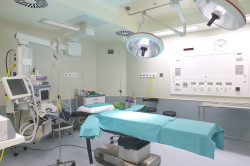
 Many health professionals have become concerned in recent years about the safety of a medical device called a power morcellator.
Doctors and patients alike are worried about the power morcellation cancer risk associated with the device.
What is a Power Morcellator?
When a surgeon uses a power morcellator in a gynecological procedure, it is generally used laparoscopically. Women opt for morcellation procedures for minimally invasive hysterectomies or the removal of uterine fibroids.
The device is inserted into the abdominal cavity. The device chops up the offending tissue and removes it from the body. There is less time in the operating room, less blood lost and a shorter recovery time for patients.
However, there is serious morcellation cancer risk among women who opt for this type of procedure.
Morcellation Cancer Risk
When a patient undergoes morcellation surgery, tiny bits of tissue are disseminated around the abdominal cavity. If this tissue is benign, there can still be problems.
Those bits of tissue can latch on to other organs and seed new growth.
The real problem for morcellation cancer risk comes when the tissue being morcellated is cancerous. Uterine cancer is extremely hard to detect and most patients do not know they have it in its early stages.
If a patient with undetected uterine cancer undergoes a morcellation procedure, those cancerous cells can be disseminated all throughout the body. What was once a slow moving, undetected cancer has now become a quickly growing, aggressive leiomyosarcoma.
Estimates say that one in 350 women who undergo a uterine fibroid morcellation surgery may have undiagnosed sarcoma and are at risk of developing leiomyosarcoma.
Causes and Symptoms of Uterine Cancer
The fourth most common cancer, uterine cancer occurs when cells within the uterus begin to grow abnormally. These cells multiply rapidly and form tumors in the uterus.
Most uterine cancers occur in the endometrium. This type of cancer is highly curable.
But some types occur on the muscular outer lining of the uterus. These cancers are called sarcomas. These are aggressive in nature and are very hard to detect.
Uterine leiomyosarcoma usually occurs in women between the ages of 40 and 60 and only accounts for 1% of patients with uterine cancer. But these tumors have the propensity to metastasize and 70% of patients, even with surgery, see a recurrence within 16 months.
Morcellation procedures can upstage any undetected uterine cancers. This can take a cancer in stage one and move it stage four very quickly.
Some symptoms of upstaged uterine cancer after morcellation are:
- Vaginal bleeding or spotting, between periods or especially after menopause
- Vaginal discharge
- Pelvic or abdominal pain or a mass
- Pelvic or abdominal swelling
- Weight loss
- Nausea or vomiting
The morcellation cancer risk is very serious and doctors are now being urged to stop using the device. The morcellation cancer risk is too high for the medical community to continue using power morcellators for hysterectomies and fibroid removals.
Do YOU have a legal claim? Fill out the form on this page now for a free, immediate, and confidential case evaluation. The morcellation cancer attorneys who work with Top Class Actions will contact you if you qualify to let you know if an individual lawsuit or class action lawsuit is best for you. [In general, morcellator cancer lawsuits are filed individually by each plaintiff and are not class actions.] Hurry — statutes of limitations may apply.
ATTORNEY ADVERTISING
Top Class Actions is a Proud Member of the American Bar Association
LEGAL INFORMATION IS NOT LEGAL ADVICE
Top Class Actions Legal Statement
©2008 – 2026 Top Class Actions® LLC
Various Trademarks held by their respective owners
This website is not intended for viewing or usage by European Union citizens.
Get Help – It’s Free
Join a Free Morcellation Cancer Class Action Lawsuit Investigation
If you or a loved one were diagnosed with cancer in the uterus, pelvis or abdomen within two years of undergoing surgery for a myomectomy (removal of fibroids), hysterectomy (removal of the uterus), oophorectomy (removal of the ovaries), or salpingectomy (removal of fallopian tubes), you may have a legal claim. See if you qualify by filling out the short form below.
An attorney will contact you if you qualify to discuss the details of your potential case at no charge to you.
Please Note: If you want to participate in this investigation, it is imperative that you reply to the law firm if they call or email you. Failing to do so may result in you not getting signed up as a client, if you qualify, or getting you dropped as a client.
Oops! We could not locate your form.