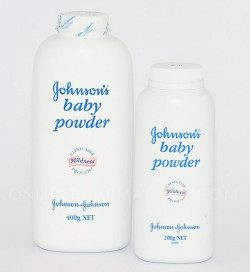
 A baby powder cancer lawsuit was filed against Johnson & Johnson, alleging an Illinois woman developed ovarian cancer after two decades of using Johnson’s baby powder as part of her personal hygiene routine.
Like the hundreds of other Johnson baby powder cancer lawsuits currently in litigation, the plaintiff claims J&J was aware of the link between ovarian cancer and talcum powder for years, but did not take steps to warn consumers through product labeling.
Plaintiff Lynee C. claims she has been a faithful consumer of J&J’s talcum powder product since 1992 when she began using Johnson’s Baby Powder for feminine hygiene purposes, such as applying the powder to the genital area to abate unpleasant odors and reduce friction. However, according to the baby powder cancer lawsuit, she was diagnosed with ovarian cancer in May 2012, which she alleges is directly linked to her use of J&J’s baby powder.
Lynee alleges that had she known about the risk of ovarian cancer to women when using talcum powder for personal hygiene, she would not have bought or used Johnson’s baby powder. The plaintiff further alleges that J&J had a responsibility to alert consumers and healthcare providers of the research linking talcum powder with an increased risk of ovarian cancer.
In this baby powder cancer lawsuit, the plaintiff alleges negligence, misrepresentation, false advertising, among others. She is seeking approximately $350,000 worth of damages in this personal injury case.
The Baby Powder Cancer Lawsuit is Case No. 3:2014cv00627, in the St. Clair County Circuit Court for the Southern District of Illinois.
History of Johnson Baby Powder Cancer
In 1893, Johnson & Johnson began manufacturing the now household staple Johnson’s Baby Powder.
In addition to using the product on the skin to maintain a soft and clean feeling, J&J also marketed the baby powder as an effective method of masking odors in the genital area. In its baby powder marketing and advertisements, J&J claimed that Johnson’s Baby powder was “intended to eliminate friction on the skin and to absorb unwanted excess moisture for both babies and women,” when applied to the genital area.
However, as early as 1960s, researchers became concerned with talcum powder side effects, particularly an increasing rate of ovarian cancer.
A 1971 research study demonstrated strong evidence for the hypothesis linking baby powder and ovarian cancer. According to the research, talc particles are prone to migrate from the site of application on the genitals to a woman’s ovaries. This study also showed how 10 out of 13 ovarian tumors held deeply embedded talc particles, suggesting that talc powder could increase a woman’s chances of ovarian cancer.
Hundreds of women have filed baby powder cancer lawsuits or have joined baby powder cancer class action lawsuits to pursue claims of personal injury stemming from use of Johnson’s Baby Powder and other similar products.
Do YOU have a legal claim? Fill out the form on this page now for a free, immediate, and confidential case evaluation. The attorneys who work with Top Class Actions will contact you if you qualify to let you know if an individual lawsuit or class action lawsuit is best for you. [In general, baby powder cancer lawsuits are filed individually by each plaintiff and are not class actions.] Hurry — statutes of limitations may apply.
ATTORNEY ADVERTISING
Top Class Actions is a Proud Member of the American Bar Association
LEGAL INFORMATION IS NOT LEGAL ADVICE
Top Class Actions Legal Statement
©2008 – 2026 Top Class Actions® LLC
Various Trademarks held by their respective owners
This website is not intended for viewing or usage by European Union citizens.
Get Help – It’s Free
Join a Free Baby Powder Cancer Class Action Lawsuit Investigation
If you used Johnson’s Baby Powder, Shower to Shower, or another talcum powder product and were diagnosed with ovarian cancer, you may have a legal claim. Family members of loved ones who died of ovarian cancer can also join. Submit your information now for a free case evaluation.
An attorney will contact you if you qualify to discuss the details of your potential case at no charge to you.