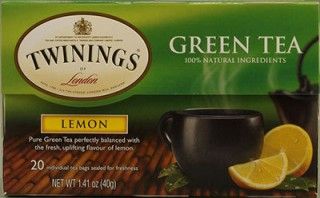
 An Arkansas federal judge has dismissed a false advertising class action lawsuit Thursday filed against Twinings North America, Inc. saying that the tea maker does not make a nutrient claim according to federal law, and coffee and tea are not subject to the same requirements as other food and beverage products.
U.S. District Judge Timothy Brooks dismissed the Twinings class action lawsuit with prejudice, meaning that plaintiff Jenny Craig cannot refile an amended class action lawsuit.
Craig filed the false advertising class action lawsuit against Twinings in an Arkansas state court in May 22. The class action lawsuit was transferred to the Arkansas federal court in July 2014.
Craig alleges that Twinings’ statement on it labels and in marketing materials that its teas are “a natural source of antioxidants” constitutes false advertising because the “teas do not meet the minimum nutrient level threshold to make such a claim which is 10 percent or more of the Reference Daily Intake (RDI) or the Daily Reference Value (DRV) of a nutrient with a recognized RDI per reference amount customarily consumed.”
Because of this alleged false advertising, Craig says that Twinings was able to charge premium prices for its teas. She claims that because of the deceptive marketing that the teas are illegally sold, saying that “misbranded food has no economic value.” And if she had known the teas were “midbranded,” she never would have bought Twinings teas.
Craig charged Twinings with violating the Arkansas Deceptive Trade Practices Act, unjust enrichment, breach of implied warranty of merchantibility, breach of express warranty, and negligence — all of which are “entirely based upon violations of the Arkansas Food, Drug, and Cosmetic Act.”
While Craig has argued that her class action lawsuit doesn’t state claims according to the federal Food, Drug and Cosmetic Act (FDCA), which gives authority and oversight to the Food and Drug Administration (FDA) to regulate food, drug and cosmetic safety, Judge Brooks explains that the U.S. Supreme Court has concluded that where state and federal law are in conflict, the federal law takes precedent.
“Because Craig’s allegations do not violate the FDCA, any related state law claims arising from the same facts are preempted,” the Arkansas federal judge wrote.
“Even if Twinings’ labels contain nutrient-content claims, the product labels do not violate the FDA’s labeling requirements because they do not characterize the level of antioxidants,” he added.
Judge Brooks says that the statement that the teas provide “a natural source of antioxidants” . . . does not characterize the level of the antioxidants, and thus are not nutrient-content claims as defined in” the FDCA.
In addition, “the generic phrase ‘natural source of antioxidants’ does not appear to be either an express or implied nutrient-content claim,” the Arkansas federal judge said. “Express claims are those that make a ‘direct statement about the level (or range of a nutrient in the food, e.g. ‘low sodium’ or ‘contains 100 calories.’
“Implied nutrient-content claims are those that describe a food or an ingredient in a manner that suggests that a nutrient is absent or present in a certain amount (e.g., ‘high in oat bran’); or suggests that the food, because of its nutrient content, may be useful in maintaining healthy dietary practices and is made in association with an explicit claim or statement about a nutrient,” he explains further about the Twinings class action lawsuit.
In the case of the Twinings statement about the being a “natural source of antioxidants” — it “does not fall under either category, as it does not make an explicit claim or statement regarding antioxidants.”
In addition, Judge Brooks says that “tea and coffee are exempt from certain labeling requirements if they “contain insignificant amounts” of nutrients listed in Arkansas Food, Drug and Cosmetic Act, if “the food bears no nutrition claims or other nutrition information in any context on the label or in labeling or advertising.” And in this case “antioxidants are not listed in the nutrients required to be on the label.”
The Arkansas federal judge concludes that the antioxidant claims on the Twinings tea labels are “not false or misleading as a matter law.”
Twinnings has been hit with other false advertising class action lawsuits over the antioxidant statements on its labels.
A California federal judge granted class certification to a Twinings class action lawsuit in April 2014, but he said that the class may only seek injunctive or declaratory relief not monetary damages.
Another Twinings false advertising class action lawsuit was filed in November 2014 making similar claims in a Massachusetts federal court.
Twinings North America Inc. is represented by Kevin A. Crass and R. Christopher Lawson of Friday Eldredge & Clark LLP and David L. Wallace and Michael R. Kelly of Herbert Smith Freehills NY LLP.
The plaintiff is represented by Kenneth R. Shemin of the Shemin Law Firm PLLC and Thomas P. Thrash and Marcus Neil Bozeman of Thrash Law Firm PA.
The Twinings False Advertising Class Action Lawsuit is Craig v. Twinings North America, Inc., Case No. 5:14-cv-05214, in the U.S. District Court for the Western District of Arkansas.
ATTORNEY ADVERTISING
Top Class Actions is a Proud Member of the American Bar Association
LEGAL INFORMATION IS NOT LEGAL ADVICE
Top Class Actions Legal Statement
©2008 – 2026 Top Class Actions® LLC
Various Trademarks held by their respective owners
This website is not intended for viewing or usage by European Union citizens.

Suing for unpaid wages in California: Recover unpaid overtime, back pay and more
April 2, 2026 | Legal News