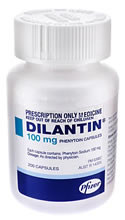
 Manufactured by Pfizer, Dilantin (phenytoin) is the most commonly prescribed anti-epileptic drug for adults.
Approved by the U.S. Food and Drug Administration (FDA) in 2001 to manage seizures, phenytoin has the potential to increase the risk of developing Stevens Johnson Syndrome (SJS) in its users.
Over the years, more than 100 Dilantin lawsuits have been filed against Pfizer, and phenytoin manufacturers Mylan Pharmaceuticals and Baxter Healthcare, saying that the companies knew of the risks of Dilantin/phenytoin, but never informed the public of the danger.
The lawsuits point out adverse event reports submitted to the FDA, Health Canada, and the World Health Organization describing severe skin reactions caused by the drug. Moreover, the FDA released an announcement in 2008 detailing the SJS risks.
One of the largest cases was in 2011, when Amber, the mother of a New York boy who died in 2009, sued Pfizer Inc. for $10 million over Dilantin. Her son, who was undergoing radiation therapy for a brain tumor, was taking Dilantin to prevent seizures. He was also taking Zithromax and Diflucan.
The combination of drugs, she alleged, was behind her son’s SJS attack, which then became toxic epidermal necrolysis (TEN). Amber alleged the condition shortened her son’s life and resulted in his “spending the last period of his life in constant pain.” He was only 7 when he died.
His mother, like many others, accused Pfizer of failing to warn about Dilantin’s side effects and connection with SJS. Lawsuits claim that Pfizer knew about the dangerous side effects of Dilantin, but still marketed the drug without accurately warning doctors and patients about all of the side effects.
And there are a number of other side effects. Dilantin side effects can include confusion, nausea and vomiting, headaches, slurred speech and slowed thinking. Stevens Johnson Syndrome, however, is one of the more severe reactions from Dilantin, and behind most of the Dilantin lawsuits.
What is Stevens Johnson Syndrome?
SJS is an autoimmune disease, but showcases as an allergic reaction. Induced by various medications, especially Dilantin, the reaction causes the body to attack its own skin. In rare cases, it expresses as toxic epidermal necrolysis (TEN).
When a person suffers SJS, it’s both painful and debilitating. With warning signs of flu-like symptoms, followed by a red rash, SJS attacks the mucous membranes, like the skin and inside the mouth. Blisters and lesions spread over the skin, and can also impact the eyes.
As it spreads, the skin soon begins separating from the body. If allowed to progress, SJS can become TEN. With TEN, the skin suffers a reaction similar to second- and third-degree burns that can impact up to 90 percent of the body.
Because of their severity, SJS and TEN are treated in the hospital burn unit with constant monitoring and painful cleanings as the body attempts to heal. Both can prove fatal.
A study compiled by 15 U.S. burn centers revealed that more than 20 percent of TEN cases are believed to be due to Dilantin, with deaths reported in approximately one out of four.
Do YOU have a legal claim? Fill out the form on this page now for a free, immediate, and confidential case evaluation. The SJS attorneys who work with Top Class Actions will contact you if you qualify to let you know if an individual lawsuit or Dilantin class action lawsuit is best for you. [In general, Dilantin lawsuits are filed individually by each plaintiff and are not class actions.] Hurry — statutes of limitations may apply.
ATTORNEY ADVERTISING
Top Class Actions is a Proud Member of the American Bar Association
LEGAL INFORMATION IS NOT LEGAL ADVICE
Top Class Actions Legal Statement
©2008 – 2026 Top Class Actions® LLC
Various Trademarks held by their respective owners
This website is not intended for viewing or usage by European Union citizens.
Get Help – It’s Free
Help for Victims of Stevens Johnson Syndrome
If you or a loved one were diagnosed with Stevens Johnson Syndrome (SJS) or toxic epidermal necrolysis (TEN) after taking a prescribed or over-the-counter medication, you may be eligible to take legal action against the drug’s manufacturer. Filing an SJS lawsuit or class action lawsuit may help you obtain compensation for medical bills, pain and suffering, and other damages. Obtain a free and confidential review of your case by filling out the form below.
An attorney will contact you if you qualify to discuss the details of your potential case at no charge to you.
Oops! We could not locate your form.