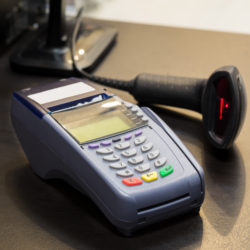
 Since the enactment of the Fair and Accurate Credit Transaction Act, or FACTA, all debit card and credit card receipts issued must be FACTA compliant in order to protect consumers from identity theft.
Most consumers are aware that under FACTA, each year they are able to obtain a free credit report from the three main nationwide credit companies, Trans Union, Experian and Equifax. However, consumers may not all be aware that FACTA also governs what information may appear on a consumer’s credit card or debit card receipt.
The part of the law focused on producing a FACTA compliant receipt was gradually phased in over a period of a few years, with complete compliance required as of December 2006.
Prior to the enactment of FACTA, receipts could include the entire debit card or credit count card account number as well as the expiration date for consumer cards. Left in the wrong hands, all of this information that could appear on receipts became easy targets for identity thieves to use the information to take a consumer’s identity, charge large amounts and create false consumer accounts.
FACTA introduced the truncation requirements in the legislation and all businesses are required to be FACTA compliant when they issue a receipt to a consumer that is electronically printed.
Is Your Receipt FACTA Compliant?
In order to be FACTA compliant, a credit card or debit card receipt that is electronically issued must follow the following guidelines:
- No more than the last five digits of the credit card or debit card account number may appear on the receipt
- No part of the card’s expiration date maybe printed on the receipt
If a business’s receipt is found to not be FACTA compliant, penalties may be assessed. This not only applies to large corporations, it also applies to small “mom and pop” shops.
The only receipts that do not have to be FACTA compliant are those that are handwritten and those that are imprinted with credit card information directly from a customer’s card. Additionally, records kept by the business and not given to a consumer do not have to have truncated consumer information.
If a business has been found to violate FACTA, consumers may bring lawsuits against the business and law enforcement actions could result by the Federal Trade Commission. Provisions of FACTA are enforced with awards of $100-$1000 for statutory damages when a business is found in willful violation of FACTA. Additional damages and attorneys’ fees may also be awarded.
As one can imagine, if a class action lawsuit is filed against a company who was not FACTA compliant, the amount of damages a business may sustain could be very substantial.
A recent class action lawsuit settlement for FACTA noncompliance involved Subway restaurants. The plaintiff on behalf of the class stated that the receipt listed the last four digits of his credit card and included the expiration date. The settlement was reached for $31 million.
Among many other settlements over receipts that were not FACTA compliant include a Jimmy Choo settlement for $2.5 million and Godiva for $6.3 million.
Consumers should check their receipts to make sure they are in fact FACTA compliant. If not, be sure to save the receipt and contact an attorney for a free case consultation to see if you may be able to take legal action.
Free FACTA Class Action Lawsuit Investigation
If you made one or more purchases and the retailer provided you with a receipt that contained more than the last five digits of your credit or debit card number or the expiration date, you may be eligible for a free class action lawsuit investigation and to pursue compensation for these FACTA violations.
ATTORNEY ADVERTISING
Top Class Actions is a Proud Member of the American Bar Association
LEGAL INFORMATION IS NOT LEGAL ADVICE
Top Class Actions Legal Statement
©2008 – 2026 Top Class Actions® LLC
Various Trademarks held by their respective owners
This website is not intended for viewing or usage by European Union citizens.

Suing for unpaid wages in California: Recover unpaid overtime, back pay and more
April 2, 2026 | Legal News