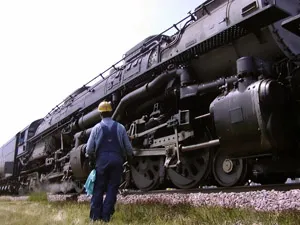
 An employee of the CSX railroad company was hospitalized recently after being injured at work, giving rise to a potential workers compensation lawsuit under the Federal Employers Liability Act (FELA).
The 63-year-old railroad employee fell from atop a slow-moving train as it passed through Wellington, Ohio, on July 2, 2015. The man was part of a crew unloading parts and equipment around the train. Firefighters from the Wellington fire department responded, finding the man had suffered a head injury without loss of consciousness. He was evacuated by air to a local hospital.
The Federal Employers Liability Act
For railroad workplace accidents like this one, the Federal Employers Liability Act (FELA) of 1908 provides for compensation. FELA sets up a workers compensation system that is specific to the U.S. rail industry. Just about any railroad workplace accident injury is covered by FELA, even for employees who don’t work on-site at railroads. The railroad employee can make his or her claim directly with the railroad. If necessary, the claimant can bring the claim as a FELA lawsuit in federal court.
FELA establishes a number of legal duties that the railroad owes its employees, the purpose of which are to prevent accidents from happening in the first place. The railroad must provide employees with a work environment that is reasonably safe, including all tools and safety equipment. The railroad is expected to actively enforce safety requirements and to inspect the work environment to make sure it stays free of hazards. Employees are entitled to adequate training and supervision to help them perform their job safely.
One major difference between FELA and most workers compensation systems is the standard of liability. Most workers compensation systems are “no fault,” meaning any workplace injury is automatically covered, and the claimant does not have to prove any fault on the employer’s part. FELA is different in that the injured worker must prove his or her injuries resulted from some negligence on the part of the employer.
Fortunately for railroad employees, the standard of negligence required to prove a FELA claim is minimal – lower than the standard in most civil negligence claims. The claimant need only prove the railroad was negligent at all and that the negligence made some contribution, no matter how small, to the claimant’s injury.
So how does a claimant show that an action (or failure to act) by a railroad company was negligent? It may help if the claimant can show the railroad’s actions violated applicable workplace safety regulations. For example, in a given claimant’s case it may be a simple matter to show that the railroad violated regulations of the Occupational Safety and Health Administration, and that the violation contributed to the claimant’s injury. In that case, the fact that the railroad violated OSHA regulations might be enough to support a finding of negligence.
Compensation under FELA, similar to that under an ordinary civil negligence lawsuit, is designed to cover all the harm resulting from the injury. This includes past and future medical expenses, lost wages and lost earning potential, and less easily measured harm such as pain and suffering. If the workplace accident results in the railroad employee’s death, that employee’s survivors (generally, the spouse, children, parents, or other close family members) can still seek compensation.
Obtain a Free Railroad Injury Case Evaluation
If you or a loved one suffered a railroad injury on the job, you may be eligible to take legal action against the employer and seek compensation for your injuries.