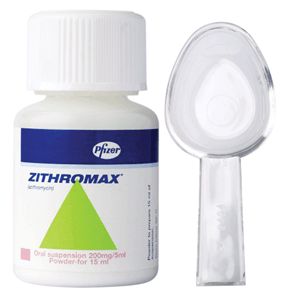
Zithromax is one of the most famous antibiotics in the U.S. pharmaceutical industry, and has been treating infections since 1992. Manufactured by Pfizer, it is prescribed to treat a variety of bacterial infections and has expanded widely in usage since its approval, now being officially approved to treat certain sexually transmitted diseases. However, as with many drugs, it carries certain side effects.
During its prime, Zithromax would earn billions on an annual basis for Pfizer; even with the release of its generic variation, it continues to earn hundreds of millions for the company. Beyond its legacy in the patient population and medical community, experts explain that the popularity of Zithromax stems from its short prescription period of five days, compared to the typical ten-day antibiotic prescription. This makes it highly popular amongst children and adults alike, as neither population groups tend to be fond of adhering to a medication schedule.
Unfortunately, Zithromax’s popularity has endured several problems over the years, with numerous injury reports indicating serious Zithromax side effects. One such side effect is the infamous skin reaction, Stevens Johnson Syndrome (SJS), which can be fatal if not properly diagnosed. This condition is characterized by the red or purple skin lesions that appear on the patient’s skin, which can later detach and make the skin appear to “melt off.” It is an extremely rare condition that is specifically caused by adverse allergic reactions to one or more medications.
There are numerous uncertainties surrounding Stevens Johnson Syndrome, from the medications that allegedly induce the reaction to the patients it strikes. It is currently unknown as to why Stevens Johnson Syndrome only occurs in some patients, but experts believe it has to due with history of medication sensitivity and certain genetic weaknesses. Additionally, patients who have suffered Stevens Johnson Syndrome are more likely to suffer this condition again, compared to patients who have not suffered this condition at all.
Overview of Zithromax SJS Complications
There are approximately 300 cases of Stevens Johnson Syndrome diagnosed per year in the United States, which is very little compared to the billions of people in the country. However, even with the condition’s rarity, Zithromax is one of the most commonly-reported medications associated with Stevens Johnson Syndrome. Every year, there are new cases of Zithromax SJS submitted to the FDA and manufacturing company, Pfizer Inc. The company remains adamant that these adverse reactions are caused by other factors, like environmental hazards, and not the drug primarily.
However, experts agree that Zithromax has been repeatedly linked to Stevens Johnson Syndrome, with numerous injury reports to prove it. A recent study conducted on the website eHealthMe analyzed 10,955 patients who were prescribed Zithromax for upper respiratory tract infections; these injury reports were submitted to the FDA and other social media sources. As of July 2, 2015, the study collected 173 Zithromax SJS injury reports, with experts expecting more reports to be submitted during the year.
It is important to note that SJS is a potentially fatal disease, as after the infected skin sloughs off it exposes the patient to possibility of infection and further complications. Other Zithromax SJS side effects include the swelling of throat, nose, and eyelids. These reactions can later result in the throat slowly closing up, and more severe complications, including permanent blindness, permanent skin damage, and internal organ damage.
While this condition is most identifiable by the skin lesions, the first signs of this condition are actually flu-like symptoms that typically occur within the first two to eight weeks of starting the medication.
Despite how often Zithromax SJS occurs, Pfizer still repeatedly denies responsibility when patients report this complication. This has resulted in several product-liability lawsuits against the company, with patients claiming that the company failed to protect them against the side effects of their product.
Do YOU have a legal claim? Fill out the form on this page now for a free, immediate, and confidential case evaluation. The Zithromax attorneys who work with Top Class Actions will contact you if you qualify to let you know if an individual lawsuit or Zithromax class action lawsuit is best for you. [In general, Zithromax lawsuits are filed individually by each plaintiff and are not class actions.] Hurry — statutes of limitations may apply.
Get Help – It’s Free
Join a Free Zithromax Class Action Lawsuit Investigation
If you or a loved one were diagnosed with liver failure, kidney failure, Stevens Johnson Syndrome or Toxic Epidermal Necrolysis after taking Zithromax, Z-Pak, Zmax or azithromycin, you may have a legal claim. See if you qualify by filling out the short form below.
A Zithromax attorney will contact you if you qualify to discuss the details of your potential case at no charge to you.
Oops! We could not locate your form.
ATTORNEY ADVERTISING
Top Class Actions is a Proud Member of the American Bar Association
LEGAL INFORMATION IS NOT LEGAL ADVICE
Top Class Actions Legal Statement
©2008 – 2026 Top Class Actions® LLC
Various Trademarks held by their respective owners
This website is not intended for viewing or usage by European Union citizens.