
Baby pow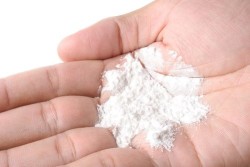 der is a common product used in personal hygiene. However, suspicions about talc powder and ovarian cancer go back decades.
Now, with a highly-publicized case ending in a $72 million award for a woman who died from ovarian cancer allegedly caused by her use of talc-based baby powder for feminine hygiene, many have begun to question if talc powder products are really safe to use.
Concerns About Baby Powder
Many baby powder products are manufactured using talc powder. A naturally-occurring mineral, talc is mainly made up of the elements magnesium, silicon, and oxygen. It’s widely used in cosmetics and personal care products to absorb moisture, cut down on friction, prevent caking, and improve the product’s feel.
In its natural form, talc can sometimes contain asbestos, which is known to cause cancers in and around the lungs when inhaled. But all talcum products sold in the U.S. have not contained asbestos since the 1970’s.
The evidence around asbestos-free talcum products and cancer risk is more unclear.
The American Cancer Society notes that research looking at the potential link between talc powder and ovarian cancer is mixed. Some studies report a slightly increased risk in women who reported using talc powder in the genital area, while other studies found no increased risk at all.
Experts say some of the studies that found a small increase in risk may not be highly accurate because they relied on a person’s memory of talc powder use many years earlier.
Baby Powder and Ovarian Cancer
Recent studies and lawsuits have brought the dangers of this popular hygiene product to light, specifically the risks of developing ovarian cancer.
In fact, the baby powder ovarian cancer risk has been documented through numerous studies dating back to 1982. When talc powder products such as baby powder are applied to the genital region, talc particles can travel through the female reproductive system to the ovaries.
Talc particles may remain in the ovaries for many years, causing inflammation and creating an environment conducive to the growth of cancer cells.
One review of data reported in the medical journal Cancer Prevention Research indicated that women who regularly use talc-based powders for feminine hygiene might increase their risk of ovarian cancer by about 41 percent and raise the risk of an ovarian tumor by 24 percent.
A follow up study in 1992 found that the use of talc containing products for feminine hygiene increases the risk of getting ovarian cancer threefold. By 2010, Harvard University researchers concluded that talc is in fact carcinogenic to humans.
As many as 10,000 women reportedly develop ovarian cancer each year as a result of baby powder use. Ovarian cancer is a serious disease and is expected to result in more than 14,000 deaths this year in the United States.
Baby Powder Lawsuits
Talc, in its purest form, has been at the center of many baby powder lawsuits filed against companies such as Johnson & Johnson. Most of these baby powder lawsuits contend that talc powder is a dangerous substance responsible for causing cancer.
If you have been diagnosed with ovarian cancer and believe that it could be due to the use of talc-based baby powder products, you should take steps to protect yourself. You can start by contacting a baby powder cancer lawyer to see if you are eligible to file a baby powder cancer lawsuit.
Do YOU have a legal claim? Fill out the form on this page now for a free, immediate, and confidential case evaluation. The attorneys who work with Top Class Actions will contact you if you qualify to let you know if an individual lawsuit or class action lawsuit is best for you. [In general, baby powder cancer lawsuits are filed individually by each plaintiff and are not class actions.] Hurry — statutes of limitations may apply.
ATTORNEY ADVERTISING
Top Class Actions is a Proud Member of the American Bar Association
LEGAL INFORMATION IS NOT LEGAL ADVICE
Top Class Actions Legal Statement
©2008 – 2026 Top Class Actions® LLC
Various Trademarks held by their respective owners
This website is not intended for viewing or usage by European Union citizens.
Get Help – It’s Free
Join a Free Baby Powder Cancer Class Action Lawsuit Investigation
If you used Johnson’s Baby Powder, Shower to Shower, or another talcum powder product and were diagnosed with ovarian cancer, you may have a legal claim. Family members of loved ones who died of ovarian cancer can also join. Submit your information now for a free case evaluation.
An attorney will contact you if you qualify to discuss the details of your potential case at no charge to you.











One thought on Can You Get Cancer From Using Baby Powder?