
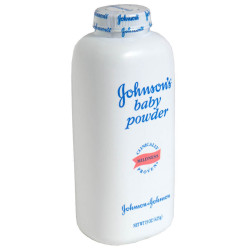
 Johnson & Johnson has been faced with several lawsuits over the past year which claim that popular Johnson & Johnson products Shower to Shower and Johnson & Johnson’s Baby Powder can lead to the development of ovarian cancer.
Plaintiffs allege that Johnson & Johnson failed to warn the public about the baby powder cancer risks that are associated with their products, which contain talcum powder (the alleged source of ovarian cancer).
Talcum Powder
Talcum powder (talc) is a powder which is intended to absorb moisture. It is a combination of magnesium, silicon, and oxygen. Talc powder was previously known to contain asbestos, a dangerous substance which can cause mesothelioma, but the asbestos was removed from the talc powder due to health concerns.
Talc powder is said to increase the risk of ovarian cancer in women who consistently use talc powder in their pelvic region by 24 percent. The Cancer Prevention Research journal suggested that women who used talc powder had a 20-30 percent chance of developing baby powder cancer. The talc particles can travel into the body and cause inflammation. Inflammation can give cancer cells the opportunity to form and grow. Sometimes, talc particles will remain in the body for years.
Various studies have suggested that talc powder has the possibility to travel throughout a woman’s genital area and reproductive system. Some found a significant increase in baby powder cancer for talc powder users while others found a smaller increase. Even if the risk of ovarian cancer is smaller than generally believed, these findings support the idea that Johnson & Johnson products should include an ovarian cancer risk warning on the label. Talc powder is still widely used in various products today.
Baby Powder Ovarian Cancer Risks
According to the American Cancer Society, nearly 22,000 women will be diagnosed with ovarian cancer in 2014 alone, with just over 14,000 fatal cases. Researchers are unsure as to how many of these ovarian cancer cases will be caused by talc powder.
Johnson & Johnson creates some of the most widely used products in the country. Nearly 40 percent of women claimed that they used baby powder after showering. This could potentially create shocking numbers of baby powder cancer. The potential risk of baby powder cancer was generally unknown for decades, risking hundreds of thousands of women who used baby powder in their pelvic region.
Johnson & Johnson was first faced with a baby powder cancer lawsuit in 2013. The plaintiff alleged that J&J failed to give adequate warning of talc-based ovarian cancer. Many other women are filing baby powder cancer lawsuits against Johnson & Johnson, and a baby powder cancer class action lawsuit investigation is underway. These baby powder lawsuits hope to hold Johnson & Johnson accountable for possibly causing baby powder cancer in many American women.
Do YOU have a legal claim? Fill out the form on this page now for a free, immediate, and confidential case evaluation. The attorneys who work with Top Class Actions will contact you if you qualify to let you know if an individual lawsuit or class action lawsuit is best for you. [In general, baby powder cancer lawsuits are filed individually by each plaintiff and are not class actions.] Hurry — statutes of limitations may apply.
ATTORNEY ADVERTISING
Top Class Actions is a Proud Member of the American Bar Association
LEGAL INFORMATION IS NOT LEGAL ADVICE
Top Class Actions Legal Statement
©2008 – 2026 Top Class Actions® LLC
Various Trademarks held by their respective owners
This website is not intended for viewing or usage by European Union citizens.
Get Help – It’s Free
Join a Free Baby Powder Cancer Class Action Lawsuit Investigation
If you used Johnson’s Baby Powder, Shower to Shower, or another talcum powder product and were diagnosed with ovarian cancer, you may have a legal claim. Family members of loved ones who died of ovarian cancer can also join. Submit your information now for a free case evaluation.
An attorney will contact you if you qualify to discuss the details of your potential case at no charge to you.










One thought on Baby Powder Cancer: Talcum Powder Risks