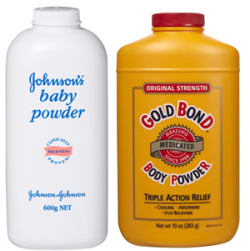
 In a recent baby powder cancer lawsuit, Johnson & Johnson Inc., Sanofi U.S., and several other companies that manufacture and sell talcum powder, were named as defendants by a widower who claims his late wife’s regular use of Johnson’s baby powder and Gold Bond body powder caused his wife to develop ovarian cancer.
According to the plaintiff, J&J, Sanofi, and the other named companies failed to warn women consumers that the use of talcum powder had been linked by several studies with an increased risk of developing ovarian cancer. He further claims in this baby powder lawsuit that the companies’ failure to warn led to his wife’s ovarian cancer and eventual death.
Staten Island, N.Y. resident James C. filed this baby powder cancer lawsuit on behalf of his wife Janice C., who allegedly died of ovarian cancer in 2012 at the age of 63. James’ baby powder cancer lawsuit claims Janice had used talcum powder practically her whole life, specifically on her genital area. The main products she used were Johnson’s bay powder and Gold Bond body powder.
This is a common practice among women, as talcum powder reduces friction, chaffing, and generally reduces genital odor.
The baby powder cancer lawsuit cites various talcum powder cancer studies, some dating back several decades, which all point to various experiments and trials demonstrating the negative, cancerous effects of baby powder can have on a woman’s reproductive system.
Despite these studies, which have been around for years, the talcum powder manufacturers continued to market their baby powder products as safe to use on baby and women’s genital areas, despite the mounting evidence of baby powder cancer.
Other companies named in this baby powder ovarian cancer lawsuit include Valeant (which recently bought Shower to Shower from J&J), Chattem (the makers of Gold Bond), and Imerys (a talcum powder mining company).
History of Johnson Baby Powder Cancer
In 1893, Johnson & Johnson began manufacturing the now well-known household product Johnson’s Baby Powder. In addition for use on skin, J&J also marketed its baby powder product as an effective method of masking odors in the genital area.
In marketing and advertisements for the talc powder product, J&J claimed that Johnson’s Baby powder was “intended to eliminate friction on the skin and to absorb unwanted excess moisture for both babies and women,” when applied to the genital area.
During the 1960s, however, researchers became concerned with possible talcum powder side effects, especially in regard to ovarian cancer among female baby powder consumers.
A 1971 baby powder research study showed strong evidence for this hypothesis. According to the research, talc particles are prone to migrate from the site of application on the genitals to a woman’s reproductive system where it finally becomes imbedded in the ovaries. This study also demonstrated how 10 out of 13 ovarian tumors held deeply embedded talc particles, suggesting that talc powder, could increase a woman’s chances of ovarian cancer.
Do YOU have a legal claim? Fill out the form on this page now for a free, immediate, and confidential case evaluation. The attorneys who work with Top Class Actions will contact you if you qualify to let you know if an individual lawsuit or class action lawsuit is best for you. [In general, baby powder cancer lawsuits are filed individually by each plaintiff and are not class actions.] Hurry — statutes of limitations may apply.
ATTORNEY ADVERTISING
Top Class Actions is a Proud Member of the American Bar Association
LEGAL INFORMATION IS NOT LEGAL ADVICE
Top Class Actions Legal Statement
©2008 – 2026 Top Class Actions® LLC
Various Trademarks held by their respective owners
This website is not intended for viewing or usage by European Union citizens.
Get Help – It’s Free
Join a Free Baby Powder Cancer Class Action Lawsuit Investigation
If you used Johnson’s Baby Powder, Shower to Shower, or another talcum powder product and were diagnosed with ovarian cancer, you may have a legal claim. Family members of loved ones who died of ovarian cancer can also join. Submit your information now for a free case evaluation.
An attorney will contact you if you qualify to discuss the details of your potential case at no charge to you.