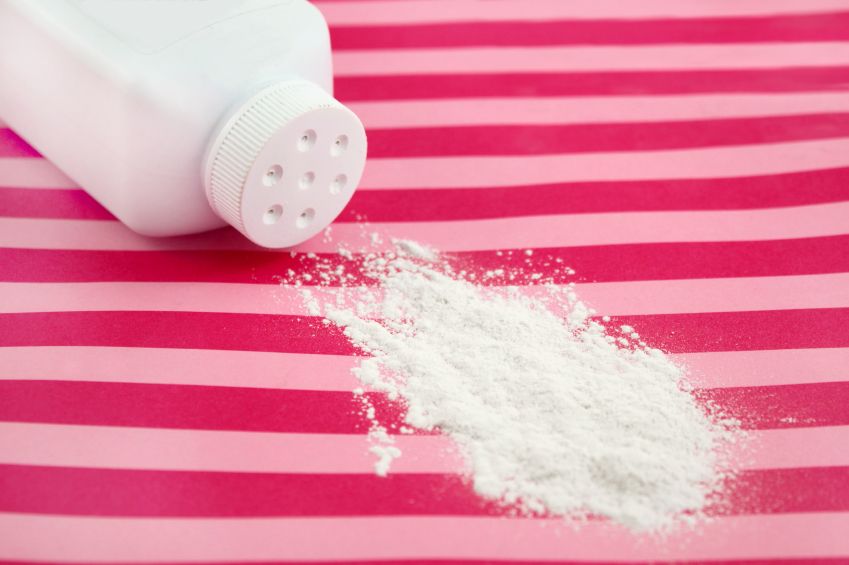
 Baby powder, also sometimes referred to as talcum powder or simply talc, is a popular product in the United States because of its many uses.
However, consumers should be aware that this seemingly innocuous sanitary product may have some unseemly side effects, including baby powder cancer, according to some recent lawsuits.
Baby powder is mainly composed of talc, a soft and natural mineral harvested from the ground where this allegedly safe mineral naturally co-occurs with pockets of asbestos, a known carcinogen.
This means that natural deposits of talc may be cross-contaminated with asbestos. While the U.S. employs strict laws considering the purity and safety of talcum powder, foreign products composed with talcum powder may have traces of asbestos.
Within the United States, baby powder is generally considered to be a safe hygienic product and has many uses beyond soothing an infant’s diaper rash. For example, it is regularly marketed as a topical application that promotes freshness, dryness and soft skin.
However, baby powder manufacturers have recently come underfire in talcum powder cancer lawsuits for allegedly marketing their talc-based product as safe to use in women’s genital areas. According to baby powder cancer lawsuits, use of talcum powder products in the genital area has been linked with cases of ovarian cancer.
One famous company that is now facing multiple talcum powder cancer lawsuits is Johnson & Johnson, the makers of brand-name Johnson’s Baby Powder.
History of Johnson’s Baby Powder
J&J has been marketing and selling it’s brand name baby powder in the U.S. market since 1894. A couple years prior, Dr. Fredrick B. Kilmer, J&J’s first director of scientific affairs, invented baby powder when he suggested that scented Italian talcum powder be used to sooth skin irritation. Johnson’s Baby Powder quickly became a household name at the turn of the century, and was regularly used by midwives and mothers. Furthermore, as early as 1913, J&J marketed its brand name talcum powder as “Best for the Baby – Best for You,” promoting the product not just for sanitary use on babies private areas, but also for adults and particularly adult women. However, reports as early as 1971 hypothesized that use of talcum powder on women’s genitals and genital area may be linked to the development of ovarian cancer. Since then, multiple baby powder cancer studies have been performed and continue to suggest that use of talc powder for feminine hygiene purposes may not be as safe as previously thought or advertised.According to new research, using baby powder in the genital area increases a woman’s risk of developing baby powder ovarian cancer by 24 percent. This figure is particularly worrisome, as nearly 40 percent of women in the U.S. regularly use baby powder for feminine hygiene purposes. The first talcum powder cancer lawsuit filed against Johnson & Johnson went to trial in October 2013. The plaintiff of this baby powder cancer lawsuit alleged that J&J failed to warn her and other consumers that Johnson’s Baby Powder could cause ovarian cancer. Since then, other baby powder cancer lawsuits have been filed in state and federal court, making similar allegations against J&J and other talcum powder product manufacturers.
Do YOU have a legal claim? Fill out the form on this page now for a free, immediate, and confidential case evaluation. The attorneys who work with Top Class Actions will contact you if you qualify to let you know if an individual lawsuit or class action lawsuit is best for you. [In general, baby powder cancer lawsuits are filed individually by each plaintiff and are not class actions.] Hurry — statutes of limitations may apply.
ATTORNEY ADVERTISING
Top Class Actions is a Proud Member of the American Bar Association
LEGAL INFORMATION IS NOT LEGAL ADVICE
Top Class Actions Legal Statement
©2008 – 2026 Top Class Actions® LLC
Various Trademarks held by their respective owners
This website is not intended for viewing or usage by European Union citizens.
Get Help – It’s Free
Join a Free Baby Powder Cancer Class Action Lawsuit Investigation
If you used Johnson’s Baby Powder, Shower to Shower, or another talcum powder product and were diagnosed with ovarian cancer, you may have a legal claim. Family members of loved ones who died of ovarian cancer can also join. Submit your information now for a free case evaluation.
An attorney will contact you if you qualify to discuss the details of your potential case at no charge to you.