 Patients who received a false negative on their pap test which resulted in a delayed diagnosis of cancer may be eligible to take legal action against the provider that failed to diagnose their cancer early, and may be eligible for compensation.
Cervical cancer affects the cervix, the lowest part of the uterus in the female reproductive system. Although early stage cervical cancer shows no symptoms, symptoms of late stage cervical cancer include irregular vaginal bleeding, watery or bloody discharge, and pelvic pain.
Cervical cancer has may potential causes, but is most often caused by human papillomavirus (HPV). HPV is often asymptomatic in men and can be unknowingly transmitted to women via unprotected sexual contact. Because early stage cervical cancer is largely asymptomatic, delayed diagnosis of cancer can happen.
Pap tests check for this. As HPV can be easily transmitted, and the success rate in treating cervical cancer is vastly better with early detection, most physicians recommend women getting pap tests starting at age 21, every three to five years.
Pap tests were introduced 60 years ago in attempt to combat the rising number of women dying from cervical cancer. Since the introduction of pap tests into modern medicine, the cervical cancer death rate has dropped significantly. The CDC says nearly 20.9 million pap smears were ordered in physician office visits and outpatient department visits in 2014 alone.
Pap Smear Screening
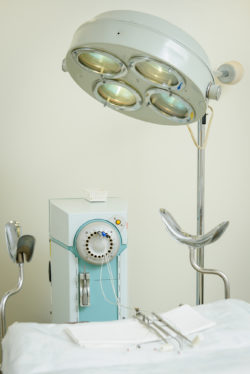
During a pap smear, a doctor swabs the cervix and collects cells to be tested for abnormal growth.
Even though pap smears provide an effective way to diagnose early cervical cancer, a false negative pap test may occur up to 40 percent of the time. A false negative occurs when abnormal cancer cells are not identified by the lab technician.
“Although the pap test has been more successful than any other screening test in preventing a cancer, it’s not perfect. One of the limitations of the pap test is that the results need to be examined by the human eye, so an accurate analysis of the hundreds of thousands of cells in each sample is not always possible,” states the American Cancer Society.
With a massive number of tests to be reviewed every year, human error is naturally going to lead to occasional missed diagnoses. Abnormal cells can be missed from an error in the test itself or negligence of medical professionals. Doctors can miss the signs of abnormal cells, misinterpret results, fail to further investigate abnormal cells, or improperly collect and preserve a pap test.
If you or a loved one were given a false negative pap smear which resulted in a delayed diagnosis of cancer, you may be entitled to legal action against the hospital which gave the false negative. Delayed diagnosis of cancer at stage 3 or stage 4 is particularly devastating because the cervical cancer could have been contained and treated had the lab correctly interpreted the test.
A false negative pap test lawsuit could help recover compensation for medical expenses, missed work, pain and suffering, wrongful death, and more.
In general, cervical cancer lawsuits are filed individually by each plaintiff and are not class actions.
If you were diagnosed with cervical cancer within the last five years, or if your loved one died of cervical cancer, and a medical lab failed to identify the cancer on a Pap smear test, you may have a legal claim. Get a free evaluation of your potential cervical cancer misdiagnosis claim by filling out the form on this page now.
ATTORNEY ADVERTISING
Top Class Actions is a Proud Member of the American Bar Association
LEGAL INFORMATION IS NOT LEGAL ADVICE
Top Class Actions Legal Statement
©2008 – 2026 Top Class Actions® LLC
Various Trademarks held by their respective owners
This website is not intended for viewing or usage by European Union citizens.

Suing for unpaid wages in California: Recover unpaid overtime, back pay and more
April 2, 2026 | Legal News