

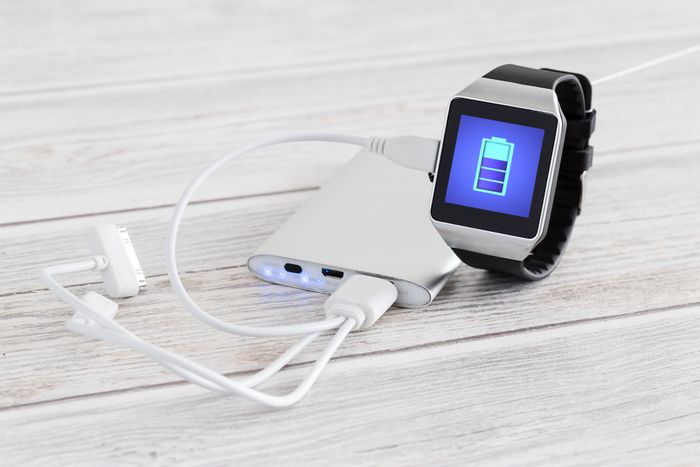
 A class action lawsuit alleges that Inland Products falsely advertises the capacity of its ProHT portable electronic device power banks.
Lead plaintiff and California resident Mongkol Mahavongtrakul says the problem is not limited to the power bank he purchased – Inland Products consistently misrepresents the capacity of its products.
According to the power bank class action lawsuit, Inland Products makes power banks or devices that consumers can use to recharge their portable electronic devices, like phones and tablets, when they don’t have access to an electrical outlet.
“The greater the capacity of the Power Bank, as is expressed in milliampere-hours (‘mAh’), the more times the Power Bank can be used to recharge PEDs before the Power Bank must be recharged itself,” explains the ProHT Power Bank class action lawsuit. “Thus, consumers prefer and are willing to pay a premium for Power Banks with higher mAh ratings.”
Mahavongtrakul alleges in his Inland power bank class action lawsuit that he purchased the company’s ProHT products at a Fry’s Electronics in California. He says that he paid a premium for the product because they were advertised with higher mAh ratings.
“In making his decision to purchase the Products, Plaintiff read and relied on Inland’s representations regarding their capacity,” states the ProHT Power Bank class action. “Had Plaintiff known the truth, that the Products’ mAh was really less than what Inland represented, he would not have purchased them or would not have been willing to pay as much as he paid for the Products.”
The class action lawsuit alleges that Inland Power falsely advertises the capacity of its power banks by a substantial amount.
“By deceiving consumers about the Products’ capacity as detailed herein, Inland is able to sell more of, and charge more for, the Products than it could if they were labeled accurately,” contends the power bank class action. “Further, Inland is incentivized to mislead consumers to take market share away from competing products, thereby increasing its own sales and profits.”
Despite Inland Products’ deceptive advertising, the plaintiff says he would purchase power banks from the company again, but only if they correctly represent their capacity.
According to testing performed by another company, Inland Power banks test at roughly half of the capacity at which they are advertised.
“Inland knew, at the time it sold the Products, that the Products’ true capacity was substantially less than what Inland had represented,” alleges the power bank class action lawsuit. “Inland intentionally misrepresented the Products’ capacity to induce the Plaintiff and other unsuspecting consumers to purchase and pay a premium for the Products.”
The Inland power banks class action lawsuit seeks to represent a nationwide Class of consumers who purchased the company’s devices, along with several state subclasses.
The plaintiff is seeking damages, as well a court order stopping Inland Products from the alleged false advertising of its power banks.
The lead plaintiff and proposed Class are represented by D. Greg Blankinship and Jean Sedlak of Finkelstein Blankinship Frei-Pearson & Garber LLP and Laurence D. King and Mario M. Choi of Kaplan Fox & Kilsheimer LLP.
The Inland ProHT Power Banks Capacity Class Action Lawsuit is Mahavongtrakul v. Inland Products Inc., Case No. 3:18-cv-07261-JSC, in the U.S. District Court for the Northern District of California.
ATTORNEY ADVERTISING
Top Class Actions is a Proud Member of the American Bar Association
LEGAL INFORMATION IS NOT LEGAL ADVICE
Top Class Actions Legal Statement
©2008 – 2026 Top Class Actions® LLC
Various Trademarks held by their respective owners
This website is not intended for viewing or usage by European Union citizens.












41 thoughts onInland Power Banks are Misrepresented, Class Action Says
Add me please
Add Me Please
Add me please
Add me please
Add me
Please add me
Add me to
Please add me
Add me please
Add me