
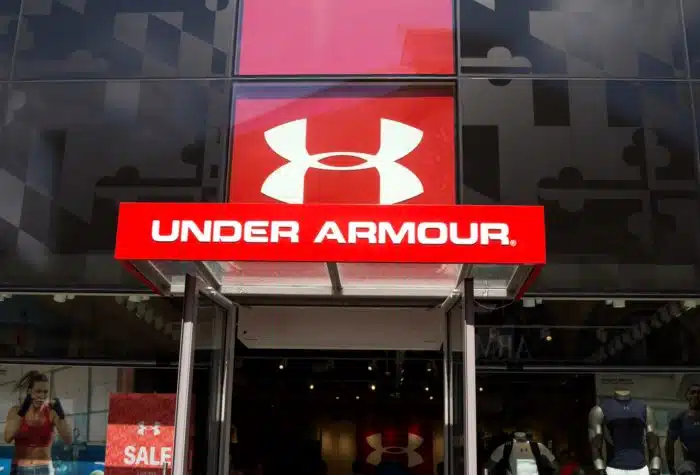
Under Armour faces a class action lawsuit contending that the athletic clothes company misleadingly markets their Rush line of apparel.
Under Armour’s Rush line is advertised as “the Fabric Version of an Infrared Sauna, Recycling the Body’s Energy During Performance.” The apparel in this line purportedly achieves the advertised benefits due to its “bioceramic” nature. Bioceramics are described by Under Armour to be “mineral-infused fabric designed to enhance performance, giving athletes that extra edge by recycling the body’s energy during moments of performance.”
The company explains that heat is released by the body during activities such as running and working out. According to Under Armour, Rush apparel converts this heat into infrared energy which is re-emitted into the body. The athletic clothes company advertises that this mechanism stimulates increased endurance and strength while also allowing for improved performance, energy, and recovery.
Although these advertisements may make Rush products attractive athletic clothes to active consumers, the recent class action lawsuit argues that these are nothing but empty promises.
According to plaintiff Jonathan Dill, the truth lies in the type of infrared energy purportedly emitted from the Rush line of athletic clothes during a workout.
Infrared energy is a type of electromagnetic radiation which is invisible to the human eye but felt as heat. The sun and fire are two prominent sources of infrared heat, though every object in the universe emits at least a small amount of this energy.
Not all infrared energy is the same, with each type of radiation able to penetrate human tissue in varying degrees. There are three types of infrared energy:
- Near-infrared: Has the greatest ability to dissipate heat from the skin’s surface and penetrate human tissue (up to 5 mm).
- Mid-infrared: Has the next deepest tissue penetration (0.5 mm).
- Far-infrared: Has the least amount of tissue penetration (0.1 mm).
Although the U.S. Under Armour website does not reveal what type of infrared energy is released by the Rush athletic clothes, Dill notes that non-U.S. websites indicate that this energy is far-infrared. According to the plaintiff, this level of radiation is no different from that radiated by all objects and can barely penetrate the skin.
 This shallow penetration allegedly means that the Under Armour athletic clothes cannot provide the benefits they are advertised with.
“Even if [far-infrared radiation] was capable of the effects claimed, the [far-infrared radiation] generated by the Product would not be of sufficient intensity to achieve the advertised benefit,” Dill contends in his Under Armour athletic clothes class action lawsuit.
“The Product’s composition and construction does not meaningfully, or at all, increase energy or recovery time.”
Dill says that he, like other consumers, relied on Under Armour’s representations of their products’ benefits. As a result of these advertisement, Dill was allegedly willing to pay a premium price – at least $50 for a sleeveless t-shirt.
If Under Armour hadn’t advertised their products in a misleading way, Dill says that he and other consumers would not have purchased the athletic clothes or would have paid significantly less for the products.
“Defendant’s branding, marketing and packaging of the Product is designed to – and does – deceive, mislead, and defraud plaintiff and consumers,” the Under Armour class action lawsuit maintains.
“Defendant sold more of the Product and at higher prices than it would have in the absence of this misconduct, resulting in additional profits at the expense of consumers.”
Based on this alleged financial injury, Dill seeks to represent a Class of consumers from New York, New Jersey, and Pennsylvania who purchased Under Armour Rush athletic clothes. On behalf of this proposed Class, Dill seeks injunctive relief, monetary damages, restitution, and disgorgement.
Did you purchased Under Armour Rush athletic clothes? Let us know in the comment section below.
Dill and the proposed Class Members are represented by Spencer Sheehan of Sheehan & Associates PC.
The Under Armour Athletic Clothes Class Action Lawsuit is Jonathan Dill v. Under Armour Inc., Case No. 1:20-cv-06066, in the U.S. District Court for the Eastern District of New York.
Read About More Class Action Lawsuits & Class Action Settlements:












957 thoughts onUnder Armour Class Action Lawsuit Challenges Athletic Clothes Advertising
Add me
Add me
Add me
Add me
Add me
Please add me
Please add me
Please add me.