
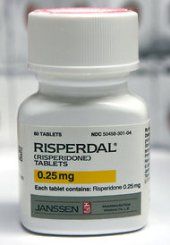
 The U.S. Department of Justice is demanding that Johnson & Johnson and its subsidiaries pay more than $2.2 billion to settle criminal and civil violations that have emerged from their prescription drug products Risperdal, Invega and Natrecor. The pharmaceutical company allegedly promoted the drugs for uses that were not approved by the U.S. Food and Drug Administration (FDA).
According to the Justice Department, this is one of the largest health care fraud settlements in U.S. history. The settlement amount includes criminal fines and forfeiture in the amount of $485 million and civil penalties in the amount of $1.72 billion.
“The conduct at issue on this case jeopardized the health and safety of patients and damaged the public trust,” said Attorney General Eric Holder. “This multibillion-dollar resolution demonstrates the Justice Department’s firm commitment to preventing and combating all forms of health care fraud. And it proves our determination to hold accountable any corporation that breaks the law and enriches its bottom line at the expense of the American people.”
The Justice Department said that the fines and forfeiture were violations of the False Claims Act that were determined after multiple investigations of Johnson & Johnson and its subsidiaries.
“When companies put profit over patients’ health and misuse taxpayer dollars, we demand accountability,” said Associate Attorney General Tony West. “In addition to significant monetary sanctions, we will ensure that non-monetary measures are in place to facilitate change in corporate behavior and help ensure the playing field is level for all market participants.”
Johnson & Johnson will also now be subject to stringent requirements under a Corporate Integrity Agreement with the Department of Health and Human Services Office of the Inspector General. The purpose of the agreement is to increase accountability and transparency to prevent more fraud and abuse.
“As patients and consumers, we have a right to rely upon the claims drug companies make about their products,” said Stuart F. Delery, Assistant Attorney General for the Justice Department’s Civil Division. “And, as taxpayers, we have a right to ensure that federal health care dollars are spent appropriately. That is why this Administration has continued to pursue aggressively — with all of our available law enforcement tools — those companies that corrupt our health care system.”
One of the drugs at issue is the antipsychotic drug Risperdal, which is made by Johnson & Johnson subsidiary Janssen Pharmaceuticals Inc. Janssen has plead guilty to misbranding the drug.
When Risperdal was first introduced to the market, it was only approved by the FDA to treat schizophrenia. However, the government claims in criminal information filed with the U.S. District Court in the Eastern District of Pennsylvania that from Mar. 3, 2002 to Dec. 31, 2003, Janssen promoted Risperdal to treat dementia in elderly patients by treating symptoms such as anxiety, agitation, depression, hostility and confusion. The promotional materials made very little mention of schizophrenia.
From 1999 through 2005, Janssen also allegedly promoted Risperdal to be used in children with mental disabilities such as autism, bipolar disorder, attention deficit disorder, oppositional defiant disorder, obsessive-compulsive disorder and other mental disabilities. However, Risperdal increases the development of prolactin, the hormone that stimulates breast development and milk production.
According to the Risperdal lawsuit, Johnson & Johnson knew about this risk yet it was one of Janssen’s Key Base Business Goals to grow and protect its market share among its child and adolescent patients. However, Risperdal was not approved for use in children for any reason by the FDA until 2006. Until then, the FDA had specifically warned Janssen against recommending the antipsychotic drug for children.
The government’s complaint also alleged that Janssen hired doctors to promote Risperdal at speaking events. Doctors were allegedly told by Janssen sales representatives that if they increased their Risperdal prescriptions, they would receive speaker fees for promoting the drug.
If you or someone you know took Risperdal between the ages of 10 and 18 and experienced an adverse side effect such as male breast growth, man boobs, gynecomastia, painful breasts or nipple pain, legal options may be available. Learn more and get a free legal consultation regarding a claim’s eligibility at the Risperdal Side Effects, Male Breast Growth Class Action Lawsuit Investigation. Experienced legal professionals have access to medical experts to assess whether or not this antibiotic played a role in your negative side effects, so act now.
ATTORNEY ADVERTISING
Top Class Actions is a Proud Member of the American Bar Association
LEGAL INFORMATION IS NOT LEGAL ADVICE
Top Class Actions Legal Statement
©2008 – 2026 Top Class Actions® LLC
Various Trademarks held by their respective owners
This website is not intended for viewing or usage by European Union citizens.









One thought on Risperdal in $2.2B Settlement with Justice Department