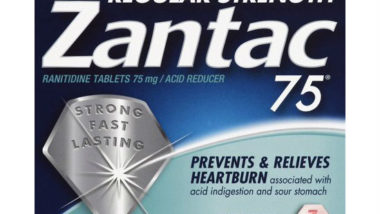
 Zantac recalls have been voluntarily initiated by certain manufacturers and pharmacies, although the FDA initially was not requiring such actions.
Zantac (ranitidine) is a histamine-2 (H2) blocker used to reduce the amount of stomach acid in the body. These medications are approved to treat a variety of conditions that are aggravated by stomach acid, including ulcers, gastroesophageal reflux disease (GERD), and more.
On Sept. 13, the U.S. Food and Drug Administration (FDA) released a safety announcement informing the public that certain Zantac and generic ranitidine medications had been found to contain contamination. The medications were reportedly found to contain N-nitrosodimethylamine (NDMA), a probable human carcinogen according to the FDA.
NDMA is an environmental contaminant that may appear in water and certain foods such as meat, dairy products, and some vegetables. The contaminant may also be produced as waste in certain industrial processes, including those used in pharmaceutical manufacturing. Unfortunately, this chemical is classified as a probable human carcinogen based on lab data.
According to the FDA, the carcinogen was found at “low levels” in Zantac and other ranitidine medications.
Initially, the FDA was not demanding a recall of the products and was “not calling for individuals to stop taking ranitidine.” Despite the lax approach taken by the FDA, several retailers and manufacturers decided to stop the sale of their ranitidine products due to the contamination.
Retailers such as CVS, Rite Aid, Walgreens, and Walmart initiated their own Zantac recalls voluntarily after the FDA’s announcement. Drug manufacturers Sandoz, GlaxoSmithKline, Apotex, and others also voluntarily recalled their ranitidine although brand name Zantac was not recalled by the product’s manufacturer Sanofi.
The FDA provided an update in early October, informing the public that they would continue to test ranitidine products for the impurity so that they could get a better idea of the problem.
“FDA is continuing to test ranitidine products from multiple manufacturers and is assessing the potential impact on patients who have been taking ranitidine,” the FDA said in their October 2 announcement.
“In addition, the agency has asked manufacturers of ranitidine to conduct their own laboratory testing to assess levels of NDMA in their ranitidine products and to send samples of ranitidine products to FDA to be tested by our scientists.”
According to the FDA, third party laboratories use higher temperatures to test other medications for NDMA. When used to test Zantac, this method reportedly yielded “very high levels of NDMA.” Although the results were alarming, the FDA determined that this method isn’t suitable for testing ranitidine medications because heating samples generates NDMA.
These results may support the theory that Zantac somehow results in the creation of NDMA within the body. This theory is based on research results that show an increase of NDMA in the urine of Zantac patients.
Even with other testing protocols, “the agency’s early, limited testing has found unacceptable levels of NDMA in samples of ranitidine.” Despite these results, the FDA has not initiated Zantac recalls. So far, the only recalls of ranitidine in the U.S. have been voluntarily initiated by manufacturers and retailers. In other countries with stricter regulations, ranitidine medications have been recalled formally.
Join a Free Zantac Cancer Lawsuit Investigation
If you or a loved one was diagnosed with stomach cancer or bladder cancer after taking Zantac or another ranitidine medication, you may qualify to join this Zantac cancer lawsuit investigation. Learn more by filling out out the form on this page for a free case evaluation by a Zantac cancer injury lawyer.
ATTORNEY ADVERTISING
Top Class Actions is a Proud Member of the American Bar Association
LEGAL INFORMATION IS NOT LEGAL ADVICE
Top Class Actions Legal Statement
©2008 – 2026 Top Class Actions® LLC
Various Trademarks held by their respective owners
This website is not intended for viewing or usage by European Union citizens.
Get Help – It’s Free
Join a Free Zantac Cancer Lawsuit Investigation
If you qualify, an attorney will contact you to discuss the details of your potential case at no charge to you.
PLEASE NOTE: If you want to participate in this investigation, it is imperative that you reply to the law firm if they call or email you. Failing to do so may result in you not getting signed up as a client or getting you dropped as a client.
E-mail any problems with this form to:
[email protected].