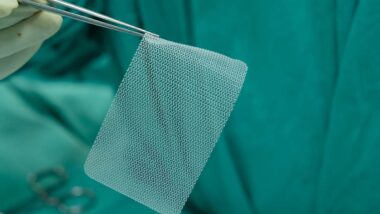
Bard Used Vaginal Mesh Plastic Not Suitable for Humans
By Courtney Coren
 C.R. Bard was warned that the plastic it was using in vaginal mesh implants wasn’t suitable to be placed in humans but used it anyway, according to court records obtained from a lawsuit against the company.
The plastic used in C.R. Bard vaginal mesh implants was a resin-based plastic manufactured by Chevron Phillips Chemical Co. – the same plastic that was used in hernia repair products manufactured by Bard’s Davol unit. The supplier of the material officially warned Davol that the resin-based plastic should not be permanently implanted in people, according to a trail of emails and other documents that were discovered in a vaginal mesh lawsuit against Bard.
The Bard Cover-Up
Emails uncovered from 2004 and 2007 reveal that a Davol executive, who is now a vice president of Bard, warned co-workers to not tell Chevron Philips that their resin-based plastic was being used for a product to be placed in humans.
“[Chevron Phillips and other suppliers] will likely not be interested in a medical application due to product-liability concerns,” Roger Darois, the Bard/Davol executive said in a March 2004 email. “It is likely they do not know of our implant application. Please do not mention Davol’s name in any discussion with these manufacturers.”
These emails — which have been filed with the C.R. Bard vaginal mesh MDL in West Virginia — are being used as evidence in vaginal mesh lawsuits for thousands of women who claim injuries as a result of Bard’s Avaulta line of vaginal mesh implants. Attorneys for the women are using them as proof that executives knew the resin-based plastic used to make the vaginal mesh implants was not to be permanently placed in humans, and that Bard tried to cover up the fact that they used the material for this purpose.
U.S. District Judge Joseph Goodwin, who is overseeing 20,000 lawsuits against Bard and other vaginal mesh manufacturers, ruled on June 4 that the emails raise “a genuine issue of material fact about whether Bard was aware its conduct was practically certain to cause injuries.”
Bard’s Statement
Bard made a statement Tuesday in which they made no mention to questions regarding the cover up.
“During the upcoming trial, Bard will provide all the relevant evidence for the jury to consider and render a decision, which will demonstrate that Bard acted appropriately in its acquisition of polypropylene resin,” said Scott Lowry, a Bard vice president, in an email statement.
“We believe that the Avaulta polypropylene mesh implant is a safe and effective treatment for pelvic organ prolapse when used in accordance with its instructions,” Lowry said. “To this day, after more than 50 years of use, polypropylene remains one of the most widely implanted and best materials for mesh products in medical applications in the human body.”
Lowry made no mention of the emails that were filed with the federal court.
Bard Vaginal Mesh Lawsuits Headed to Trial
The first of four bellwether vaginal mesh trials is set to begin on July 8 against Bard in Charleston, West Virginia. The case is spearheaded by Donna Cisson, age 54, who claims she was harmed by Bard’s Avaulta vaginal mesh product.
If you or someone you know was injured by a transvaginal mesh, bladder sling or vaginal sling implant, legal options are available to you. Learn more and get a free legal consultation regarding a claim’s eligibility at the Vaginal Mesh Sling Class Action Lawsuit Investigation. Experienced legal professionals have access to medical experts to assess whether or not a vaginal mesh implant may be playing a role in your current pain, discomfort or other serious side effects, so act now.
Updated July 4th, 2013
All medical device, dangerous drug and medical class action and lawsuit news updates are listed in the Drug and Medical Device section of Top Class Actions.
Top Class Actions Legal Statement

Suing for unpaid wages in California: Recover unpaid overtime, back pay and more
April 2, 2026 | Legal News