

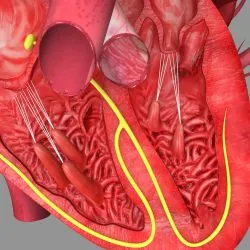
 The U.S. Food and Drug Administration (FDA) released a warning on Dec. 20, 2018, saying that use of a certain type of antibiotic can set the stage for aortic rupture by weakening the artery through dissection or aneurysm.
An aorta rupture can be a life-threatening event in which a patient internally bleeds to death. It generally follows from a breakdown or tear in the inner layer of the tube of the aorta known as a dissection. The tube runs out of the heart and down the inner side of the backbone delivering vital nutrients through oxygenated blood to all the main organ systems of the body and the extremities.
A dissection allows for this blood to seep in between the tissue layers and weaken the outer wall, lending itself to sudden aorta rupture. Aorta rupture can also happen secondary to an aneurysm of the same blood delivery system. An aneurysm is a bulge—which can be quite large—that also weakens the multi-layers of the major artery.
Dangerous Antibiotics?
Fluoroquinolone antibiotic prescriptions are quite common, but according to the head of the FDA, Scott Gottlieb, great caution needs to be employed by physicians when faced with certain patient medical histories and conditions.
According to Medscape, the FDA studied adverse event reports and reviewed four separately released fluoroquinolone studies whose data revealed a serious uptick in the risk of aortic rupture among patients taking these antibiotics.
The statistical range of dissection, aneurysm, and aortic rupture was wide depending upon whether the patients were in the normal or high-risk categories.
High-risk patients were identified as advanced in age, diagnosed with high blood pressure, compromised with peripheral arteriosclerotic vascular disease (PAD), or having one of two genetically-based disorders—Marfan Syndrome or Ehler’s Danlos Syndrome.
The Drug Safety Communication sent out by the FDA said that patients who are at risk for conditions like these should not be prescribed fluoroquinolones.
Brand names of common fluoroquinolones are Avelox, Cipro, Levaquin, Factive, Noroxin, and Floxin. These antibiotics are used for the treatment of a multitude of bacterial infections ranging from urinary tract infections to pelvic inflammatory disease.
Fluoroquinolone Warning
The FDA—which had previously held off making a judgment about preliminary indicators of risk association in the Spring of 2017—now says that fluoroquinolones are showing a consistent doubling of aortic rupture risk and should be saved for use in only the most dangerous infections.
The Medscape article revealed that the grouping of antibiotics has been plagued with a group of other warnings as well, but the most significant one was the FDA warning in July 2016.
This Drug Safety Communication revealed that there were possible dangerous side effects related to tendons, ligaments and other connective tissue. Tendon ruptures had previously been noted among users of these fluoroquinolone antibiotics, so further testing was warranted to determine if other side effects related to the weakening of collagen-based tissues was likely.
Join a Fluoroquinolone Aortic Aneurysm, Aortic Dissection Lawsuit Investigation
If you or a loved one were prescribed Fluoroquinolones such as Cipro, Levaquin or Avelox and were later diagnosed with an aortic dissection or aortic aneurysm, you may have a legal claim. Fill out the form on this page now for a FREE case evaluation or call 1-(855)-JONES-LAW (1-855-566-3752).
ATTORNEY ADVERTISING
Top Class Actions is a Proud Member of the American Bar Association
LEGAL INFORMATION IS NOT LEGAL ADVICE
Top Class Actions Legal Statement
©2008 – 2026 Top Class Actions® LLC
Various Trademarks held by their respective owners
This website is not intended for viewing or usage by European Union citizens.
Get Help – It’s Free
Join a Fluoroquinolone Aortic Aneurysm, Aortic Dissection Lawsuit Investigation
If you qualify, an attorney will contact you to discuss the details of your potential case at no charge to you.
PLEASE NOTE: If you want to participate in this investigation, it is imperative that you reply to the law firm if they call or email you. Failing to do so may result in you not getting signed up as a client or getting you dropped as a client.
E-mail any problems with this form to:
[email protected].
Oops! We could not locate your form.


