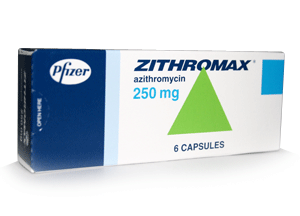
 Individuals who use Zithromax, Z-Pak, or generic azithromycin may be at risk for unknown side effects.
Heart attacks have been connected with Zithromax use. However, some users have developed Zithromax Stevens Johnson Syndrome, or SJS, and have filed Zithromax SJS lawsuits against Pfizer as a result.
Stevens Johnson Syndrome
SJS is a severe autoimmune disease that affects the skin and mucous membranes of the body. SJS begins with flu-like symptoms and a red or purplish rash. It then develops into sores and blisters which can cause the skin to literally burn off from the inside out. SJS has the potential to spread across the body, leaving painful blisters and burns as it spreads.
SJS can cause blindness if the eyes are affected as well as severe scarring, organ damage, and secondary infections.
When the blisters cover more than 30 percent of the body, the diagnosis changes to Toxic Epidermal Necrolyisis (TEN). TEN can cause patients to lose skin in larger sheets. It can also cover as much as 90 percent of the body, making it much more dangerous than SJS.
SJS and TEN patients are often treated in burn wards as the wounds caused by the potentially-deadly skin condition are very similar to the wounds caused by a burn.
While as many as 15 percent of SJS patients die from the skin condition, 30 percent to 40 percent of TEN cases are fatal.
SJS and TEN are both caused by a reaction to a drug. While SJS and TEN are relatively rare conditions, the severity and danger of the diseases has caused concern for many medical professionals and researchers.
Many SJS legal investigations have been launched against drug makers whose drugs may have caused users to develop the disease.
Zithromax SJS
The U.S. Food and Drug Administration, or FDA, issued a warning letter to Pfizer concerning Zithromax SJS in 2012. The FDA claimed that Pfizer did not adequately warn users about the risk of developing Zithromax SJS.
Pfizer allegedly “minimized the risks associated with [Zithromax] by failing to disclose that severe and fatal allergic reactions have been observed with azithromycin,” according to the FDA warning letter.
On the Zithromax warning insert, Pfizer included information about the early signs of SJS: the rash and blisters, but this may not be enough to properly warn users of Zithromax SJS.
Any Zithromax SJS warnings have been directed at medical professionals not Zithromax users.
Many individuals have filed Zithromax SJS lawsuits against Pfizer because of its alleged failure to warn against SJS side effects. Wrongful death lawsuits may also be filed if a loved one has died from SJS or TEN after using Zithromax.
Zithromax has also been the subject of Zithromax heart attack lawsuits. These Zithromax lawsuits allege the popular antibiotic caused heart attacks and that Pfizer also failed to warn against this Zithromax side effect.
Do YOU have a legal claim? Fill out the form on this page now for a free, immediate, and confidential case evaluation. The Zithromax attorneys who work with Top Class Actions will contact you if you qualify to let you know if an individual lawsuit or Zithromax class action lawsuit is best for you. [In general, Zithromax lawsuits are filed individually by each plaintiff and are not class actions.] Hurry — statutes of limitations may apply.
Get Help – It’s Free
Join a Free Zithromax Class Action Lawsuit Investigation
If you or a loved one had a heart attack, liver failure, Stevens Johnson Syndrome or Toxic Epidermal Necrolysis after taking Zithromax, Z-Pak, Zmax or azithromycin, you may have a legal claim. See if you qualify by filling out the short form below.
A Zithromax attorney will contact you if you qualify to discuss the details of your potential case at no charge to you.
Oops! We could not locate your form.
ATTORNEY ADVERTISING
Top Class Actions is a Proud Member of the American Bar Association
LEGAL INFORMATION IS NOT LEGAL ADVICE
Top Class Actions Legal Statement
©2008 – 2026 Top Class Actions® LLC
Various Trademarks held by their respective owners
This website is not intended for viewing or usage by European Union citizens.