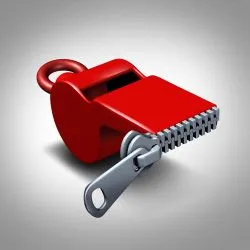
 Under the False Claims Act, also called the “Lincoln Law,” liability is placed on individuals and companies who have engaged in fraud against the government. The False Claims Act serves as the main tool to move litigation forward and to protect the government from fraud, as well as to protect a whistleblower – a person who speaks out against the defrauding of the government.
The False Claims Act contains a qui tam provision that allows individuals to file a lawsuit on behalf of the government. An individual filing a lawsuit is called a “relator,” or more informally, government whistleblower.
A federal or government whistleblower is typically an employee who has witnessed their employer commit acts of fraud against the government, and in many cases, the amount of fraud costs the government millions, sometimes even billions of dollars.
Types of Fraud Under the False Claims Act
In each and every case of a federal whistleblower coming forth to file a qui tam lawsuit under the False Claims Act, the government itself is the victim of fraud.
Fraud against the government can happen in a number of industries. Many cases involve healthcare fraud and government contractor fraud, but there are other areas where a government whistleblower may come forth as well. Areas of government fraud include:
- Healthcare Fraud (Medicare/Medicaid Fraud): Commonly reported fraudulent activities in healthcare include fraudulent billing (billing for services not rendered, double billing, billing for unnecessary procedures, using certain billing codes to inflate reimbursement), or providing false information relating to research programs or grant opportunities
- Physician or Hospital Kickbacks: It is illegal for drug companies to pay doctors or hospitals to prescribe their drugs, however sometimes doctors are paid for so-called “consulting contracts” or “research stipends” by the companies. Drug companies may try to get around such laws prohibiting kickbacks by offering non-monetary incentives such as vacations, sporting event or concert tickets and more.
- Government Contractor Fraud: Government contractors may use illegal kickbacks or bribes to secure contracts, may make false certification of compliance, price gouge or charge for services that were not provided.
- Flawed Pharmaceutical Products/Pharma Fraud: Federal whistleblowers report issues such as illegal manufacturing processes, violations occurring during clinical drug trials, off-label marketing of drugs or illegal pricing/kickback schemes.
- Tax Fraud/Financial Fraud: Tax evasion and tax underpayment as a result of misrepresenting income, overstating the amount of deductions, accounting fraud and more.
Claims of fraud must show evidence of substantial loss. Most claims that are accepted as cases under the False Claims Act include government losses of over $1 million.
Protection for Whistleblowers
Whistleblowers have historically been fearful of speaking out due to fears of retaliation by the employer. Federal law, however, prohibits employers for taking any actions in retaliation against those who file a whistleblower lawsuit. It also extends protection to those who assist whistleblowers who file qui tam actions.
If retaliation were to take place, as long as an individual’s conduct was aligned with that protected under the False Claims Act, he or she will be able to establish a claim for retaliation.
In response to such claims, if they are determined to be valid, a federal whistleblower is entitled to reinstatement with appropriate seniority, double the payment of pack pay, interest, damages as a result of discriminatory treatment, and the cost of litigation.
Awards in Qui Tam Actions
The monetary reward to a government whistleblower who brings forth a qui tam lawsuit can be substantial at between 10-30%. Federal whistleblowers also play an important role in standing up for all citizens as they bring these illegal activities against the government into light when they would have otherwise gone undetected.
Filing a Federal Whistleblower Qui Tam Lawsuit
If you have inside information about fraud taking place against the government, you may have a legal claim. The fraud you are reporting must have evidence of substantial material losses. Most successful cases often involve the fraud costing the government more than $1 million in losses.
Due to the complex nature of whistleblower cases, individuals should seek the counsel of an experienced qui tam attorney who can review your case and who can assist in protecting you as you come forth with information.
Our attorneys are available to consult with you in a free, confidential case review and can assist you in determining your legal options.
In general, whistleblower and qui tam lawsuits are filed individually by each plaintiff and are not class actions.
Do YOU have a legal claim? Fill out the form on this page now for a free, immediate, and confidential case evaluation. The attorneys who work with Top Class Actions will contact you if you qualify to let you know if an individual qui tam lawsuit or whistleblower class action lawsuit is best for you. Hurry — statutes of limitations may apply.
ATTORNEY ADVERTISING
Top Class Actions is a Proud Member of the American Bar Association
LEGAL INFORMATION IS NOT LEGAL ADVICE
Top Class Actions Legal Statement
©2008 – 2026 Top Class Actions® LLC
Various Trademarks held by their respective owners
This website is not intended for viewing or usage by European Union citizens.
Get Help – It’s Free
Join a Free Whistleblower, Qui Tam Lawsuit Investigation
If you believe that you have witnessed fraud committed against the government, you may have a legal claim. See if you qualify to pursue compensation and join a whistleblower lawsuit investigation by submitting your information for a free case evaluation.
An attorney will contact you if you qualify to discuss the details of your potential case.
Oops! We could not locate your form.