
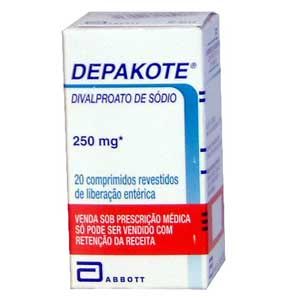
 Research published in the prestigious New England Journal of Medicine has suggested that the active ingredient in Depakote (valproic acid) could cause serious birth defects.
Depakote is an important drug that treats a variety of brain disorders. Researchers discovered its first medical use, as an anticonvulsant, in the 1960s. Prior to that, it was viewed as an inert solvent for other drugs.
It was eventually discovered that Depakote could treat a variety of other health problems originating in the brain, including bipolar disorder and migraines. In fact, Depakote is one of the few drugs approved by the U.S. Food and Drug Administration (FDA) to treat migraines. However, the NEJM study suggests the drug can promote severe birth defects.
The NEJM study was published in June 2010. In this study, researchers performed a meta-analysis, a type of study wherein researchers pool data from other studies and use it to perform new research. In this case, researchers used data from eight other studies, translating into data from 1,565 pregnancies with data on the mother’s use of Depakote, or other forms of valproic acid.
Researchers used this data to evaluate the risk of 14 birth defects in mothers who used Depakote. Researchers found that women who used Depakote had a much higher risk of about a half-dozen severe birth defects, including spina bifida and cleft palates. These severe birth defects were most pronounced in women who used Depakote in the first trimester of their pregnancies.
The first of these potentially severe birth defects is a condition called spina bifida. In spina bifida, a baby’s spine does not form normally. Under normal conditions, a neural tube closes over the spine, forming the basis of the spinal column.
However, in spina bifida, this process goes wrong, creating a pouch with part of the unprotected spinal cord at the base of the back. This condition varies wildly in severity, from a cryptic form that is only visible on medical imaging to debilitating paralysis. Sometimes, spina bifidia can be corrected early in pregnancy via prenatal surgery, but this is a complex and somewhat dangerous surgery.
A cleft palate is another of the severe birth defects allegedly linked to Depakote. Like spina bifida, a cleft palate is a situation when a baby does not fully develop along normal lines. In the case of the face, various bones and structures fuse together to form the face.
When this process does not fully complete itself, a baby can be born with a gap in the bones and tissue of the mouth. Like other birth defects, cleft palates can vary from minor to severe, and cleft lips is a milder form of the birth defect where only the soft tissue of the lip is not fully formed. However, even the mildest forms of this birth defect can be fatal in the developing world, as it interferes with feeding.
In the United States, a cleft palate can usually be corrected with surgery.
Birth defect lawsuits have been filed by mothers who took Depakote during their pregnancies and had children with severe birth defects like spina bifida, cleft palates, craniosynostosis, and heart defects.
These birth defects lawsuits allege that drug makers were aware — or reasonably should have been aware — of the serious risk of severe birth defects allegedly linked to Depakote and failed to adequately protect the public from this risk.
Do YOU have a legal claim? Fill out the form on this page now for a free, immediate, and confidential case evaluation. The birth defect attorneys who work with Top Class Actions will contact you if you qualify to let you know if an individual lawsuit or class action lawsuit is best for you. [In general, birth defect lawsuits are filed individually by each plaintiff and are not class actions.] Hurry — statutes of limitations may apply.
ATTORNEY ADVERTISING
Top Class Actions is a Proud Member of the American Bar Association
LEGAL INFORMATION IS NOT LEGAL ADVICE
Top Class Actions Legal Statement
©2008 – 2026 Top Class Actions® LLC
Various Trademarks held by their respective owners
This website is not intended for viewing or usage by European Union citizens.
Get Help – It’s Free
Join a Free Birth Defect Lawsuit Investigation
If you or a loved one took Zoloft, Prozac, Lexapro, Effexor, Celexa, Cymbalta or Depakote during pregnancy and gave birth to a child with a congenital defect, you may have a legal claim against the drug’s manufacturer. Find out if you qualify to pursue compensation for your child’s medical expenses, pain and suffering, and other damages by filling out the form below now.
An attorney will contact you if you qualify to discuss the details of your potential case.
Oops! We could not locate your form.












One thought on Study Links Depakote to Severe Birth Defects