
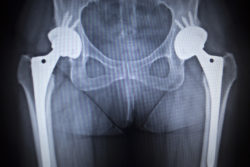
 A Minnesota couple filed a Stryker LFIT lawsuit alleging the medical device company manufactures defective metal hip implants that have a high failure rate.
Plaintiffs James and Cindy S. claim in their Stryker LFIT lawsuit that, as a result of the defective LFIT metal hip implant James received in July 2007, he suffered multiple injuries and side effects.
According to the couple, Stryker knew or should have known of possible defects in the LFIT V40 femoral head but failed to warn of it.
The Stryker LFIT lawsuit states that as a result of the defendant’s conduct, “[James] has suffered and continues to suffer both injuries and damages, including but not limited to: past, present and future physical and mental pain and suffering; and past, present and future medical, hospital, rehabilitative and pharmaceutical expenses, and other related damages.”
James and his wife are seeking compensatory, loss of consortium, and actual damages resulting from Stryker’s alleged breach of warranty, negligence and for strict liability. A jury trial has been requested for this case.
If you have received a Stryker metal hip implant with an LFIT Anatomic CoCr V40 Femoral Head component, you may be able to file a lawsuit and receive compensation for pain, suffering, medical expenses, and more.
Stryker Hip Implant Complications
The implantation of Stryker hip implants has been associated with multiple complications. One of the most commonly reported side effects of these implants is metallosis, a kind of metal poisoning. The Stryker hip implant is considered a metal-on-metal device—that is, according to the FDA, a device in which two of its metal moving components, the metal ball and metal hip, rest directly against each other.
The specific component named in this recent Stryker LFIT litigation is the LFIT V40 femoral head. The LFIT V40 femoral head is designed to replace the natural femoral head. It sits at the end of the implant’s femoral neck and is designed to fit inside the acetabular cup, the depression within the hip bone that forms the socket of the hip joint.
Even with normal movement and regular function of the implant, this can purportedly cause the implant components to rub, wear, and eventually corrode, releasing tiny metal particles into the surrounding bloodstream and tissue. These components have been implicated in reports of metal poisoning and implant failure. The presence of loose metal can lead to a reaction called metallosis, potentially leading to death of the surrounding tissue.
The Stryker hip implant can release cobalt, chromium, and titanium. Unfortunately, metallosis causes severe inflammation and leads to the necrosis, or cell death, of the tissue and bone surrounding the area. Patients with metal allergies may be at an even greater risk for complications.
Other complications have been associated with the failure of the Stryker LFIT metal hip, including device dissociation and even complete device failure. When this happens, the patient’s own femur bone can fracture and completely break as a result. Initially, patients may experience symptoms including pain and swelling in the area of the implant as well as the inability to move.
Patients report pain, joint instability, loss of mobility and reduced range of motion. Some patients have had to undergo extensive revision surgery to resolve their problems. Of course, additional surgery is not just an added medical expense but also exposes the patient up to further risks associated with surgery, including infection.
However, some patients do not experience these warning symptoms. In these cases, the device can fail suddenly, causing patients grave pain leading to their incapacitation.
2016 Stryker Hip Implant Recall
In August 2016, Stryker announced a hip implant recall over metallosis affecting an entire line of hip implants. The hip implants affected include a specific component called the LFIT Anatomic Cobalt-Chromium V40 femoral head, or LFIT V40. The recall affects several years’ worth of devices—that is, any LFIT V40 femoral head manufactured prior to 2011.
In total, the recall affected more than 42,500 individual units in the United States and across the globe.
The reported defect in these pre-2011 implants has to do with the taper lock—the part that connects the femoral head to the femoral stem below it. Taper locks used in the LFIT V40 heads have been the subject of a higher than expected number of reports of failure.
Previous Stryker Hip Implant Recalls
This is not the first Stryker recall that has been issued over defective hip implant devices. Indeed, in just the last five years, Stryker Medical has had to recall two of its artificial hip medical devices due to defective design issues.
In 2011, employee error led to a recall of the company’s Accolade TMZF Plus hip stem. In actuality, Stryker recalled the Accolade TMZF implants three separate times between 2009 and 2013 due to errors in packaging and manufacturing.
Then in 2012, the company recalled two femoral stems—the Rejuvenate and the ABG II. The Rejuvenate and ABG II had both been implicated in cases of corrosion and shedding of metal particles into the surrounding tissue, a phenomenon known as fretting, according to sciencedirect.com.
Simultaneous with the 2012 Stryker hip implant recall, the company immediately ceased production of both models and terminated their global distribution.
Now, the 2016 Stryker LFIT metal hip recall has brought the total up to three recalls, making the future questionable for the medical device company. Lawsuits over the recalled Stryker implant components have reportedly led to over $1 billion in settlement payouts.
International Warnings About Stryker LFIT Metal Hip Failure
Australian health officials issued a Hazard Alert about the LFIT V40 implant in September 2016. The Australian warning applies to seven specific LFIT V40 femoral heads, with head diameters ranging in size from 36 to 44 millimeters, due to a high rate of failure. Australian action on these hip implants has raised concerns about the safety of the hip implant device worldwide.
On Sept. 27, the Australian Therapeutic Goods Administration warned that the modular components used in Stryker hip replacements have higher than expected rates of taper lock failures, which indicates failures where the femoral head connects to the femoral neck.
Stryker Safety Alert Sent to Doctors
Stryker recently sent a warning notice in May 2018 to orthopedic surgeons who have used the LFIT metal hip implant manufactured prior to 2011.
The warning includes a list of 50 pages of lot numbers, as well as a shortened list with the eight sizes of devices that were affected by the problem in the alert.
Stryker has reportedly received higher than expected complaints of taper lock failure for certain LFIT hip implants manufactured prior to March 4, 2011. Stryker has not disclosed the cause of the failures; it could be either a manufacturing defect or related to a design defect that was present in 2011 or earlier. According to the safety warning, femoral head/hip stem is associated with a number of conditions, including:
- Dislocation
- Pain associated with implant loosening
- Peri-prosthetic fracture
- Revision to alleviate the hazardous situation
- Leg length discrepancy
- Loss of mobility secondary to hip/stem trunnion fracture or femoral head/hip stem dissociation
- Pain requiring revision surgery
- Inflammatory response
- Adverse local tissue reaction (ALTR)
The safety alert noted that a few side effects warrant further investigation, including continued pain, stiffness, instability or swelling in the hip, groin, buttock, or thigh.
Stryker LFIT Settlements
In November 2018, Stryker reached an important settlement agreement with a group of plaintiffs who had cases pending in both federal and state courts. Judge Harz of the Superior Court of New Jersey and Judge Talwani of the Federal District Court in Massachusetts—the courts in which the majority of the cases have been filed—approved the settlement.
Stem components, both recalled and nonrecalled, that may be involved in this litigation include the Accolade TMZF, Accolade 2, Citation, Meridian, and Rejuvenate.
Reportedly, this hip implant settlement agreement covers a number of cases that involve Stryker implants that led to the plaintiff requiring additional surgery. The settlement plan is meant to address cases in the Multidistrict Litigation (MDL) 2768 in Massachusetts, as well as consolidated cases in the Multi-County Litigation (MCL) 624 in New Jersey.
The details of the settlement—including specific amounts paid to plaintiffs involved in these cases—are considered private and confidential, and will not be announced. While the settlement plan will not resolve all of the claims that have been filed, this settlement is undoubtedly a step forward for all litigation involving Stryker hip implants.
Filing a Stryker LFIT Lawsuit
Following these several recalls of the Stryker LFIT metal hip, it is assumed that many lawsuits will soon follow, which could deal a huge blow to the medical company.
Since 2014, many lawsuits have been filed in U.S. courts indicating that patients had suffered Stryker LFIT V40 femoral head failures, alleging that the components were defectively designed and manufactured.
If you or someone you love has suffered from complications like metallosis, dissociation, device failure, or other complications after implantation with a Stryker LFIT metal hip device, you may be able to file a lawsuit and pursue compensation for your injuries.
While suffering from an injury, it can feel overwhelming to pursue litigation, so Top Class Actions has taken some of the guesswork out of the equation for you and can connect you with an experienced medical device attorney. Consulting an attorney can help you determine if you have a claim, navigate the complexities of litigation, and maximize your compensation for everything from medical expenses to loss of earnings to pain and suffering.
The Stryker LFIT Lawsuit is Case No. 0:16-cv-03897 in the U.S. District Court for the District of Minnesota.
Do YOU have a legal claim? Fill out the form on this page now for a free, immediate, and confidential case evaluation. The hip implant attorneys who work with Top Class Actions will contact you if you qualify to let you know if an individual lawsuit or class action lawsuit is best for you. [In general, metal hip implant lawsuits are filed individually by each plaintiff and are not class actions.] Hurry — statutes of limitations may apply.
ATTORNEY ADVERTISING
Top Class Actions is a Proud Member of the American Bar Association
LEGAL INFORMATION IS NOT LEGAL ADVICE
Top Class Actions Legal Statement
©2008 – 2026 Top Class Actions® LLC
Various Trademarks held by their respective owners
This website is not intended for viewing or usage by European Union citizens.
Get Help – It’s Free
Join a Free Stryker Metal Hip Replacement Class Action Lawsuit Investigation
An attorney will contact you if you qualify to discuss the details of your potential case at no charge to you.
Please Note: If you want to participate in this investigation, it is imperative that you reply to the law firm if they call or email you. Failing to do so may result in you not getting signed up as a client, if you qualify, or getting you dropped as a client.
Email any problems with this form to [email protected].
Oops! We could not locate your form.











One thought on Stryker LFIT Lawsuit Alleges Metal Hip Implant is Defective