 Dilantin, a popular epilepsy medication, has been known to trigger a potentially fatal Dilantin rash called Stevens Johnson Syndrome.
Dilantin, or phenytoin, is an anticonvulsant and is most often used to treat epilepsy.
The drug has been linked to major side effects such as cerebral atrophy, but just as alarming is the potentially life-threatening Stevens Johnson Syndrome.
Dilantin Rash Could Be Stevens Johnson Syndrome
Stevens Johnson Syndrome is a serious skin condition that is often caused as a reaction to certain prescription drugs.
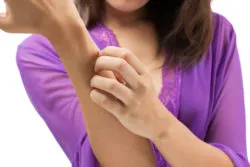
SJS begins with the patient initially exhibiting flu-like symptoms such as fever, sore throat and headache. Because of this, patients often do not address the Dilantin rash in its early stages.
Then, Stevens Johnson Syndrome proceeds to a rash and blisters that appear on the body. These blisters can progress to large blisters and burns that cover large areas of the body.
Essentially, SJS causes the outer layer of the skin to detach and slough off in large pieces.
This Dilantin rash can also the mucous membranes of the body as well as the eyes. SJS can, in some cases, cause permanent vision damage or loss.
When a patient experiences Stevens Johnson Syndrome, it can evolve into the deadly Toxic Epidermal Necrolysis (TEN). Most of the time victims of Stevens Johnson Synderome or TEN are treated in hospital burn units.
If the skin lesions become infected or if they develop in the lungs, this Dilantin rash can lead to death.
A study that looked at 15 burn centers found that 20 percent of Toxic Epidermal Necrolysis cases are thought to have been triggered by Dilantin. In this study 1 in 4 TEN cases resulted in death.
Other symptoms of these Dilantin rash conditions include rash, burns and blisters, sore throat, fatigue, flu-like symptoms, ulcers and lesions.
Warning for SJS Dilantin Rash May Be Inadequate
In 2008, the U.S. Food and Drug Administration acknowledged the risk of Dilantin rash but many critics say that there has not been enough done to warn the public of the possibility of developing the severe skin condition when taking Dilantin.
Dilantin (phenytoin) was first synthesized in 1908 and was then released for use in controlling seizures in 1938. The FDA approved Dilantin as an anticonvulsant in 1953. But Dilantin is often prescribed off-label for conditions like anxiety, panic attacks and depression.
Some critics claim that Pfizer, the maker of Dilantin, had prior knowledge that their drug could trigger a Dilantin rash and that they did not include a label warning.
If you or someone you love has been affected by a Dilantin rash you may be entitled to legal compensation. An experienced Dilantin attorney is waiting to review your case.
Do YOU have a legal claim? Fill out the form on this page now for a free, immediate, and confidential case evaluation. The SJS attorneys who work with Top Class Actions will contact you if you qualify to let you know if an individual lawsuit or Dilantin class action lawsuit is best for you. [In general, Dilantin lawsuits are filed individually by each plaintiff and are not class actions.] Hurry — statutes of limitations may apply.
ATTORNEY ADVERTISING
Top Class Actions is a Proud Member of the American Bar Association
LEGAL INFORMATION IS NOT LEGAL ADVICE
Top Class Actions Legal Statement
©2008 – 2026 Top Class Actions® LLC
Various Trademarks held by their respective owners
This website is not intended for viewing or usage by European Union citizens.
Get Help – It’s Free
Help for Victims of Stevens Johnson Syndrome
If you or a loved one were diagnosed with Stevens Johnson Syndrome (SJS) or toxic epidermal necrolysis (TEN) after taking a prescribed or over-the-counter medication, you may be eligible to take legal action against the drug’s manufacturer. Filing an SJS lawsuit or class action lawsuit may help you obtain compensation for medical bills, pain and suffering, and other damages. Obtain a free and confidential review of your case by filling out the form below.
An attorney will contact you if you qualify to discuss the details of your potential case at no charge to you.
Please Note: If you want to participate in this investigation, it is imperative that you reply to the law firm if they call or email you. Failing to do so may result in you not getting signed up as a client, if you qualify, or getting you dropped as a client.
Oops! We could not locate your form.