

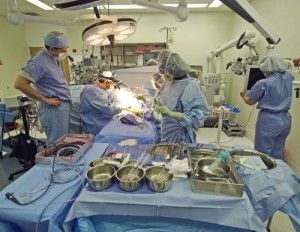
 A growing number of product liability lawsuits are being filed over the use of power morcellators, medical devices used during hysterectomy and myomectomy surgeries.
One such power morcellator lawsuit, filed by a New York woman, claims that morcellator device manufacturer Karl Storz Endoscopy-America, Inc. was aware that uterine fibroids harbored cancerous tissue and of the risk of the device spreading cancer in the body of women.
The U.S. Food and Drug Administration warned that morcellators can spread undetected cancer cells into other parts of women’s bodies.
Plaintiff Adelaide B. underwent a partial hysterectomy in November 2012 due to a fibroid condition. During this procedure, a Karl Storz Rotocut power morcellator was used to remove tissue. After a pathological examination of the tissue removed by the power morcellator, it was determined that a leiomyosarcoma cancer was present.
According to the morcellator cancer lawsuit, Adelaide was forced to undergo a more complete hysterectomy and chemotherapy in an effort to destroy the cancer cells the power morcellator released into her body.
However, in August, it was found that the leiomyosarcoma had spread throughout her pelvic region and intestines. Adelaide was admitted to the hospital for a third time for treatment of the spreading morcellator cancer, which included a resection of her small bowel.
Adelaide and her physicians claim they were unaware of the risks of spreading cancer through use of a morcellator and would not have used the power morcellator had they been informed of the risks associated with the device.
Adelaide is undergoing numerous painful and risky procedures to stop the cancer and is suing Karl Storz for pain and suffering, medical expenses, loss of income and shortened life expectancy.
Overview of Power Morcellators
Morcellators do the cutting in laparoscopic and robotic surgeries, breaking large tissue masses into small fragments with the help of tiny rotating blades. The broken down tissues are then vacuumed out of the patient’s body.
Power morcellation requires incisions of less than two centimeters to remove fibroids and other tissue. These tiny incisions mean doctors do not have to make large cuts through the patient’s core stomach muscles. The technique has led to quicker patient recovery times, less pain and fewer complications.
But power morcellators have recently been linked to the spread of an aggressive form of uterine cancer called leiomyosarcoma.
Morcellator Studies
In February, a study published in Obstetrics & Gynecology found undetected uterine sarcomas in 2.7% (about one in 368) of 2,575 women who underwent fibroid removal surgery.
Morcellators may spread the cancerous tissue, which is typically not diagnosed before surgery. Patients should be informed of “the possibility of a poorer prognosis should an unidentified malignancy be morcellated,” the researchers concluded.
Another study published the same month in JAMA Oncology found that the risk of spreading cancerous tissue via power morcellators increases with age.
The researchers found that from 2006 to 2012, 7.7% of 41,777 myomectomies were performed with morcellators. “Electric power morcellation should be used with caution in older women undergoing myomectomy,” the authors said.
FDA Warning on Power Morcellators
In April 2014, the FDA issued a warning advising surgeons not to use laparoscopic power morcellators during hysterectomy or myomectomy surgeries due to the risk they may spread undiagnosed cancerous uterine tissue.
The agency estimates that about one in 350 women who require hysterectomy or myomectomy surgery for uterine fibroids have undiagnosed uterine sarcoma. If morcellators are used on these patients, there is a risk they will spread cancerous tissue to other parts of the body.
According the FDA warning, “There is no reliable way to determine if a uterine fibroid is cancerous prior to removal. Patients should know that the FDA is discouraging the use of laparoscopic power morcellation for hysterectomy or myomectomy, and they should discuss the risks and benefits of the available treatment options with their health care professionals.”
To reduce the spread of cancerous tissue during fibroid removal and hysterectomy surgeries, many hospitals have discontinued use of power morcellators on women who have risk factors for gynecologic cancer.
The Power Morcellator Cancer Lawsuit is Case No. 1:15-cv-07556-JPO in the U.S. District Court for the Southern District of New York.
Do YOU have a legal claim? Fill out the form on this page now for a free, immediate, and confidential case evaluation. The morcellation cancer attorneys who work with Top Class Actions will contact you if you qualify to let you know if an individual lawsuit or class action lawsuit is best for you. [In general, morcellator cancer lawsuits are filed individually by each plaintiff and are not class actions.] Hurry — statutes of limitations may apply.
ATTORNEY ADVERTISING
Top Class Actions is a Proud Member of the American Bar Association
LEGAL INFORMATION IS NOT LEGAL ADVICE
Top Class Actions Legal Statement
©2008 – 2026 Top Class Actions® LLC
Various Trademarks held by their respective owners
This website is not intended for viewing or usage by European Union citizens.
Get Help – It’s Free
Join a Free Morcellation Cancer Class Action Lawsuit Investigation
If you or a loved one were diagnosed with cancer in the uterus, pelvis or abdomen within two years of undergoing surgery for a myomectomy (removal of fibroids), hysterectomy (removal of the uterus), oophorectomy (removal of the ovaries), or salpingectomy (removal of fallopian tubes), you may have a legal claim. See if you qualify by filling out the short form below.
An attorney will contact you if you qualify to discuss the details of your potential case at no charge to you.
Oops! We could not locate your form.











