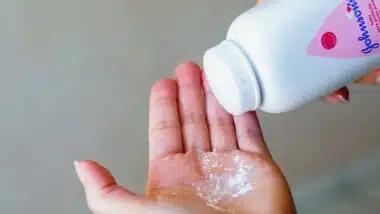
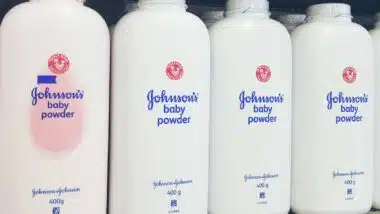
 Johnson & Johnson is facing an increasing number of talcum baby powder cancer lawsuits.
One of these recent baby powder cancer lawsuits involves a woman who alleges J&J’s talc based products caused her to develop ovarian cancer.
This case is significant, as it may start a domino chain of multimillion dollar verdicts against Johnson & Johnson.
Two St. Louis juries have already ruled in favor of the plaintiffs, resulting in two major awards the company had to pay up in the talcum baby powder cancer lawsuits.
One of these claims had awarded $72 million to the ovarian cancer victim, with the other resulting in a $55 million.
While Johnson & Johnson is appealing these verdicts, the company may face other formidable talcum baby powder cancer lawsuits. Talcum baby powder lawsuits have been filed over the years, from women who allegedly developed ovarian cancer.
Recent scientific research indicates that when talc particles enter the bloodstream, when applied through the genital area. When the talc particles settle in the ovaries, they can potentially fester into cancer cells.
Overview of Talcum Baby Powder Cancer Lawsuits
Approximately 1,800 talcum baby powder lawsuits have been filed in St. Louis against Johnson & Johnson, filed by women or loved ones of women who developed ovarian cancer soon after using the product.
Even with the number of claims mounting, Johnson & Johnson attorneys are expected to argue there is no definitive scientific link between talc and ovarian cancer.
Johnson & Johnson is also planning to fight each individual case, with plaintiff attorneys predicting the company to argue that the allegations would be lacking any sufficient evidence.
According to a statement released by the company, a New Jersey judge had recently dismissed two talcum baby powder cancer lawsuits for lack of scientific evidence.
However if Johnson & Johnson loses a third talcum baby powder lawsuit, with another large multimillion dollar verdict, it could result in the company being pressured into offering a settlement.
Talcum baby powder attorneys argue the company knew of the alleged link between ovarian cancer and talcum powder, but failed to warn consumers.
“The internal documents show that as the medical community became aware that talc causes cancer, they (Johnson and Johnson) began target-marketing to blacks and hispanics, the two groups they knew were at risk and who were the highest user rates,” a class action attorney said.
Patients who may have been affected by talcum baby powder cancer, may be able to file legal action against Johnson & Johnson. Potential claimants should contact specialized attorneys, to determine eligibility for a talcum baby powder lawsuit.
Do YOU have a legal claim? Fill out the form on this page now for a free, immediate, and confidential case evaluation. The attorneys who work with Top Class Actions will contact you if you qualify to let you know if an individual lawsuit or class action lawsuit is best for you. [In general, baby powder cancer lawsuits are filed individually by each plaintiff and are not class actions.] Hurry — statutes of limitations may apply.
ATTORNEY ADVERTISING
Top Class Actions is a Proud Member of the American Bar Association
LEGAL INFORMATION IS NOT LEGAL ADVICE
Top Class Actions Legal Statement
©2008 – 2026 Top Class Actions® LLC
Various Trademarks held by their respective owners
This website is not intended for viewing or usage by European Union citizens.
Get Help – It’s Free
Join a Free Baby Powder Cancer Class Action Lawsuit Investigation
If you used Johnson’s Baby Powder, Shower to Shower, or another talcum powder product and were diagnosed with ovarian cancer, you may have a legal claim. Family members of loved ones who died of ovarian cancer can also join. Submit your information now for a free case evaluation.
An attorney will contact you if you qualify to discuss the details of your potential case at no charge to you.
Please Note: If you want to participate in this investigation, it is imperative that you reply to the law firm if they call or email you. Failing to do so may result in you not getting signed up as a client, if you qualify, or getting you dropped as a client.