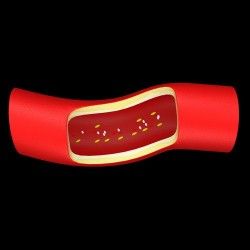
 While designed to prevent serious complications from errant blood clots, recent IVC filter lawsuits, including a wrongful death lawsuit, allege that IVC filters cause more problems than they prevent.
An IVC filter is a small “net” inserted into the body to catch blood clots. Physicians insert the IVC filter into the large blood vessel — the inferior vena cava, hence the initials — that leads to the heart.
In at-risk patients, blood clots may occur in the lower body. Once they form, they can travel upwards. If these blood clots get stuck in the heart or lungs, they may cause certain types of heart attacks, as well as pulmonary embolisms.
IVC filters are designed to lock into place in the inferior vena cava and capture blood clots before they can reach the critical tissues of the heart and lungs.
However, IVC filter lawsuits allege that filters made by C.R. Bard may carry serious risks. Catherine R. of St. Louis, filed a wrongful death lawsuit, alleging that her late husband, Johnny R. died due to design flaws in C. R. Bard’s IVC filters.
Johnny R. had a C. R. Bard’s filter implanted in November 2006 in a He died in September 2012.
The IVC filter lawsuit alleges that C. R. Bard’s IVC filter is defective, C. R. Bard knew about it, and that they fraudulently marketed the device anyway.
C. R. Bard’s own internal documents and communications reveal that the company had serious reservations about the device at least as far back as 2004, according to the lawsuit.
The IVC filter lawsuit cites internal communications that indicate that C. R. Bard was worried that its device had a much higher rate of complication compared to other brands and models of IVC filters.
These alleged complications included problems like the device “migrating” or moving within the body, causing damage to organs and possibly even death if the tiny metal implant damaged the heart.
Additionally, the lawsuit alleges that C. R. Bard’s models of IVC filters could break apart, possibly causing many of the same types of injuries as the blood clots they were designed to defend against.
The IVC filter lawsuit alleges that C. R. Bard actively tried to “silently recall” its IVC filters without alerting the public. Allegedly, C. R. Bard began frantically re-designing its IVC filters.
However, its “G2,” or second-generation IVC filter, allegedly suffered from many of the same complications as its original model. One G2 IVC filter was implanted in Johnny R.
Allegedly, it was not until 2011 that C. R. Bard finally redesigned its IVC filters to function as well as other available IVC filters, even as C.R. Bard marketed its allegedly-defective IVC filters as superior to other options.
In general, IVC filter lawsuits are filed individually by each plaintiff and are not class actions.
Do YOU have a legal claim? Fill out the form on this page now for a free, immediate, and confidential case evaluation. The attorneys who work with Top Class Actions will contact you if you qualify to let you know if an individual lawsuit or class action lawsuit is best for you. Hurry — statutes of limitations may apply.
ATTORNEY ADVERTISING
Top Class Actions is a Proud Member of the American Bar Association
LEGAL INFORMATION IS NOT LEGAL ADVICE
Top Class Actions Legal Statement
©2008 – 2026 Top Class Actions® LLC
Various Trademarks held by their respective owners
This website is not intended for viewing or usage by European Union citizens.
Get Help – It’s Free
Join a Free IVC Filter Class Action Lawsuit Investigation
If you or a loved one were injured by IVC filter complications, you may have a legal claim. See if you qualify to pursue compensation and join a free IVC filter class action lawsuit investigation by submitting your information for a free case evaluation.
An attorney will contact you if you qualify to discuss the details of your potential case.
Oops! We could not locate your form.