 A Waco physician was faced with a Steven Johnson Syndrome (SJS) lawsuit after his patient died from sepsis as a result of his SJS condition. The patient’s condition was said to be caused by taking Bactrim. A jury found the physician not guilty, deciding that his treatment of the patient was the best course of action and that other doctors would have taken the same steps.
Dr. Michael Burbidge Jr. treated Central Freight Lines employee Harold H. in 2011, who died in August of the same year. Burbidge prescribed Bactrim twice for Harold, who complained of rashes. Burbidge believed this was the best course of action for Harold, who also had diabetes, prostate ailments, and high blood pressure.
Harold’s sister, Mildred S., was the individual who accused Burbidge of negligence and filed the SJS lawsuit against him. Mildred believed “it was clear from the hospital records and direct history from the patient that Dr. Burbidge should not have prescribed a known allergen [Bactrim] to [Harold].” Burbidge claimed that his use of Bactrim was brief and did not cause the development of SJS in his patient several months later.
The jury deliberated for less than an hour before deciding the Burbidge was free from blame and that he did “what any family practice physician of ordinary prudence would have done,” according to the jury’s decision.
Part of the problem, according to infection disease specialist Dr. Scott Lea, was that SJS is an extremely rare condition that family practice physicians might never encounter in their lifetime. Furthermore, once SJS is developed, it can be tricky to manage.
Mildred was seeking $4 million from the SJS lawsuit initially but later adapted her claim. She asked the jury to award $400,000 for pain and mental anguish and $146,734 for medical expenses. She, along with Harold’s family, is considering an appeal of this SJS lawsuit.
Steven Johnson Syndrome
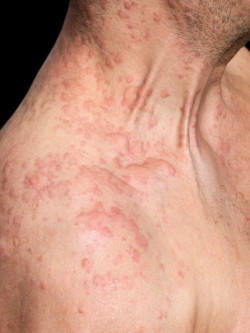
Stevens Johnson Syndrome is a severe skin condition that is typically caused by an allergic reaction to a drug. It begins with a red or purplish rash and later develops to severe blisters. The blisters may become so severe that the skin essentially burns from the inside out, causing the infected skin to shed. SJS may also affect mucous membranes such as the mouth or pubic areas.
SJS requires immediate hospitalization and may lead to further infections, sepsis, and death. Five to 15 percent of SJS patients die from the condition.
If the blisters cover more than 10 percent of the skin (usually more than 30 percent) the disease is then called Toxic Epidermal Necrolysis (TEN). The blistering is so severe that the skin can peel off in sheets, leaving the body even more exposed to secondary infections. The fatality rate of TEN is significantly higher than SJS, rising to 30-40 percent.
Several medications are under investigation by SJS attorneys. Many individuals have filed SJS lawsuits against drug manufacturers, and an SJS class action lawsuit investigation is currently underway.
Many SJS lawsuits name drug manufacturers as defendants instead of the treating physician(s). It has been claimed that the warning labels on certain drugs are inadequate and do not properly warn about SJS or TEN. This suggests that the treating physicians, such as Burbidge, may not be responsible for infection, sepsis, or death that may follow SJS.
Do YOU have a legal claim? Fill out the form on this page now for a free, immediate, and confidential case evaluation. The Stevens Johnson Syndrome attorneys who work with Top Class Actions will contact you if you qualify to let you know if an individual lawsuit or class action lawsuit is best for you. [In general, SJS lawsuits are filed individually by each plaintiff and are not class actions.] Hurry — statutes of limitations may apply.
ATTORNEY ADVERTISING
Top Class Actions is a Proud Member of the American Bar Association
LEGAL INFORMATION IS NOT LEGAL ADVICE
Top Class Actions Legal Statement
©2008 – 2026 Top Class Actions® LLC
Various Trademarks held by their respective owners
This website is not intended for viewing or usage by European Union citizens.
Get Help – It’s Free
Help for Victims of Stevens Johnson Syndrome
If you or a loved one were diagnosed with Stevens Johnson Syndrome (SJS) or toxic epidermal necrolysis (TEN) after taking a prescribed or over-the-counter medication, you may be eligible to take legal action against the drug’s manufacturer. Filing an SJS lawsuit or class action lawsuit may help you obtain compensation for medical bills, pain and suffering, and other damages. Obtain a free and confidential review of your case by filling out the form below.
An attorney will contact you if you qualify to discuss the details of your potential case at no charge to you.
Oops! We could not locate your form.