
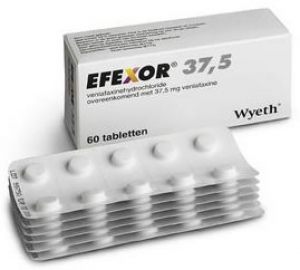
 There are a number of anti-depressants available that are marketed toward pregnant women—but some of them, including Effexor and Zoloft, have been linked to birth defects. This lack of warning has prompted hundreds of parents to sue the drug makers for counts of negligence, product liability and failure to warn.
Plaintiffs Meredith and Peter Gear filed an Effexor lawsuit on May 17, 2013 after their son, “WMG,” was born with congenital birth. According to the birth defects lawsuit, the Minnesota mother took Effexor throughout her pregnancy as recommended by her doctor.
Born in 2009, WMG was “suffering from a very serious and life-threatening birth defect called pyloric stenosis, as well as other birth defects and/or conditions not yet discovered,” the Effexor lawsuit says. The child has had to undergo surgeries to repair his birth defect, and will likely have additional surgeries in the future.
Mrs. Gear says that if she or her doctor had known about the risks of Effexor side effects on fetuses, she never would have taken the drug—no mother would willingly risk the health of her child. However, she says that Pfizer Inc. purposefully hid the reality of Effexor side effects because the drug was so profitable to the company. The Gears claim that Pfizer knew, or at the very least should have known, about these Effexor complications. They say Pfizer should have known that Effexor can cross the placenta and impact a fetus’ health and well-being. In early medical testing, Effexor was linked to birth defects during animal testing—even as early as 1996.
Pfizer Concealed Effexor Birth Defect Link
According to the Gears, Pfizer “misrepresented and continues to misrepresent the safety and efficacy of Effexor.” They claim that Pfizer “knew from preclinical studies and subsequent published studies that dangerous birth defects were associated with” the drug, but they chose to stay mum. According to the Effexor lawsuit, Pfizer “did not properly publish the results of studies that it did conduct, which would have reflected increased risks.”
Similar to patients, doctors depend on information provided by drug makers to make prescription choices and recommendations. Although the research was technically available, it was Pfizer’s job to make all safety warnings accessibly to healthcare providers, patients and the general public.
“Pfizer failed to adequately warn or remedy the risks, and, instead, concealed, suppressed, and failed to disclose the dangers,” their Effexor lawsuit says.
The couple claims that before Mrs. Gear became pregnant, Pfizer “had the knowledge, the means, and the duty to provide to the medical community and the consuming public with more accurate warnings regarding the association between Effexor and congenital birth defects.”
However, they allege that Pfizer simply saw the drug as too lucrative to risk any dip in sales, even if it was only for the duration of a woman’s pregnancy. They claim that Pfizer purposefully risked the life of numerous fetuses and newborns, all because the profits were too tempting to resist. In turn, they allege that Pfizer has put countless families into turmoil and financial ruin since birth defects can lead to mounting and lifelong medical bills.
An Altered Life
To this day, the Gears and other Effexor victims claim that the labels on the drug aren’t adequate. “Despite Pfizer’s knowledge of the dangers of birth defects, Pfizer failed and continues to fail to warn and disclose to consumers” the real Effexor side effects including birth defects. According to the Effexor lawsuit, Pfizer’s “failure to disclose this information was willful, wanton, and with intentional disregard to the health and safety of consumers.”
The couple says that the “current Effexor label remains deficient to adequately warn and accurately warn doctors and/or their patients about the increased risk of cardiac malformations and other birth defects that are seen in babies whose mothers took Effexor.” Part of their hope by filing an Effexor lawsuit is to help warn other parents about the risks of Effexor.
The Gears are suing Pfizer for defective design, failure to warn, negligence, negligent misrepresentation, fraud/fraudulent misrepresentation/concealment, and breach of warranties.
The Effexor birth defects lawsuit is Meredith Gear, et al. v. Pfizer Inc., et al., Case No. 1:13-cv-03345-JPO, in the U.S. District Court for the Southern District of New York.
Did Your Child Suffer Effexor Birth Defects?
Studies have shown that women who take SSRI antidepressants during the first trimester of pregnancy are more likely to give birth to a child with congenital defects. These congenital defects include:
ASD/VSD (hole in heart)
Hypoplastic Left Heart or Right Heart Syndrome
Tetralogy of Fallot
Pulmonary Valve Stenosis
Other heart malformation or heart defect
Cleft Palate or Cleft Lip
Spina Bifida
Omphalocele
Club foot
If you took an antidepressant such as Celexa, Lexapro, Paxil, Prozac, Zoloft or Effexor and your child was born with one or more of the birth defects listed above, you may qualify to pursue compensation from the drug manufacturer. Your child must be under the age of 18 and had surgery to correct his or her congenital defects. Learn more and obtain a free case review at the SSRI Antidepressant Birth Defect Class Action Lawsuit Investigation.
ATTORNEY ADVERTISING
Top Class Actions is a Proud Member of the American Bar Association
LEGAL INFORMATION IS NOT LEGAL ADVICE
Top Class Actions Legal Statement
©2008 – 2026 Top Class Actions® LLC
Various Trademarks held by their respective owners
This website is not intended for viewing or usage by European Union citizens.













One thought on Couple Sues Pfizer Over Child’s Alleged Effexor Birth Defects