
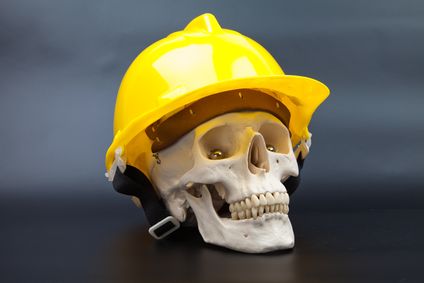
 Workers in nearly every construction trade face an elevated risk for asbestos exposure.
All buildings constructed between the early 1920s and the late 1980s are presumed to harbor asbestos and products that contain asbestos in walls, floors, ceilings, insulation, pipes, HVAC, boiler rooms and more.
It is estimated that more than 1 million construction workers every year work with materials that contain asbestos, which may lead to the development of asbestos cancers such as mesothelioma or lung cancer.
Dangers of Asbestos Exposure
Asbestos is a heat and flame resistant mineral that was once an ingredient in many different construction materials. In the mid-1960s, scientists confirmed that asbestos exposure can cause a variety of serious lung illnesses, including lung cancer.
Asbestos is also the only confirmed cause of mesothelioma, a rare and aggressive cancer that can develop several decades after someone first breathes it in. Construction professionals who worked with asbestos long ago continue to develop asbestos cancer and lung diseases to this day.
While manufacturers have now phased out virtually every product that contains asbestos, contaminated building materials still exist at countless jobsites, placing workers at serious risk of illness or death from asbestos exposure.
A study in the American Journal of Respiratory and Critical Care Medicine estimates that at least 1.3 million construction industry workers are still at risk for occupational asbestos exposure. Especially at risk are demolition workers who create and dispose of contaminated debris.
However, the asbestos exposure risk applies to workers in any field who perform renovations on older buildings, especially structures built before the 1970s.
Asbestos Risk for Construction Workers
Without proper asbestos exposure protections, construction workers can come into contact with asbestos during construction projects and subsequent maintenance, remodeling or demolition of buildings.
Workers unknowingly may place family members in danger by exposing them to asbestos fibers that can be carried home on work clothes or on a worker’s body.
Exposure to even a fractional amount of asbestos during construction, repairs, demolition, alteration or maintenance can result in serious health problems, including the risk of developing mesothelioma, lung cancer or other related asbestos cancers.
Construction workers who are often at risk of asbestos exposure include:
- Drywall installers
- Electricians
- Insulators
- Plumbers and pipefitters
- Sheet metal workers
- Laborers
- Brickmasons
- Carpenters
- Plasterers
- Welders
Workplace Safety
Starting in the 1970s, the government developed regulations that were designed to protect construction workers from harmful health risks associated with the materials involved in asbestos construction.
Today, most construction sites where asbestos is known to be present are monitored daily for levels of asbestos in the work environment. However, companies often do not follow these rules and put construction workers at risk.
The Occupational Safety and Health Administration (OSHA) has established rules for controlled zones at construction sites where asbestos is present. For their own protection, workers are required to follow safety precautions, including wearing protective respiratory equipment and clothing.
Employers are also required to provide decontamination areas for construction workers at sites where asbestos is present. At sites where an employee is exposed to greater amounts of asbestos, employers are required to provide routine medical examinations for workers.
In addition, OSHA rules stipulate that if an employee is working in an area that contains asbestos, the employer must pay for special training that covers the dangers of asbestos and what precautions to take.
If you or a loved one has worked in the construction industry and has subsequently been diagnosed with mesothelioma or other asbestos-related health condition, you should consider filing an asbestos lawsuit.
Do YOU have a legal claim? Fill out the form on this page now for a free, immediate, and confidential case evaluation. The attorneys who work with Top Class Actions will contact you if you qualify to let you know if an individual mesothelioma lawsuit or asbestos class action lawsuit is best for you. [In general, mesothelioma lawsuits are filed individually by each plaintiff and are not class actions.] Hurry — statutes of limitations may apply.
ATTORNEY ADVERTISING
Top Class Actions is a Proud Member of the American Bar Association
LEGAL INFORMATION IS NOT LEGAL ADVICE
Top Class Actions Legal Statement
©2008 – 2026 Top Class Actions® LLC
Various Trademarks held by their respective owners
This website is not intended for viewing or usage by European Union citizens.
Get Help – It’s Free
Join a Free Asbestos Mesothelioma Class Action Lawsuit Investigation
If you or a loved one were exposed to asbestos and developed mesothelioma, lung cancer, or cancer in the lining of the lungs, abdomen or chest cavity, you may be able to take legal action against the companies responsible. Don’t delay – in most states the statute of limitations is two years to file an asbestos lawsuit after you’re diagnosed. Obtain a free and confidential case evaluation be filling out the form below.
An attorney will contact you if you qualify to discuss the details of your potential case at no charge to you.












One thought on Construction Workers At High Risk for Asbestos Exposure