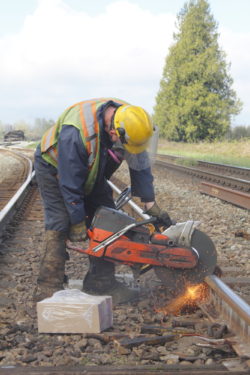
 Occupational hazards plague many Americans due to a variety of safety issues. One such issue is chemical exposure in the work environment. A variety of chemicals in the workplace can pose an increased risk to employees for developing serious medical conditions, including cancer.
Of particular concern is the risk that railroad workers are faced with in the scope of their employment. Railroad workers are exposed to a number of chemicals and carcinogenic materials during their everyday job responsibilities. These men and women deal with creosote, asbestos and benzene cancer risk due to their exposure while working with these materials.
Benzene Cancer Risk
Of particular concern is benzene cancer risk. As a crude oil product, benzene is a colorless and flammable liquid that has a slightly sweet smell. Benzene is used as a solvent that aims to extract or dissolve substances and also is used to make other chemicals, including rubbers, lubricants, dyes and detergents.
It is one of the top 20 most commonly used chemicals in the nation. Railroad workers are exposed to benzene by breathing in air that is contaminated with the chemical. Additionally, benzene can be absorbed when the chemical makes contact with the skin, although this type of exposure is typically less common.
Benzene is a known carcinogen, and its status as such has been determined by numerous studies undertaken on lab animals and by studying the effect of the chemical on people.
Lab studies have shown that various tumors develop in lab animals, and in humans, leukemia. In particular, a form known as acute myeloid leukemia, or AML, has been found in humans. Other blood-related cancers including multiple myeloma and non-Hodgkins lymphoma are also seen with benzene exposure, although these types of cancers are less common than AML in those exposed to benzene.
Thus far, a number of agencies have studied the carcinogenic potential of benzene. These agencies have determined that a real benzene cancer risk exists. These organizations include the International Agency for Research on Cancer (IARC), a division of the World Health Organization (WHO), the National Toxicology Program (NTP), and the U.S. Environmental Protection Agency (EPA) have all noted a distinct benzene cancer risk and have determined that the chemical is a carcinogen.
Other Benzene Risks
In addition to the benzene cancer risk, benzene poses other health risks as well. Inhaling benzene can cause both short-term and long-term effects. Short-term benzene exposure can lead to dizziness, headaches, drowsiness, confusion, tremors, unconsciousness and irritation of the eyes, skin or throat. Consuming benzene-contaminated foods can lead to vomiting, irritation of the stomach, rapid heart rate and convulsions in addition to the aforementioned issues.
Being exposed to benzene in the long-term causes effects on the bone marrow of the body, which can lead to a low white blood cell count, a low red blood cell count (anemia) and a low blood platelet count. There is also some concern that benzene exposure causes reproductive harm, and acute or long-term exposure to benzene can be potentially fatal.
Do YOU have a legal claim? Fill out the form on this page now for a free, immediate, and confidential case evaluation. The attorneys who work with Top Class Actions will contact you if you qualify to let you know if an individual railroad worker cancer lawsuit or class action lawsuit is best for you. [In general, railroad worker cancer lawsuits are filed individually by each plaintiff and are not class actions.] Hurry — statutes of limitations may apply.
ATTORNEY ADVERTISING
Top Class Actions is a Proud Member of the American Bar Association
LEGAL INFORMATION IS NOT LEGAL ADVICE
Top Class Actions Legal Statement
©2008 – 2026 Top Class Actions® LLC
Various Trademarks held by their respective owners
This website is not intended for viewing or usage by European Union citizens.
Get Help – It’s Free
Join a Free Railroad Worker Cancer Class Action Lawsuit Investigation
If you qualify, an attorney will contact you to discuss the details of your potential case at no charge to you.
Please Note: If you want to participate in this investigation, it is imperative that you reply to the law firm if they call or email you. Failing to do so may result in you not getting signed up as a client, if you qualify, or getting you dropped as a client.
E-mail any problems with this form to:
[email protected].
Oops! We could not locate your form.