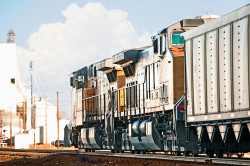
 Many employees of railroads have developed cancer but may not be aware of a benzene cancer risk that may be associated with their work with the railroads.
Benzene is a liquid that is both colorless and flammable that evaporates when exposed to air. It can be formed by natural processes but it is also produced as a result of the burning of diesel fuel. Naturally, benzene occurs as a result of forest fires and volcanic activity.
According to cancer.org, benzene has traditionally been used as a starting component in making other things and is one of the twenty most commonly used chemicals.
Benzene has been used to make plastics, lubricants, rubbers, dyes, detergents, pesticides and drugs. Benzene is present in both crude oil and gasoline as well as motor exhaust and cigarette smoke. Unfortunately, benzene is also classified as a carcinogen.
Benzene cancer risk is high for those who work around substances that contain benzene. For railroad workers, that is most of their environment. They are often around this chemical and exposed through inhalation and through skin contact, both of which put them at risk for benzene cancer.
Over two decades ago benzene was banned, but some products still contain the chemical, including those used at rail yards.
Normally, the types of cancer that are associated with benzene are lung cancer and leukemia.
But benzene cancer risk because of railroad work may mean that employees could develop not only lung cancer or leukemia, but one of the following types of cancer:
- Bladder cancer
- Colon cancer
- Esophageal cancer
- Hodgkin’s Lymphoma
- Kidney cancer
- Mesothelioma
- Multiple myeloma
- Non-Hodgkin’s lymphoma
- Laryngeal cancer
- Rectal cancer
- Stomach cancer
- Throat cancer
Under the Federal Employers Liability Act (FELA), railroad companies are required to provide a safe working environment for their employees and protect them from benzene cancer risk.
FELA was put into law in the early 20th century to protect railroad workers who were injured on the job. Congress enacted the law because of the large number of railroad workers who had been hurt.
Under this law, the worker who has been injured must prove that the railroad company was legally negligent. When this has been proven, the injured employee is entitled to complete compensation and is often given a much higher award than what could be provided through workers compensation elsewhere.
If you or someone you love has worked on the railroad and believe a benzene cancer risk has occurred, or you have suffered from a cancer diagnosis, you may be entitled to legal compensation.
Do YOU have a legal claim? Fill out the form on this page now for a free, immediate, and confidential case evaluation. The attorneys who work with Top Class Actions will contact you if you qualify to let you know if an individual railroad worker cancer lawsuit or class action lawsuit is best for you. [In general, railroad worker cancer lawsuits are filed individually by each plaintiff and are not class actions.] Hurry — statutes of limitations may apply.
ATTORNEY ADVERTISING
Top Class Actions is a Proud Member of the American Bar Association
LEGAL INFORMATION IS NOT LEGAL ADVICE
Top Class Actions Legal Statement
©2008 – 2026 Top Class Actions® LLC
Various Trademarks held by their respective owners
This website is not intended for viewing or usage by European Union citizens.
Get Help – It’s Free
Join a Free Railroad Worker Cancer Class Action Lawsuit Investigation
If you qualify, an attorney will contact you to discuss the details of your potential case at no charge to you.
Please Note: If you want to participate in this investigation, it is imperative that you reply to the law firm if they call or email you. Failing to do so may result in you not getting signed up as a client, if you qualify, or getting you dropped as a client.
E-mail any problems with this form to:
[email protected].
Oops! We could not locate your form.