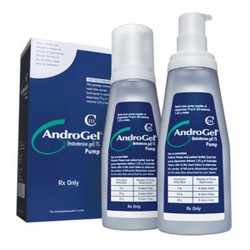
 An AndroGel lawsuit has been filed against the makers of the testosterone drug, alleging it caused a man’s death.
David Lopriore started taking AndroGel at 55 years of age after his physician diagnosed the man with “Low T,” or decreasing testosterone levels in males, according to the testosterone product lawsuit. However, after taking AndroGel, Lopriore allegedly suffered from a myocardial infarction, a clot in the blood vessel that feed heart tissue. This led to his death from cardiac arrest. According to the text of his heir’s AndroGel lawsuit, Lopriore had no prior history of heart problems.
The AndroGel lawsuit alleges that the makers of AndroGel have aggressively “promoted” the Low T as a medical condition. Males normally produce less testosterone as they age, but allegedly some males suffer from more pronounced effects from these changes, and may constitute a medical problem, producing symptoms like lower libido, decreasing muscle mass, and a general lack of energy. To this end, the makers of AndroGel invested more than $80 million in marketing the drug in a single year, and generated $1.4 billion in sales in 2013.
However, AndroGel lawsuits and peer-reviewed research studies suggest a link between an increased risk of blood-clot complications and drugs like AndroGel. Blood clotting is a part of the healing process in a healthy human. But when this process misfires, it can cause life-threatening problems, like strokes and myocardial infarctions.
Several studies have supported this alleged link. The prestigious New England Journal of Medicine published an article in 2010 on the subject. In this peer-reviewed paper, researchers found that patients taking these drugs appeared to have a higher-than-average risk of stroke related complications. More specifically, a 2010 study in The Journal of the America Medical Association found a 30 percent increase in the risk of stroke for patients using Low T drugs like AndroGel. Similar studies in PLoS ONE and other medical journals found similar results when they looked at medical records and case studies.
The litigation over AndroGel and related drugs have taken the form of a multidistrict litigation, or MDL. MDLs are a type of group lawsuit, in which individual AndroGel lawsuits are combined into a single legal proceeding. In many ways, MDLs are similar to class action lawsuits. But the main difference is that MDLs start out as individual lawsuits that are later combined into a single MDL, while class action lawsuits start out as group lawsuits.
The AndroGel Lawsuit is Lisa Beaumet, et al, v. AbbVie Incorporated, et al., Case No. 1:14-cv-5388, filed in the MDL In Re: Androgen Products Liability Litigation, MDL No. 2545, in the U.S. District Court for the Northern District of Illinois.
In general, AndroGel heart attack lawsuits are filed individually by each plaintiff and are not class actions.
Do YOU have a legal claim? Fill out the form on this page now for a free, immediate, and confidential case evaluation. The attorneys who work with Top Class Actions will contact you if you qualify to let you know if an individual lawsuit or class action lawsuit is best for you. Hurry — statutes of limitations may apply.
ATTORNEY ADVERTISING
Top Class Actions is a Proud Member of the American Bar Association
LEGAL INFORMATION IS NOT LEGAL ADVICE
Top Class Actions Legal Statement
©2008 – 2026 Top Class Actions® LLC
Various Trademarks held by their respective owners
This website is not intended for viewing or usage by European Union citizens.
Get Help – It’s Free
Join a Free Testosterone Product Class Action Lawsuit Investigation
If you or someone you know suffered a heart attack, stroke, blood clot, or other injury as a result of using a testosterone gel or cream, legal options are available. Find out if you qualify to join a free testosterone gel class action lawsuit investigation and pursue compensation for you or your loved one’s injuries by filling out the form below.
An attorney will contact you if you qualify to discuss the details of your potential case at no charge to you.
Oops! We could not locate your form.