
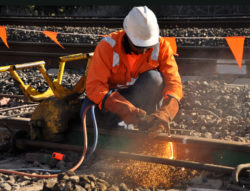
 A railroad cancer lawyer may be able to assist workers in pursuing legal action and recovering compensation for benzene-related illnesses.
Railroad workers who developed illnesses such as cancer after working with benzene and other materials may benefit from consulting a railroad cancer lawyer who could help recover compensation.
Many railroad workers who develop cancer may not immediately realize that their cancer could be linked to exposure to hazardous chemicals. They may assume their cancer is due to family history or other environmental factors when, in reality, their cancer may be linked to benzene exposure. Railroad workers who may have been exposed to benzene and developed cancer as a result can contact a railroad cancer lawyer for more information about their legal rights.
Benzene is a toxic, volatile, flammable liquid that was used as a starting material in making chemicals, plastics, rubbers, lubricants, and other materials. According to the American Cancer Society, benzene is classified as a known carcinogen by several national and international organizations including the International Agency for Research on Cancer (IARC), the National Toxicology Program (NTP), and the Environmental Protection Agency (EPA).
Although benzene was banned from consumer products over 20 years ago in the United States, and its usage as an industrial solvent has been reduced, it can still be found in certain railroad products.
The chemical is often a byproduct of coal distillation but can form from natural processes such as volcanic eruptions and forest fires. It is also a natural part of crude oil and gasoline. When diesel fuel containing benzene is burned, the most dangerous forms of benzene are created and released into the environment where they can be inhaled and absorbed through the skin.
Railroad workers are often exposed to this dangerous form of benzene because they are working with trains and in environments where large amounts of fuel are burned. The burned benzene can easily be inhaled by workers or absorbed through their skin while they work with railroad products and in benzene-heavy environments.
Early on, it was believed that benzene could only cause lung cancer, but exposure to the chemical has also been linked to bladder cancer, colon cancer, kidney cancer, mesothelioma, multiple myeloma, rectal cancer, stomach cancer, leukemia, and more. Other railroad materials such as creosote and other chemical solvents have been linked to cancers, chronic toxic encephalopathy, and other brain diseases.
Dangers from Creosote
Coal tar creosote is a wood preservative that has been used on railroad ties for decades.
According to the National Toxicology Program, a division of the Department of Health and Human Services, coal tars are associated with skin cancer and scrotal cancer. In a study back in 1946, the United Kingdom determined that fuel employees had a risk of lethal scrotal cancer that was 500 times that of other workers.
The Railway Tie Association reports that 98 percent of all wood crossties manufactured in the U.S. and Canada are treated with creosote or creosote and oil blends. Tests show creosote is the most complete and cost-effective wood preservative used on hardwood ties.
Besides weatherproofing, creosote helps preserve hardwood by protecting it from fungi and termites.
The Railway Tie Association says that “railroad workers do not manually handle crossties. Virtually all crossties are handled and installed by mechanized equipment.” Still, workers who do need to be exposed to creosote-treated crossties must wear long-sleeved shirts and special gloves to protect their skin from creosote exposure.
Despite the fact that new railways are rarely built these days, more than 20 million wood ties are replaced every year in North America. Many of the old ties are recycled for landscaping use or are used as fuel in co-generation facilities that are authorized to burn the wood to produce electricity and gas power. An estimated three to four million old wood ties end up in landfills every year.
Railroad companies who were responsible for providing a safe work environment may be in violation of the Federal Employers Liability Act (FELA). FELA allows employees who worked in unsafe environments to seek financial compensation via a lawsuit with the help of a railroad cancer lawyer. FELA lawsuits do not require out-of-pocket costs on the part of railroad workers.
If you or a loved one were diagnosed with cancer or another serious illness after working on the railroad for more than five years, a railroad cancer lawyer may be able to assist you in filing a railroad cancer lawsuit. A railroad cancer lawyer could help recover compensation for medical expenses, pain and suffering, loss of consortium, wrongful death, and more.
Do YOU have a legal claim? Fill out the form on this page now for a free, immediate, and confidential case evaluation. The attorneys who work with Top Class Actions will contact you if you qualify to let you know if an individual railroad worker cancer lawsuit or class action lawsuit is best for you. [In general, railroad worker cancer lawsuits are filed individually by each plaintiff and are not class actions.] Hurry — statutes of limitations may apply.
ATTORNEY ADVERTISING
Top Class Actions is a Proud Member of the American Bar Association
LEGAL INFORMATION IS NOT LEGAL ADVICE
Top Class Actions Legal Statement
©2008 – 2026 Top Class Actions® LLC
Various Trademarks held by their respective owners
This website is not intended for viewing or usage by European Union citizens.
Get Help – It’s Free
Join a Free Railroad Worker Cancer Class Action Lawsuit Investigation
If you qualify, an attorney will contact you to discuss the details of your potential case at no charge to you.
Please Note: If you want to participate in this investigation, it is imperative that you reply to the law firm if they call or email you. Failing to do so may result in you not getting signed up as a client, if you qualify, or getting you dropped as a client.
E-mail any problems with this form to:
[email protected].
Oops! We could not locate your form.












2 thoughts onRailroad Cancer Lawyer May Be Able to Assist with a FELA Claim