
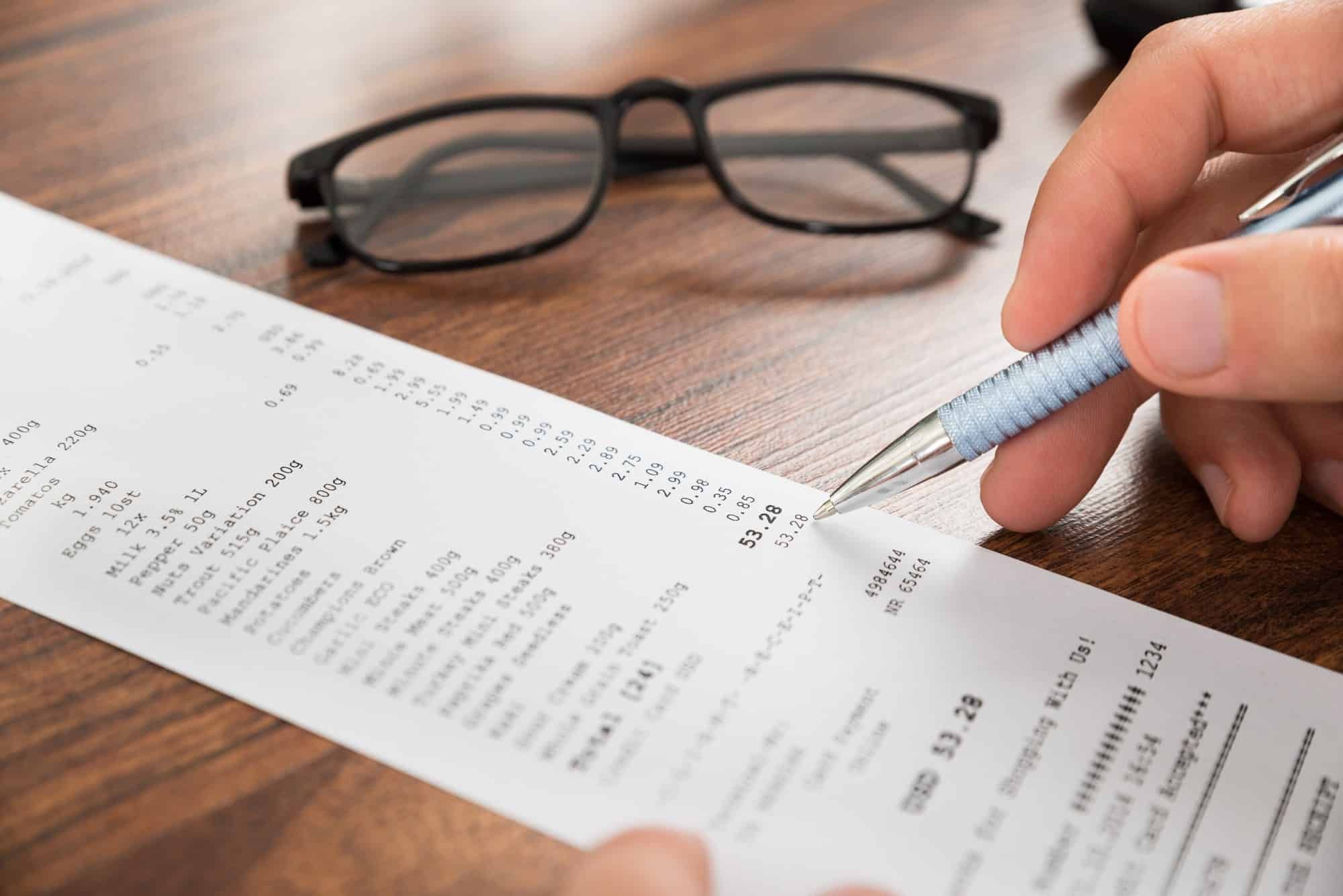
As Americans are stuck at home looking for ways to pass the time, it’s a good opportunity to get all that financial paperwork organized. If you’re someone who saves receipts, it’s always important to check the printed receipts you receive from retailers and restaurants—not just to make sure that you were charged correctly but also to check if your credit card information was printed illegally, including too much of your personal information.
If too much of your credit card information was printed on a receipt, this not only puts you at risk for identity theft, but you may also be eligible for compensation under the Fair and Accurate Credit Transactions Act (FACTA). FACTA was passed in 2003 as a way of protecting consumers from identity theft and has been in full effect for businesses since Dec. 1, 2006.
Why Was Your Credit Card Information Printed?
It’s legal for businesses to include some amount of your credit card information on the receipts they print, but there is a limit to how much of your personal information, including credit card information, they are allowed to show. The majority of the debit or credit card number should be truncated (that is, cut off or censored) so that anyone else who sees the receipt does not then have access to your credit card number or the expiration date.
Businesses are responsible for truncating card numbers until only the last five digits are shown. Digits from anywhere else in the card number string cannot be revealed. In other words, the first eleven digits of your sixteen-digit credit card number should be censored.

Card number information that is compliant with FACTA rules should look something like this:
**** **** ***1 2345
Often, businesses will choose to censor all but the last four digits of a card number since these numbers are divided into four-digit segments. Therefore, it may also look like this:
**** **** **** 4321
The other piece of your credit card information to look out for on printed receipts is your card’s expiration date. Under FACTA rules, no portion of your card’s expiration date should be included on the receipt. The entire expiration date should be censored (or simply not included) and should look something like this: **/****
See the picture at the bottom of this article for an example of what the account number and expiration date look like. They’re different from the other information on the receipt, which is not restricted under FACTA.
Please note that these FACTA rules only apply to electronically printed receipts for debit and credit cards. The rules do not apply to handwritten or imprinted receipts, or to receipts sent via email or text message.
Are There Exceptions to the FACTA’s Receipt Requirements?
Yes, there are exceptions to the requirements of the FACTA. The law’s limit on credit card number inclusion on receipts only applies to customer copies of receipts. Businesses may print the full credit or debit card number on the merchant copy of a receipt.
Merchants may need to access a credit or debit card number after a transaction in certain circumstances. This can occur if a merchant needs to correct a payment, run a card again, or offer a refund. Merchants are responsible for keeping your personal information safe, but are allowed to print more information about a credit or debit card for their own records than what they give to customers.
There are other exceptions to the FACTA’s requirements. Handwritten receipts or those made with an imprinting machine are not subject to the law’s requirements. Though these types of receipts are becoming less and less common, they are important to watch out for.
Though receipts with an entire card number printed on them are now rare, this does not mean that credit card theft or identity theft are similarly rare. Unfortunately, advancing technology has made it increasingly easy for thieves to access card information, and to combine it with other private information that could make it all the more damaging.
Many customers may be inadvertently careless with their receipts, believing that they will not contain too much information. However, it is important to dispose of all receipts properly. This is especially the case with handwritten or imprinted receipts, as they may contain all of your credit card information.
Graphic Tickets & Systems advises shredding any receipt that has personal information on it, so that a thief cannot piece this information together with other pieces of information and harm you. Even incomplete card numbers do pose some security risk. Consumers should be aware that a full credit card number, bank account number, or social security number on a receipt can pose a serious risk to your information security even if you did not sign the receipt.
The company also recommends shredding receipts that contain membership card numbers to a store, grocery store, or other businesses. Though less damaging than a credit card number, these pieces of information can used by thieves as access points to gain other kinds of information, and may be enough on their own for thieves to steal your identity.
Graphic Tickets & Systems goes on to warn customers that sometimes, cheaper household shredders may leave you open to identity theft, if they only shred vertically. These shredders make it easy to piece together strips of paper. However, shredders that shred both virtually and horizontally, or cut paper into smaller pieces may be better at protecting your identity. As you look for your old receipts, it may be good to make sure your household equipment is sufficient to protect your personal information, even as you attempt to dispose of your receipts responsibly.
What Risks Do You Face if Your Credit Card Information Was Revealed?
The exposure of credit card information like credit card numbers and card expiration dates can open consumers up to the risk of credit fraud and identity theft. If offered too much information on a receipt, identity thieves can piece together the information and potentially be able to access your full card number or accounts.
In some cases, thieves aren’t looking to use your credit card information themselves—instead, they may be looking to sell your data, along with the data of many others, on the “dark web” for a profit.
This can set you up for identify theft, fraud, and other serious financial problems. Recovering from identity theft can take years, as you may need to change account numbers, credit card numbers, and even take sites to repair your credit. Identity theft can seriously damage your credit, which can imperil your ability to take out a loan, buy a car or a house, or conduct other business transactions.
Could the Business Be Liable?
If a business prints too much of your credit card information on your receipt, they can be held liable and you may be able to file a FACTA lawsuit and pursue compensation. Reporting violations of the Fair and Accurate Credit Transactions Act helps enforce these rules and protect your information, but also helps to protect the information of hundreds or even thousands of other consumers.
Remember to regularly check the information printed on your receipts for compliance with FACTA. For violations made recklessly or willfully, statutory damages start at $100 and may be as much as $1,000 per violation. Make sure to keep any and all relevant receipts as evidence to support your claim.
Join a Free Credit Card Receipt Class Action Lawsuit Investigation
If you have a receipt, invoice or contract from a retailer or vendor that includes more than the last five digits of your credit card or debit card number or any portion of the expiration date, you may qualify to file a credit card receipt class action lawsuit.
This article is not legal advice. It is presented
for informational purposes only.
ATTORNEY ADVERTISING
Top Class Actions is a Proud Member of the American Bar Association
LEGAL INFORMATION IS NOT LEGAL ADVICE
Top Class Actions Legal Statement
©2008 – 2026 Top Class Actions® LLC
Various Trademarks held by their respective owners
This website is not intended for viewing or usage by European Union citizens.

Suing for unpaid wages in California: Recover unpaid overtime, back pay and more
April 2, 2026 | Legal News











24 thoughts onStuck at Home? Check Your Old Receipts for Credit Card Information!
Yes please add me I have 2 shoe boxes full of receipts.
Please add me.