
Zithromax Eye Infection Side Effects Can Lead to Blindness
By Andrea Gressman
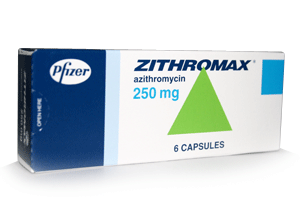 September 28, 2006 marked the first announcement by concerned researchers stating that patients who use Zithromax, a popular antibiotic manufactured by Pfizer, are four times more likely to have a recurring eye infection as a side effect than those who did not use Zithromax. The fact that brought more concern to this situation is that these Zithromax eye infections could potentially cause blindness. However, despite this release of information, Zithromax (also known as Z-Pak) has still been widely prescribed over the past few years as it seems that the general public still has a lack of information pertaining to these specific side effect risks. As a result, Zithromax side effect lawsuits continue to increase.
Ironically, Zithromax was designed as a treatment for this same eye infection, known as trachoma, that it has been linked to causing. According to the Journal of American Medical Association study, those who undergo surgery are at a reduced risk for a recurring eye infection than those who take Zithromax.
The study indicated that Z-Pak may decrease exposure to the bacteria that causes trachoma, which will stifle the immune system’s chances of developing natural resistances. Deborah Dean, who co-authored the paper and is currently developing a trachoma vaccine at the Research Institute at the Oakland Children’s Hospital, says Zithromax may wipe out the infection, but at the same time doesn’t give the immune system enough time to develop any natural resistances to the bacteria responsible for the infection.
The International Trachoma Initiative stated that around 8 million people suffered blindness or at least partial blindness as a result of Trachoma, which ranks in at number two for common causes of blindness. An additional study proved that Zithromax’s detriments outweigh its benefits in that it reduces the effectiveness of the immune system, making it more difficult for the body to resist infections that may occur later on in the future. Over time, the eye’s surface becomes scratched by eye-lashes, opening the path for bacteria to enter. Blindness then occurs as a result.
A discovery was made in 2005 involving the sexually transmitted disease, Chlamydia. Infections tapered off after patients took Zithromax, then rose due to high probability for subsequent infections. Charles Knirch, who is a Pfizer infectious disease researcher, was skeptical of the conclusion regarding immunity because those who conducted the research did not provide substantial evidence to back up the claim.
Zithromax Eye Infection Lawsuits
Due to the lack of awareness of the potential Zithromax eye infection side effect risks, more people continue to unknowingly take the prescription medication. As a result, the number of Zithromax lawsuits continues to increase due to so many people experiencing adverse side effects.
Updated October 18th, 2012
All medical device, dangerous drug and medical class action and lawsuit news updates are listed in the Drug and Medical Device section of Top Class Actions.
Top Class Actions Legal Statement














One thought on Zithromax Eye Infection Side Effects Can Lead to Blindness
is conjuctivitis a problem with the zithromax if it was prescribed a long time as a baby to a child with asthma and adhd.