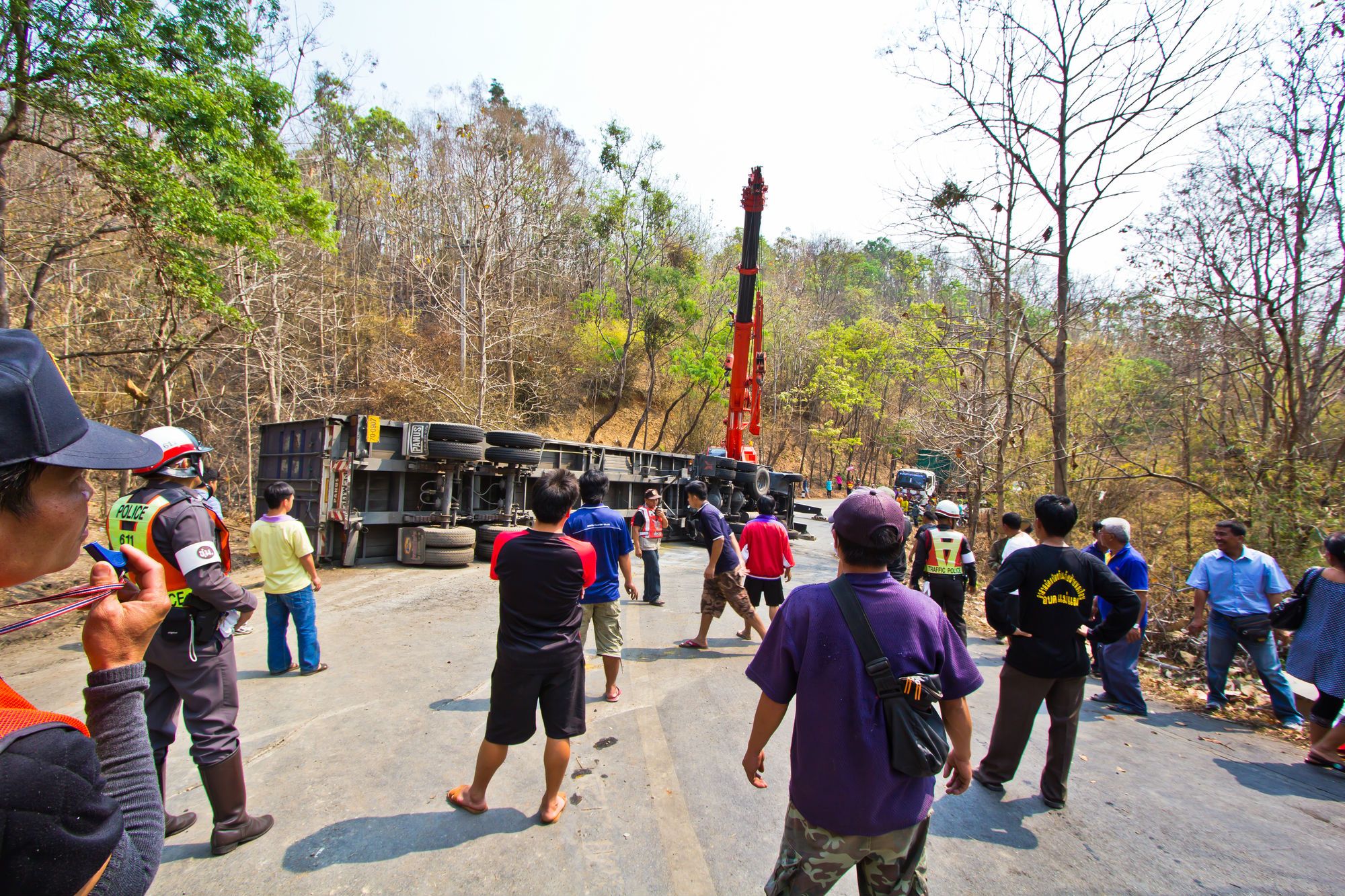
Getting into an accident with a truck or semi-trailer can be dangerous, and even fatal. Unfortunately, most fatalities and personal injury claims that occur in a truck accident are suffered by the drivers and passengers in smaller vehicles.
There are some steps drivers of other vehicles can take to prevent a truck accident from happening. One of these steps includes being aware of when a truck is on the road and staying a safe distance away. Truck drivers also play an essential role in this because they need to keep a safe distance from other vehicles. How far behind a truck another vehicle is can prevent a collision.
The Insurance Institute for Highway Safety notes that trucks often weigh as much as 20 to 30 times as much as passenger vehicles, and are significantly taller. In case of an accident, these vehicles can do a great deal of damage. Moreover, emergency maneuvering in case of an impending accident can be much more difficult for large trucks because of their size and weight, so it is essential that people driving smaller vehicles around them are aware of the distance they leave between themselves and these larger vehicles.
Are Truck Accidents Common?
An average of 500,000 truck accidents occur annually in the United States. Some 20% of these crashes involve a serious injury, and 1% result in fatalities—which may seem like a small percentage, but that comes out to about 4,000–5,000 fatal truck accidents annually.
The dangers presented by large trucks are not limited to the freeways—while most fatalities from large truck crashes occur on more major roads, about 14% of these fatalities occurred on minor roads in 2018.
A number of factors can contribute to a truck accident. In some cases, truckers may have been driving for an extended period and may be tired. This can cause them to make mistakes that they otherwise would not, which can lead to an accident.
In other cases, unsafe equipment, brake problems, or equipment that has not been properly maintained may malfunction and result in an accident. Similarly, weight, load, or size imbalance may also lead to an unsafe situation.
Some accidents occur because of driver error. This may be caused by drivers who have not been sufficiently trained, or who are inexperienced. In some situations, drivers may be distracted while driving, including by the use of their cell phone. In other cases, drivers who have been drinking, or are drinking while driving, may cause an accident.
Of course, environmental conditions may also pose an accident risk. Unsafe roads or sub-optimal weather conditions may cause accidents involving trucks to occur.
Because there is so much that could cause something to go wrong—driver error, improper vehicle maintenance, substance use, environmental conditions, and more—it is extremely important when driving, especially around large trucks, to take proper precautions for your safety and for the safety of everyone else on the road. This includes the distance that you leave between you and a large truck.
How Far Behind a Truck Should I Be?
It may seem like a simple thing, but maintaining a proper distance between two vehicles can be key to preventing a collision. This is true for cars and trucks.
Keeping enough distance, traditionally two car lengths, ensures that a driver has enough time to stop if the vehicle in front stops abruptly.
Additionally, a safe following distance allows drivers to have plenty of time to react to situations that may occur, and make well-planned driving decisions about how to respond to those situations.
Drivers of smaller vehicles should be aware that large trucks require more space between vehicles to safely brake. Under 40 mph, it has been determined that a vehicle should leave one second of following time for every 10 feet of their vehicle’s length. So, the longer a vehicle, the farther they should be from the vehicle in front of them.
For speeds over 40 mph, drivers should leave two seconds worth of distance between their vehicle and the vehicle in front of them, says the Federal Motor Carrier Safety Administration. This can help prevent crashes between trucks and other vehicles.
Truck Accident Litigation
In some cases, truck drivers and trucking companies may be found liable for an accident. Liability in these situations is determined differently in different states, but essentially, the less fault attributed to the injured party, the more compensation they’re eligible to receive.
In general, a truck driver or trucking company should be shown to be 51% or more at fault, though in some states this threshold is even lower. This rule is also known in the insurance industry as the “51 Percent Bar.” Insurance companies use this rule to lessen or deny compensation for those injured in an accident.
If your share of the blame is less than the other party’s share, you are eligible to collect compensation from the other at-fault party. The severity of the injuries suffered is also taken into account when determining how much compensation a lawsuit can provide. Some lawsuits can settle in the millions.
If you or someone you love has been injured in a semi-truck accident, you may be able to file a lawsuit and pursue compensation. Filing a lawsuit cannot take away the pain and suffering caused by these kinds of injuries, nor can it bring a loved one back to life, but it can at least help to alleviate the financial burden incurred by medical expenses, lost wages, property damage, and more. A lawsuit can also help hold those responsible accountable for their negligence.
Filing a lawsuit can be a daunting prospect, so Top Class Actions has laid the groundwork for you by connecting you with an experienced truck accident attorney. A truck accident lawyer can help you determine whether or not you have a claim, navigate the complexities of litigation, and maximize your compensation.
Join A Free Truck Accident Lawsuit Investigation
Truck accidents can result in serious injuries to drivers and their families. A truck accident lawsuit can recover damages to compensate victims and families for associated costs and damages.
If you or a loved one were involved in a truck accident and sustained injuries and damages, you may be eligible to file a lawsuit. Fill out the form on this page for a free case evaluation.
Various Trademarks held by their respective owners
This website is not intended for viewing or usage by European Union citizens.
Get Help – It’s Free
Join a Free Truck Accident Lawsuit Investigation
If you qualify, an attorney will contact you to discuss the details of your potential case at no charge to you.
PLEASE NOTE: If you want to participate in this investigation, it is imperative that you reply to the law firm if they call or email you. Failing to do so may result in you not getting signed up as a client or getting you dropped as a client.
Please note: Top Class Actions is not a settlement
administrator or law firm. Top Class Actions is a legal news source
that reports on class action lawsuits, class action settlements,
drug injury lawsuits and product liability lawsuits. Top Class
Actions does not process claims and we cannot advise you on the
status of any class action settlement claim. You must contact the
settlement administrator or your attorney for any updates regarding
your claim status, claim form or questions about when payments are
expected to be mailed out.











One thought on How Far Behind a Truck Should You Be?