

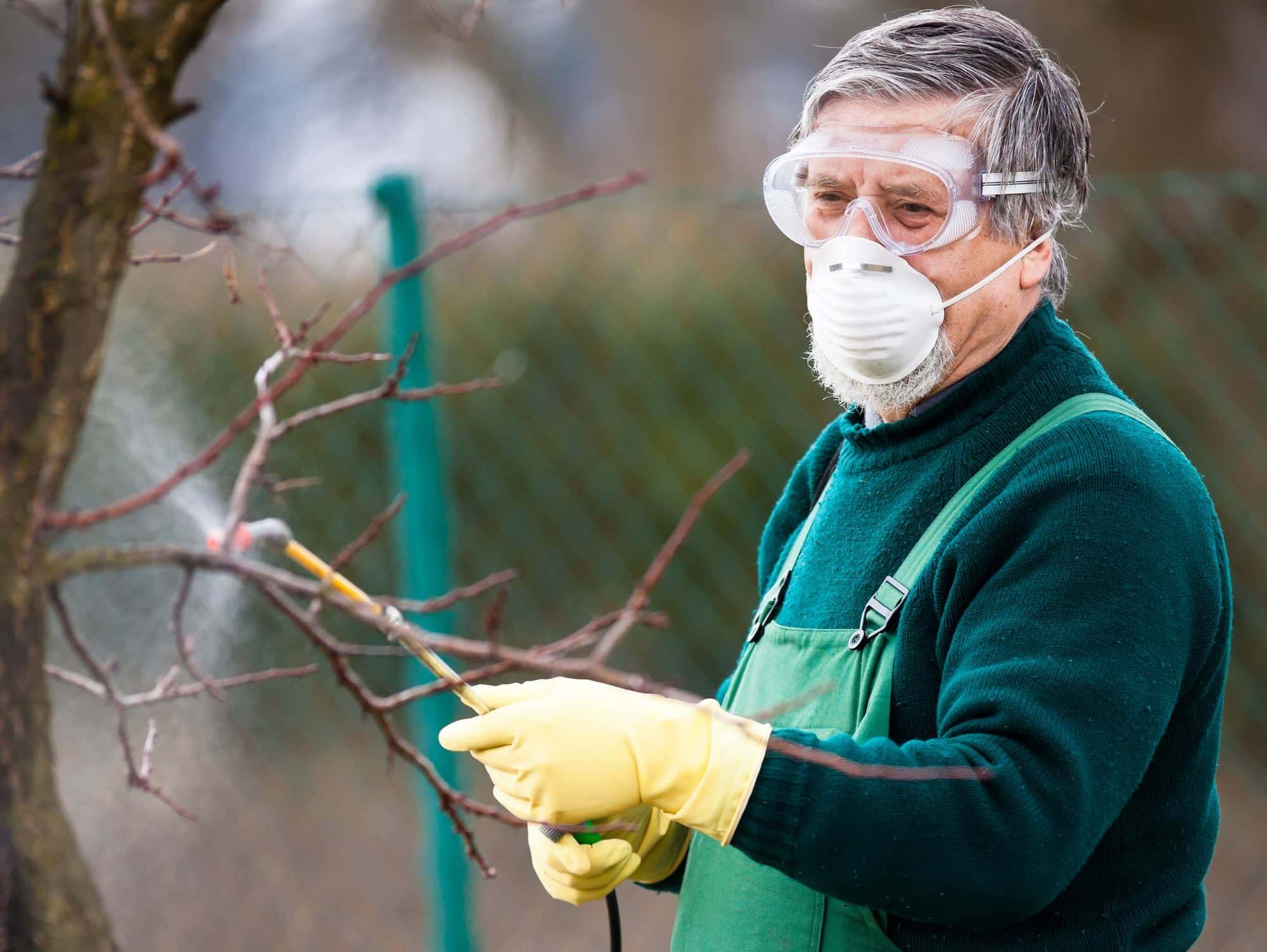
The Mexican government has announced a glyphosate ban to prevent the importation of Roundup and other glyphosate-based herbicides from entering the country.
In June 2020, Mexico announced the use of glyphosate will be phased out over the next four years, according to Beyond Pesticides, a nonprofit organization headquartered in Washington, D.C.
Mexico’s Minister of the Environment Victor M. Toledo said in a press release that the country is attempting to change its food growing practices to make products “safer, healthier and more respectful of the environment.”
The government also referred to the Precautionary Principle, which helped guide its decision to eliminate glyphosate products. The Wingspread Statement on the Precautionary Principle says, “Where an activity raises threats of harm to the environment or human health, precautionary measures should be taken even if some cause and effect relationships are not fully established scientifically.”
The Precautionary Principle was decided upon in 1998 at the Wingspread Conference, which was held by a number of scientific organizations that believed environmental regulations were too lax to adequately protect human health and the environment.
Mexico’s Glyphosate Ban Reflects WHO’s Concerns
In 2015, the World Health Organization’s (WHO) International Agency for Research on Cancer (IARC) determined strong evidence shows glyphosate is a “probable human carcinogen,” which means it is likely to cause cancer.
Dr. Adelita San Vicente Telle, Director General of the Primary Sector and Renewable Natural Resources at the Secretariat of Environment and Natural Resources (SEMARNAT), told Sustainable Pulse that the importation of glyphosate was stopped in November 2019.
SEMARNAT is working with the National Council of Science and Technology to determine alternatives to glyphosate-based herbicides, including looking at organic methods of weed control used by indigenous communities for centuries, said San Vicente Tello.
According to some studies, Roundup has been linked to an increased risk of certain cancers, including non-Hodgkin’s lymphoma.

Still, French researchers conducted a study in 2002 that found Roundup is more deadly to cells than glyphosate by itself is. Lead scientist J. Marc led the study that found glyphosate alone caused no harm to the first cell cycle of a sea urchin embryo, but Roundup interfered with the cell’s development. This led them to conclude that there’s a “synergy” between glyphosate and the other ingredients found in Roundup that cause cellular toxicity.
Roundup Offers to Settle Class Action Lawsuits
Last month in the U.S., Bayer agreed to pay more than $10.9 billion to settle thousands of class action lawsuits alleging Roundup causes cancer. Most of the plaintiffs allege Roundup causes non-Hodgkin’s lymphoma even though the U.S. Environmental Protection Agency recently determined it saw “no evidence that glyphosate causes cancer in humans.”
According to The New York Times, about 95,000 lawsuits would be settled through Bayer’s $10-billion-offer, plus $1.25 billion would go towards settling any suits filed down the road by Roundup users who might blame the weedkiller for a diagnosis of non-Hodgkin’s lymphoma.
In the U.S., several states, cities and school districts have instituted a glyphosate ban or called for a dramatic reduction of Roundup products on properties where they have jurisdiction.
Countries around the world that have begun phasing out glyphosate or already have outright bans include Germany, the European Union, Thailand, United Arab Emirates, Bermuda, Denmark, France and Italy.
Join a Roundup Weed Killer Cancer Class Action Lawsuit Investigation
You may qualify for this Roundup cancer lawsuit investigation if you were diagnosed with one of these conditions after using Roundup:
- Non-Hodgkin’s lymphoma
- B-cell lymphoma
- T-cell lymphoma
- Chronic lymphocytic leukemia (CLL)
- Hairy cell lymphoma
See if you qualify by filling out the form on this page for a case evaluation with an experienced Roundup lawsuit attorney.
This article is not legal advice. It is presented
for informational purposes only.
ATTORNEY ADVERTISING
Top Class Actions is a Proud Member of the American Bar Association
LEGAL INFORMATION IS NOT LEGAL ADVICE
Top Class Actions Legal Statement
©2008 – 2026 Top Class Actions® LLC
Various Trademarks held by their respective owners
This website is not intended for viewing or usage by European Union citizens.
Get Help – It’s Free
Join a Roundup Weed Killer Cancer Class Action Lawsuit Investigation
For the most up-to-date information on this case, click here.