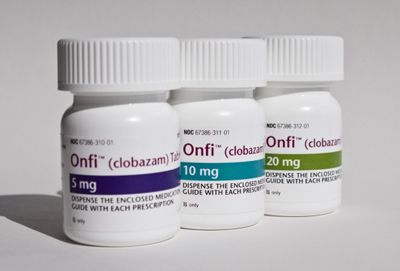
 In late 2013, the U.S. Food and Drug Administration approved label changes to the seizure drug Onfi to warn patients about the risk of Stevens Johnson Syndrome.
Onfi is the trade name of a seizure drug called clobazam. The drug has been in use since the 1970s. Onfi (clobazam) is widely used as a treatment for most types of epilepsy, as well as other types of seizure disorders. Onfi’s approval also extends to treating some psychiatric conditions. It is not uncommon for diseases approved to treat seizures to have beneficial effects for psychiatric conditions and vice versa. However, the FDA’s new warnings indicate a rare but life-threatening complication is possible called Steven Johnson’s Syndrome.
Stevens Johnson Syndrome or SJS is an autoimmune disorder. In autoimmune disorders, the immune system malfunctions. In a healthy person, the immune system works to fight invading disease organisms like viruses and bacteria. When a person suffers from an autoimmune disorder, the body uses these same mechanisms are deployed against the patient’s own body. Usually such disorders attack specific organs or tissues. In the case of SJS, the immune system attacks the body’s largest organ: the skin.
Onfi SJS symptoms start with generalized flu-like symptoms. However, a painful skin rash rapidly appears, with blisters, then sores and ulcers. In many cases, this damage can spread to the inside of the mouth and nose, the eyes, and even the surfaced of internal organs.
Mortality rates vary with the severity of the disorder, topping out around 30%. After this benchmark, cases of SJS are considered a separate disorder called Toxic Epidermal Necrolysis. TEN symptoms are even more severe than SJS symptoms. In these cases, patches of skin die and slough off, leaving burn-like wounds. Patients that survive Onfi SJS and TEN may face a lifetime of complications, including disfiguring and debilitating scars, blindness, and impaired organ function.
Nearly all cases of Stevens Johnson Syndrome and Toxic Epidermal Necrolysis can be traced back to drug exposure. It is very difficult to predict which patients will develop SJS and TEN from which drug. But the FDA’s new guidelines suggest that there is sufficient evidence to add Onfi to the list of drugs that may cause SJS.
Several other common seizure drugs, including Dilantin, are also known to trigger SJS in some individuals. While this side effect is rare, the epidemiology of the situation is small comfort to people fighting for their lives after suffering this drug reaction. The new labeling information for Onfi will carry a warning that the drug may cause SJS and TEN.
Onfi Lawsuits
The new warning for Onfi Stevens Johnson Syndrome is too little too late, according to some Onfi lawsuit plaintiffs. These plaintiffs claim they were not adequately warned of the risk of getting Onfi SJS and were subsequently severely injured.
Onfi lawsuits often seek compensation for medical expenses, pain and suffering, and other damages.
Do YOU have a legal claim? Fill out the form on this page now for a free, immediate, and confidential case evaluation. The Stevens Johnson Syndrome attorneys who work with Top Class Actions will contact you if you qualify to let you know if an individual lawsuit or class action lawsuit is best for you. [In general, SJS lawsuits are filed individually by each plaintiff and are not class actions.] Hurry — statutes of limitations may apply.
ATTORNEY ADVERTISING
Top Class Actions is a Proud Member of the American Bar Association
LEGAL INFORMATION IS NOT LEGAL ADVICE
Top Class Actions Legal Statement
©2008 – 2026 Top Class Actions® LLC
Various Trademarks held by their respective owners
This website is not intended for viewing or usage by European Union citizens.
Get Help – It’s Free
Help for Victims of Onfi Stevens Johnson Syndrome
If you or a loved one were diagnosed with Stevens Johnson Syndrome (SJS) or toxic epidermal necrolysis (TEN) after taking Onfi, you may be eligible to take legal action against the drug’s manufacturer. Filing an Onfi SJS lawsuit or Onfi class action lawsuit may help you obtain compensation for medical bills, pain and suffering, and other damages. Obtain a free and confidential review of your case by filling out the form below.
An attorney will contact you if you qualify to discuss the details of your potential case at no charge to you.
Oops! We could not locate your form.