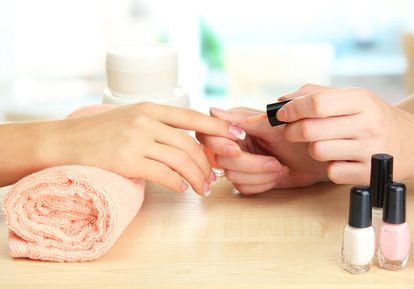
 A proposed class action lawsuit has been filed in New York claiming that at least four nail salons routinely violated minimum wage and overtime laws. The wage and hour class action lawsuit comes on the heels of a New York Times investigation that exposed wage and hour law violations and dangerous workplace conditions, such as the use of nail and beauty products, that could cause serious health problems like fungal and skin infections.
The proposed wage and hour lawsuit, according to Reuters, accuses four salons on New York City’s Upper East Side (all with the same owners) of violating New York’s minimum wage law as well as a federal law requiring overtime pay and mandatory meal and rest breaks.
The plaintiffs allege that they were paid $60 or less for 10-hour shifts and often denied breaks, according to the wage and hour class action lawsuit filed in U.S. District Court in Manhattan. Some manicurists who spoke to The New York Times told the newspaper that they were paid just $30 a day and that their salons did not provide them the “equipment or ventilation to safely deal with toxic chemicals.”
The plaintiffs’ attorney told Reuters that he expects the proposed minimum wage Class to include upward of 50 people. Anyone who worked at the Manhattan salons for more than six years can be part of the minimum wage claim. The overtime and break claims go back three years, according to the nail salon wage and hour class action lawsuit.
Fair Labor Standards Act
Sometimes referred to as the Wages and Hours Bill, the Fair Labor Standards Act (FLSA) established a minimum wage, overtime pay, record keeping, and youth employment standards. The FLSA covers employees in both public and private employment.
Non-exempt employees, according to the FLSA, may be required to work an eight-hour workday and a 40-hour workweek. Any work above that threshold is subject to overtime at a rate of time-and-a-half, or 1.5 times the worker’s regular pay. Overtime pay is not required for work on weekends, holidays, or regular days of rest, unless the work constitutes actual overtime on those days.
New York’s minimum wage is $8.75 per hour and will increase to $9 per hour on Dec. 31, 2015, according to the New York Department of Labor, though there are exceptions for youth, farmers, and workers who earn tips such as manicurists.
In the case of “tipped workers,” employers in New York can pay their workers less than the minimum wage, a figure which is based on “a complex calculation of how much a worker is making in tips,” the Times reported.
The newspaper’s investigation found that the wages paid to the manicurists are so low that it renders the tip calculation meaningless.
“None reported receiving supplemental pay from their bosses, as is legally required when their day’s tips fall short of the minimum wage,” the report states. “Overtime pay is almost unheard-of in the industry, even though workers routinely work up to 12 hours a day, six or even seven days a week.”
As a result of the Times’ investigation, New York Governor Andrew Cuomo announced the creation of a task force to investigate nail salons. Regulators will also be notifying workers — in six languages — of their rights as part of an education campaign.
Join a Free Wage & Hour Class Action Lawsuit Investigation
If you were forced to work off the clock or without overtime pay within the past 3 years, you have rights – and you don’t have to take on the company alone.
ATTORNEY ADVERTISING
Top Class Actions is a Proud Member of the American Bar Association
LEGAL INFORMATION IS NOT LEGAL ADVICE
Top Class Actions Legal Statement
©2008 – 2025 Top Class Actions® LLC
Various Trademarks held by their respective owners
This website is not intended for viewing or usage by European Union citizens.

Cellphone wrong-number robocalls could be worth $500-$1,500 per violation of the federal TCPA
December 12, 2025 | TCPA Class Action Lawsuits