

For 60 years, one oral blood thinner medication held nearly all of the market share for anticoagulants. Warfarin (Coumadin) was the staple for many years to treat patients with a risk of developing blood clots.
It wasn’t until 2010 that new, viable options were available to physicians to effectively deliver anti-clotting medications to their patients.
Several drugs came out within a few years of each other and are in a class of medications called new generation or novel oral anticoagulants (NOACs).
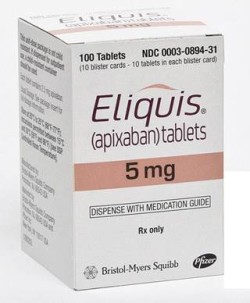
One such drug, Eliquis, took its place as a popular warfarin alternative until Eliquis blood thinner side effects began emerging.
Eliquis Takes the Stage
In 2012, Eliquis (apaxiban) received approval to enter the market. Produced by Bristol-Myers Squibb, the anticoagulant was touted as a safer alternative to warfarin.
With warfarin, doctors were required to monitor patients’ blood levels of the drug to ensure that safe therapeutic doses of the drug were being administered. Additionally, patients were required to conform to a specific diet while they were taking the drug.
Although warfarin was very efficient and helpful, physicians and patients alike wished for an alternative that did not require so much maintenance.
Eliquis fit the bill by having dosing that was more standardized among patients, therefore requiring less monitoring. It also eliminated the need for patients to follow a specific dietary regimen.
The main conditions Eliquis is intended to treat are atrial fibrillation, deep vein thrombosis (DVT) and pulmonary embolism (PE).
With atrial fibrillation, the heart beats rapidly and erratically, causing blood to pool where it shouldn’t, giving rise to potential clots. These clots can then lead to conditions like heart attack and stroke depending how the clots are released into the body.
Deep vein thrombosis is a condition where blood clots form in the deep veins of the lower body, particularly in the legs. A clot in these deep veins can then be carried to the lungs where it can cause a pulmonary embolism. Pulmonary embolisms are often life-threatening.
For patients and physicians alike, Eliquis seemed like the perfect answer to being a true improvement over warfarin. However, it did not take long before Eliquis blood thinner side effects began making an appearance.
Eliquis Blood Thinner Side Effects
Eliquis works by blocking a protein in the body that is responsible for forming clots in the blood. In patients who have a tendency to develop such clots, the likelihood of developing these clots is reduced when the medication is administered.
For everyday situations, this is a positive intervention. However, there are some cases where the body needs to be able to clot the blood in order to stop excessive bleeding. In these cases, if clotting cannot be initiated by the body, excessive bleeding can be very damaging or even fatal.
With Eliquis, the most common types of internal bleeding complications due to Eliquis blood thinner side effects are:
- Gastrointestinal bleeding throughout any area of the entire gastrointestinal tract
- Internal bleeding in the brain, also known as hemorrhagic stroke
The shortcomings of Eliquis became evident when patients suffered from internal bleeding but had no way to reverse it.
With warfarin, patients could be administered fresh frozen plasma and intravenous vitamin K in order to reverse the drug’s effects and restore the normal clotting mechanisms of the body.
With Eliquis, there is no such reversal agent or antidote to the excessive bleeding. Patients require emergency hospitalization to stabilize them, but there is no way currently to quickly reverse the blood thinning effects of the medication.
Filing an Eliquis Blood Thinner Side Effects Lawsuit
Families and patients who have encountered excessive internal bleeding as a result of Eliquis use have claimed the drug manufacturer did not do enough to warn patients about the risks associated with the drug’s use.
If you or a loved one has taken Eliquis and has experienced severe Eliquis blood thinner side effects such as gastrointestinal bleeding or bleeding on the brain, you may be eligible to seek legal compensation.
An attorney can review your case for free and can help you decide which legal options may be right for you.
Do YOU have a legal claim? Fill out the form on this page now for a free, immediate, and confidential case evaluation. The Eliquis attorneys who work with Top Class Actions will contact you if you qualify to let you know if an individual lawsuit or Eliquis class action lawsuit is best for you. [In general, Eliquis lawsuits are filed individually by each plaintiff and are not class actions.] Hurry — statutes of limitations may apply.
Get Help – It’s Free
Join a Free Eliquis Class Action Lawsuit Investigation
If you or a loved one took Eliquis (apixaban) and suffered injuries such as uncontrollable internal bleeding, gastrointestinal bleeding, hemorrhaging, kidney bleeding or death, you may have a legal claim. See if you qualify by filling out the short form below.
An attorney will contact you if you qualify to discuss the details of your potential case at no charge to you.
Please Note: If you want to participate in this investigation, it is imperative that you reply to the law firm if they call or email you. Failing to do so may result in you not getting signed up as a client, if you qualify, or getting you dropped as a client.
Oops! We could not locate your form.
ATTORNEY ADVERTISING
Top Class Actions is a Proud Member of the American Bar Association
LEGAL INFORMATION IS NOT LEGAL ADVICE
Top Class Actions Legal Statement
©2008 – 2026 Top Class Actions® LLC
Various Trademarks held by their respective owners
This website is not intended for viewing or usage by European Union citizens.











