

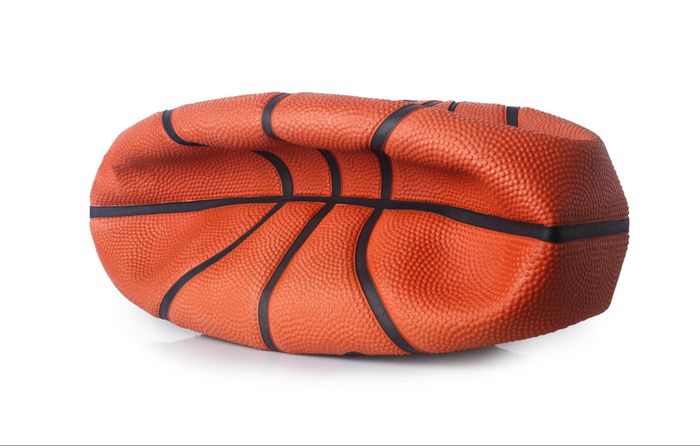
 A Russell Brands class action lawsuit argues that the quality of Spalding balls is poor and harms consumers, leading the lead plaintiff to seek class certification.
The lead plaintiff, Jaish Markos, filed the Russell Brands class action lawsuit after he says he experienced problems with the Spalding Neverflat basketballs deflating within a year of purchase. Although the defendants are arguing for dismissal of the case, the plaintiff says that he and other Class Members bought products that didn’t live up to the advertisement’s promises.
The Russell Brands class action lawsuit contends that the balls are sold as premier sports basketballs with long-lasting air and maximum bounce, but that actual use reveals the product in action comes nowhere close.
The plaintiff in the Russell Brands class action lawsuit says that the balls don’t bounce nearly as high as the manufacturer claims and that over the course of just one year, the balls lose significant pressure despite the fact that consumers pay a premium based on the promises of outstanding quality.
The defendants say that the plaintiff has provided no evidence of personal loss or that consumers were misled. The defendants argue that there is no proof the lead plaintiff ever measured the air pressure in the ball or how high the ball bounced. The defendants also argue that the plaintiff never took advantage of the guaranteed satisfaction policy or contacted customer service about his issues.
The Russell Brands class action lawsuit alleges that the plaintiff bought the Neverflat ball in June 2015. The plaintiff says that he bought the Neverflat ball because the company promised the ball would not need to be inflated for a year, unlike many basketballs on the market.
The plaintiff’s class action lawsuit references laboratory tests showing that the Spalding balls actually lose about 2 psi over the course of 200 days and that the rebound height decreases over that period as well.
The Russell Brands class action lawsuit goes on to allege that other basketball models were tested against the Spalding Neverflat and that the other basketballs had higher rebounds. The class action lawsuit against Russell Brands says that consumers would not have paid a premium for the Neverflat ball if they had known about the basketball’s low quality.
The defendants still take issue with whether or not the plaintiff has any standing to file on his own, a claim they make based on what they see as lack of evidence about losses he sustained.
The defendants in the Russell Brands class action lawsuit also say that no surveys or other evidence from consumers shows that class certification is appropriate or that other consumers were misled by the packaging.
The plaintiff and proposed Class are represented by Jason P. Sultzer and Joseph Lipari of the Sultzer Law Group PC, Michael R. Reese and George V. Granade II of Reese LLP, and Melissa S. Weiner of Pearson Simon & Warshaw LLP.
The Russell Class Action Lawsuit is Jaish Markos et. al., v. Russell Brands, LLC, Case No. 7:16-cv-04362, in the U.S. District Court for the Southern District of New York.
ATTORNEY ADVERTISING
Top Class Actions is a Proud Member of the American Bar Association
LEGAL INFORMATION IS NOT LEGAL ADVICE
Top Class Actions Legal Statement
©2008 – 2026 Top Class Actions® LLC
Various Trademarks held by their respective owners
This website is not intended for viewing or usage by European Union citizens.











61 thoughts onRussell Brands Class Action Lawsuit Plaintiff Seeks Certification
add me in
Add
Please add me
Add me
Add me
Please add me
Please add me. Thank you.