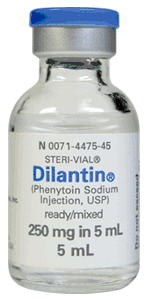
 Dilantin (Phenytoin) is a popular anticonvulsant drug, which is commonly prescribed to patients who suffer complex partial seizures and generalized tonic-clonic seizures. Despite being on the market since 1953, physicians are becoming increasingly hesitant to prescribe the drug because of its association with Stevens Johnson Syndrome (SJS).
Stevens Johnson Syndrome is a severe allergic skin reaction, which is caused specifically by one or more medications. This condition is famously characterized by the red or purple skin lesions that appear on the patient’s body, which then causes the skin to detach, leading to the possibility of further SJS complications. Oftentimes, patients who are diagnosed with an SJS condition need to be treated in the burn units of hospitals, as skin grafts will probably be needed to facilitate the recovery process. Doctors warn that if SJS were to occur, it would usually develop within the first two to eight weeks of starting the medication.
Luckily this is an extremely rare medical event, with only 300 cases diagnosed per year in the United States, but pharmaceutical companies consequently omit SJS on their drugs’ warning label. This can be either due to the fact that the drug has not been reported to cause Stevens Johnson Syndrome or (as may be the case with Dilantin SJS) SJS has been reported but the event is so rare that the pharmaceutical company considers it a low-risk.
Manufactured by Pfizer Inc., Dilantin has built a long list of clients throughout a number of generations and has earned itself a place on the World Health Organization’s List of Essential Medicines. This means that this medication should be included in any basic healthcare system. According to medical experts, Dilantin works by blocking certain sodium channels and voltage charges in the brain that are known to cause seizures. Dilantin is known for its effectiveness and is often requested despite its association with Stevens Johnson Syndrome.
In a recent health survey conducted on the medical website, eHealthMe, where injury reports collected from social media sites and the U.S. Food and Drug Administration (FDA) are analyzed, the correlation between Dilantin and Stevens Johnson Syndrome was observed to determine just how at risk a patient may be of developing SJS. This Dilantin SJS study consisted of 10,959 patients who were taking Dilantin, along with the drug Dexamethasone. The majority of patients who suffered Dilantin SJS were elderly women who had been on Dilantin for less than one month. With the results consolidated on March 1, 2015, approximately 577 (5.27 percent) of the Dilantin patients reported suffering Stevens Johnson Syndrome.
Overview of Stevens Johnson Syndrome Risk
Even though this Dilantin study indicates that SJS is highly unlikely when taking Dilantin, it is still a risk that should be made known to the patients. It is important to note that Dilantin SJS can occur in both adults and children, and that it has been known to be fatal. Oftentimes, Dilantin SJS is misdiagnosed due its early symptoms being flu-like and with the skin lesions appearing when the condition progresses to a later stage.
In other words, because healthcare providers often do not recognize this skin condition at first, the patients often suffers severe SJS side effects. Other than permanent skin scarring, SJS can also induce blindness and internal organ damage, as well as leave the patient in constant fear of recurrence. As of now, it is currently unknown as to why SJS occurs in some patients and not all, but experts state that it is more likely to occur in patients who have a family history of severe drug reactions or allergy medications, or are taking more than one drug at at time.
With these varying factors, it is important for pharmaceutical companies to list Stevens Johnson Syndrome on their drugs’ warning label if it has been reported before. Legal experts state that pharmaceutical companies have the responsibility to warn consumers of all side effects their products can induce, because the consumers rely on the accuracy of the given information.
Do YOU have a legal claim? Fill out the form on this page now for a free, immediate, and confidential case evaluation. The SJS attorneys who work with Top Class Actions will contact you if you qualify to let you know if an individual lawsuit or Dilantin class action lawsuit is best for you. [In general, Dilantin lawsuits are filed individually by each plaintiff and are not class actions.] Hurry — statutes of limitations may apply.
ATTORNEY ADVERTISING
Top Class Actions is a Proud Member of the American Bar Association
LEGAL INFORMATION IS NOT LEGAL ADVICE
Top Class Actions Legal Statement
©2008 – 2026 Top Class Actions® LLC
Various Trademarks held by their respective owners
This website is not intended for viewing or usage by European Union citizens.
Get Help – It’s Free
Help for Victims of Stevens Johnson Syndrome
If you or a loved one were diagnosed with Stevens Johnson Syndrome (SJS) or toxic epidermal necrolysis (TEN) after taking a prescribed or over-the-counter medication, you may be eligible to take legal action against the drug’s manufacturer. Filing an SJS lawsuit or class action lawsuit may help you obtain compensation for medical bills, pain and suffering, and other damages. Obtain a free and confidential review of your case by filling out the form below.
An attorney will contact you if you qualify to discuss the details of your potential case at no charge to you.
Oops! We could not locate your form.